Analysis of "嫦娥" - Classical Chinese Poetry
Introduction
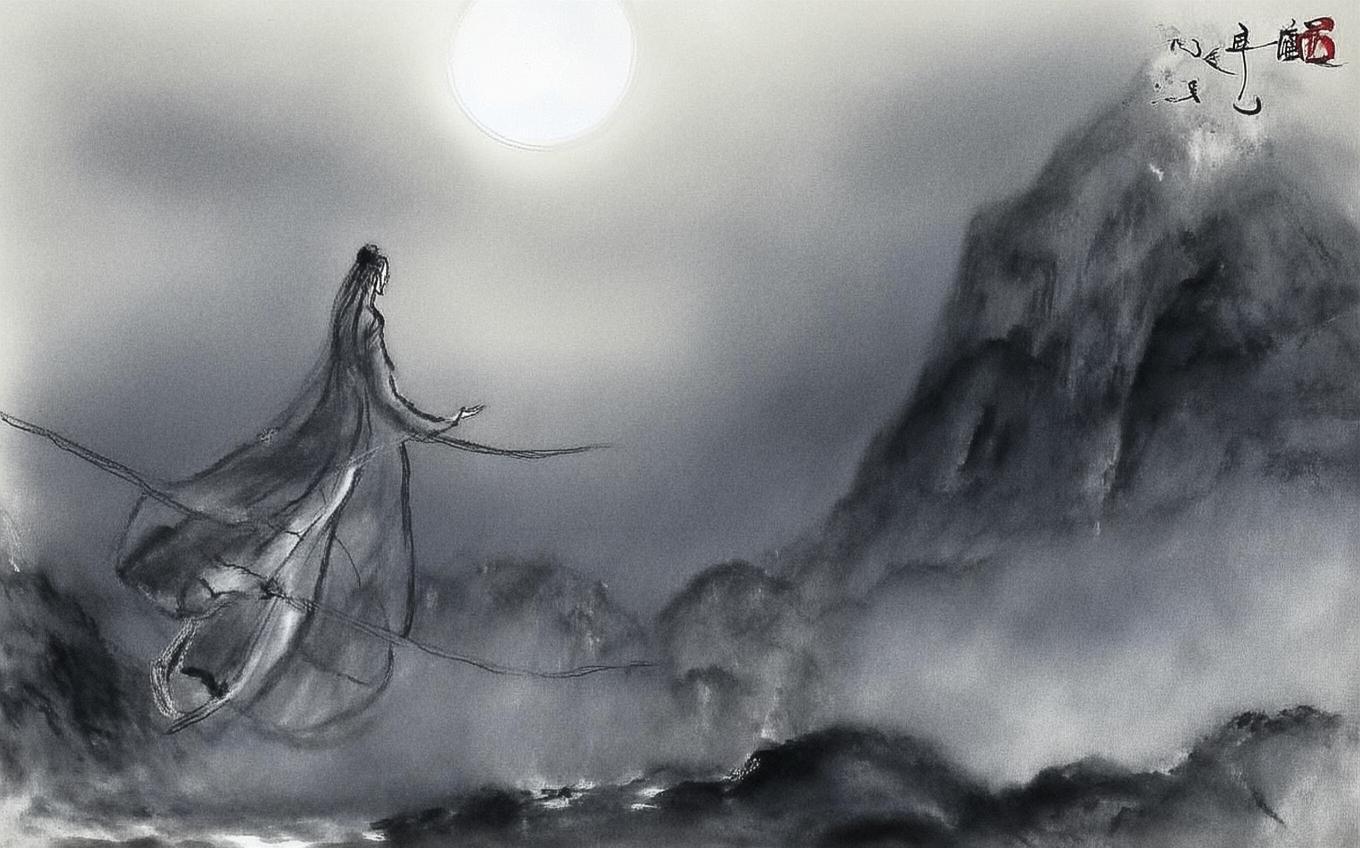
The poem "嫦娥" (Cháng'é) was written by the renowned Tang Dynasty poet Li Shangyin (李商隐, c. 813–858). Known for his dense, allusive style, Li Shangyin often explored themes of love, solitude, and existential melancholy. This particular poem references Chang'e, the Chinese moon goddess, who fled to the moon after consuming the elixir of immortality. The poem blends myth with personal reflection, creating a haunting meditation on isolation and longing.
The Poem: Full Text and Translation
嫦娥
Cháng'é
The Moon Goddess云母屏风烛影深
Yúnmǔ píngfēng zhú yǐng shēn
The mica screen casts deep candle shadows,长河渐落晓星沉
Cháng hé jiàn luò xiǎo xīng chén
The Milky Way fades as dawn stars sink.嫦娥应悔偷灵药
Cháng'é yīng huǐ tōu líng yào
Chang'e must regret stealing the elixir,碧海青天夜夜心
Bì hǎi qīng tiān yè yè xīn
Facing the blue sea and azure sky, night after night, alone.
Line-by-Line Analysis
-
"The mica screen casts deep candle shadows"
- The mica screen suggests luxury but also seclusion. The flickering candlelight deepens the sense of solitude, hinting at a sleepless night. -
"The Milky Way fades as dawn stars sink"
- The passage of time is marked by celestial imagery. The fading stars imply the approach of morning, yet the speaker remains awake, lost in thought. -
"Chang'e must regret stealing the elixir"
- Here, the poet draws a parallel between Chang'e's eternal loneliness and human regrets. The "elixir" symbolizes desires that lead to unintended consequences. -
"Facing the blue sea and azure sky, night after night, alone"
- The vast, unchanging sky and sea mirror Chang'e's endless isolation. The repetition of "night after night" emphasizes the inescapable nature of her fate.
Themes and Symbolism
- Loneliness & Regret: The poem contrasts immortality with emotional emptiness. Chang'e’s punishment is not death but eternal solitude.
- Celestial Imagery: The moon, stars, and Milky Way symbolize the unattainable and the passage of time.
- Myth as Metaphor: Chang'e’s story reflects human struggles—choices that bring fleeting gains but lasting sorrow.
Cultural Context
- Chang'e in Chinese Myth: Originally a mortal, Chang'e drank the elixir to save it from a thief but was exiled to the moon. The Mid-Autumn Festival honors her with mooncakes and lanterns.
- Tang Dynasty Poetry: Li Shangyin’s work typifies Late Tang poetry—introspective, ambiguous, and rich in symbolism. His poems often resist straightforward interpretation, inviting readers to ponder deeper meanings.
Conclusion
"嫦娥" is a masterpiece of emotional depth and lyrical beauty. Through Chang'e’s myth, Li Shangyin captures a universal truth: some desires, once fulfilled, leave us more isolated than before. The poem’s enduring appeal lies in its haunting imagery and timeless meditation on the cost of eternal life—and eternal longing.
For modern readers, it serves as a poignant reminder that not all that glitters is gold, and some treasures come with invisible chains.

Comments (0)
No comments yet. Be the first to comment!