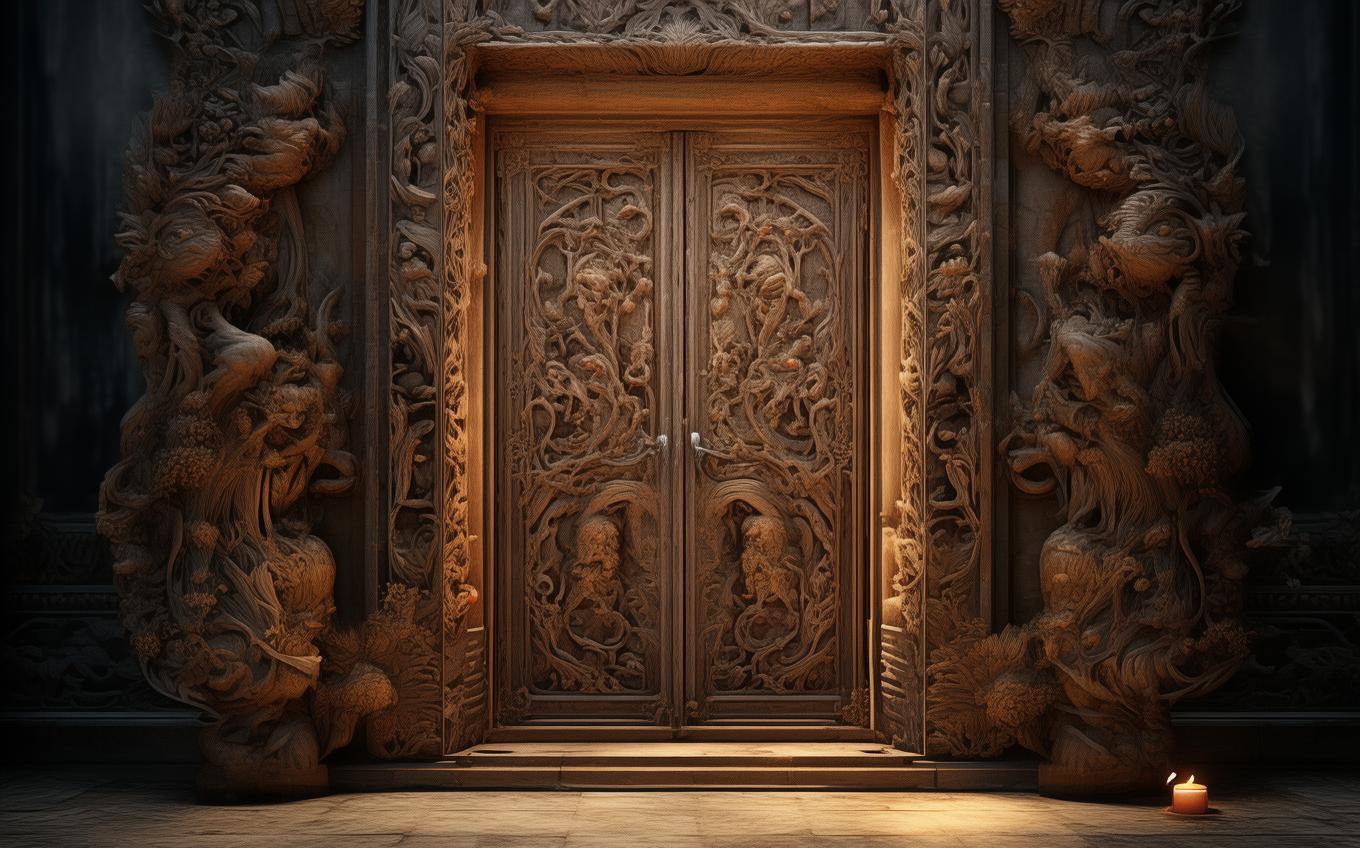
Understanding "门口" - Chinese Word Explanation
1. Basic Information
- Word: 门口
- Pinyin: mén kǒu
- Literal Meaning: "door" (门) + "opening/entrance" (口) = "doorway" or "entrance"
- Primary Meaning: Refers to the space or area immediately in front of a door or entrance, commonly translated as "doorway," "entrance," or "gateway."
2. In-depth Explanation
-
Context and Usage:
"门口" is used to describe the physical space near a door or entrance, whether it's a house, building, or room. It emphasizes the threshold or the area where one enters or exits. It can also imply a waiting or gathering spot (e.g., "waiting at the door"). Unlike "门" (door) alone, "门口" includes the surrounding space. -
Character Breakdown:
- 门 (mén): "door" or "gate."
- 口 (kǒu): "mouth" or "opening," here meaning "entrance" or "threshold."
3. Example Sentences
-
Chinese: 他在门口等你。
Pinyin: Tā zài mén kǒu děng nǐ.
English: He is waiting for you at the door. -
Chinese: 请把包裹放在门口。
Pinyin: Qǐng bǎ bāoguǒ fàng zài mén kǒu.
English: Please leave the package at the entrance. -
Chinese: 门口有很多人排队。
Pinyin: Mén kǒu yǒu hěn duō rén páiduì.
English: There are many people lining up at the doorway.
Cultural Notes
In Chinese culture, the "门口" is often seen as a transitional space between the outside world and the private interior. It’s common to remove shoes at the entrance (门口) to maintain cleanliness inside. In festivals, decorations like couplets (春联) are pasted on or near the doorway for good luck.
Conclusion
"门口" (mén kǒu) is a practical word for describing entrances or doorways in daily life. Remember it as "door" + "opening," and use it to talk about waiting, leaving items, or observing activities near a door.




Comments (0)
No comments yet. Be the first to comment!