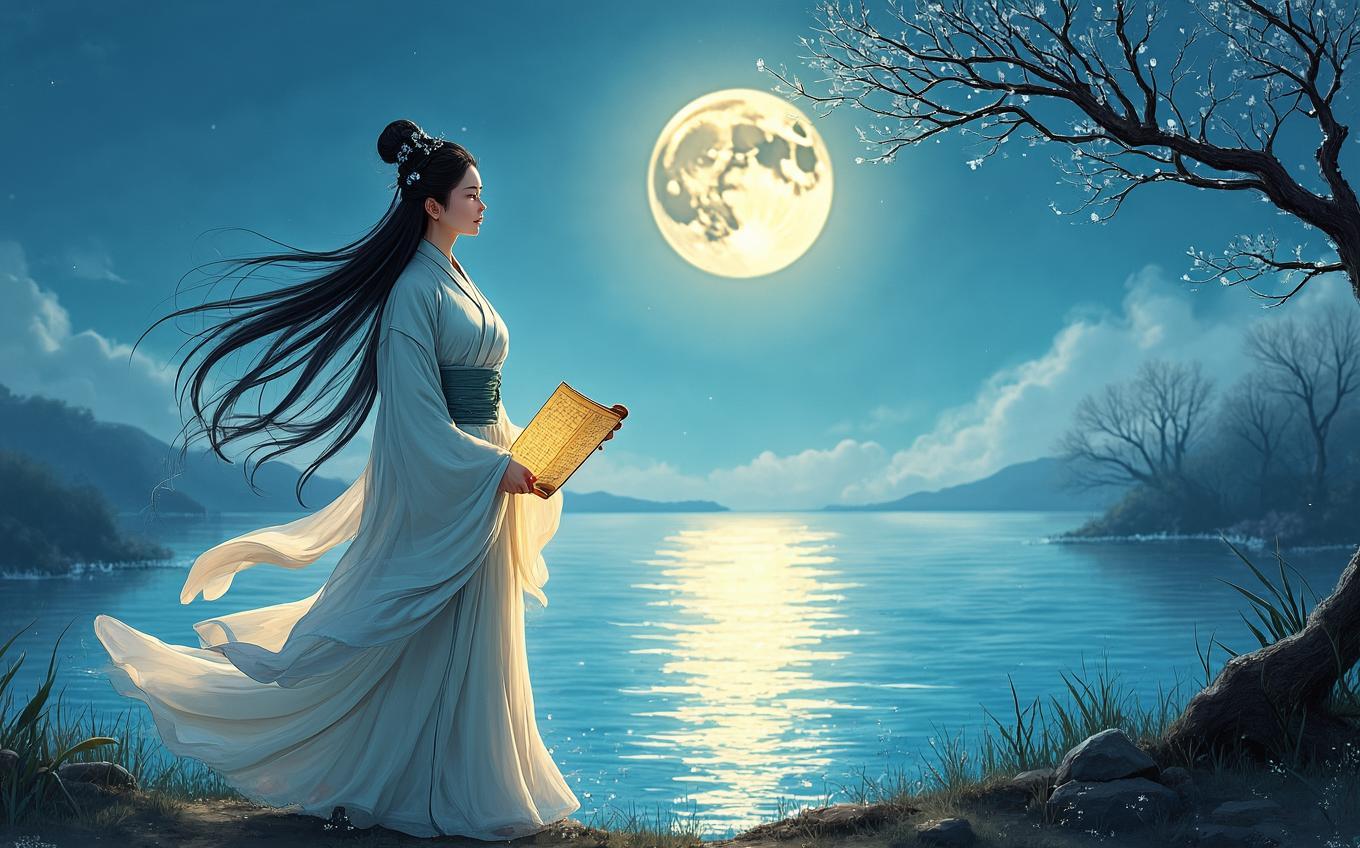
Analysis of "长相思" - Classical Chinese Poetry
Introduction
"长相思" (Cháng xiāng sī, "Everlasting Longing") is one of the most famous cí (lyric poetry) pieces by the Tang dynasty poet Li Bai (李白, 701–762). Known as the "Immortal Poet," Li Bai was a central figure in China's golden age of poetry, celebrated for his romanticism, vivid imagery, and emotional depth.
This poem captures the essence of longing—a recurring theme in classical Chinese poetry—blending personal emotion with natural imagery. It reflects the deep cultural tradition of expressing unfulfilled desire, whether for a distant lover, home, or an idealized past.
The Poem: Full Text and Translation
长相思,在长安。
Cháng xiāng sī, zài Cháng'ān.
Everlasting longing, in Chang'an.络纬秋啼金井阑,微霜凄凄簟色寒。
Luò wěi qiū tí jīn jǐng lán, wēi shuāng qī qī diàn sè hán.
Autumn crickets weep by the golden well rails; faint frost chills the mat's color.孤灯不明思欲绝,卷帷望月空长叹。
Gū dēng bù míng sī yù jué, juǎn wéi wàng yuè kōng cháng tàn.
A lone lamp dims, thoughts near breaking; rolling the curtain, I gaze at the moon and sigh in vain.美人如花隔云端。
Měi rén rú huā gé yún duān.
The fair one, flower-like, is beyond the clouds.上有青冥之长天,下有渌水之波澜。
Shàng yǒu qīng míng zhī cháng tiān, xià yǒu lù shuǐ zhī bō lán.
Above, the vast blue heavens stretch; below, green waters surge in waves.天长路远魂飞苦,梦魂不到关山难。
Tiān cháng lù yuǎn hún fēi kǔ, mèng hún bù dào guān shān nán.
The sky endless, the road far—my soul flies in torment; even dreams cannot cross the mountain passes.长相思,摧心肝。
Cháng xiāng sī, cuī xīn gān.
Everlasting longing, it shatters the heart.
Line-by-Line Analysis
-
"Everlasting longing, in Chang'an."
The poem opens with the speaker in Chang'an, the Tang capital, a place of political and cultural significance. The longing is set against this grand backdrop, suggesting a yearning intertwined with ambition or separation from a loved one. -
Autumn imagery (crickets, frost, cold mat)
The "autumn crickets" and "faint frost" evoke melancholy and the passage of time. The "chilled mat" symbolizes loneliness, as mats were associated with intimacy and rest. -
"A lone lamp dims… sigh in vain."
The dim lamp mirrors the speaker's fading hope. Gazing at the moon—a classic symbol of longing—heightens the sense of helplessness. -
"The fair one, flower-like, beyond the clouds."
The beloved is compared to a flower, beautiful but untouchable, separated by clouds (distance or fate). -
Heaven and water imagery
The vast sky and turbulent waters emphasize the insurmountable distance between the speaker and their desire. -
"Even dreams cannot cross the mountain passes."
A heartbreaking admission—not even dreams can bridge the separation, underscoring the depth of despair. -
"Everlasting longing, it shatters the heart."
The final line echoes the title, reinforcing the physical and emotional toll of unfulfilled desire.
Themes and Symbolism
- Longing and Separation: The poem explores the pain of distance, whether romantic, familial, or existential.
- Nature as Emotion: Autumn, frost, and turbulent waters mirror inner turmoil.
- The Unattainable: The "flower-like" beloved and unreachable moon symbolize idealized love or aspirations.
Cultural Context
During the Tang dynasty, poetry was a medium for expressing yuǎn yì (怨抑, repressed sorrow), often through natural imagery. "Chang'an" represents both a real place and a metaphor for unfulfilled ambitions—Li Bai himself struggled with political disillusionment.
The moon, a recurring motif in Chinese poetry, symbolizes reunion in folk culture (e.g., the Mid-Autumn Festival). Here, it becomes a cruel reminder of absence.
Conclusion
Li Bai's "Everlasting Longing" is a masterpiece of emotional intensity and lyrical beauty. Its universal themes—love, distance, and despair—resonate across cultures and time. Today, it reminds us how art transforms personal sorrow into something timeless, connecting us to the shared human experience of longing.
"What the Tang dynasty expressed in four lines, we spend lifetimes trying to articulate." —Reflection on classical Chinese poetry's enduring power.

Comments (0)
No comments yet. Be the first to comment!