Analysis of "终南山" - Classical Chinese Poetry
Introduction
The poem "终南山" (Zhōngnán Shān) was written by Wang Wei (王维, 699–759), one of the most celebrated poets of the Tang Dynasty. Known for his Buddhist-influenced, tranquil nature poetry, Wang Wei was also a skilled painter, earning him the title "Poet Buddha" and praise for creating "poems within paintings."
"终南山" is a masterpiece of landscape poetry, capturing the grandeur and mystical aura of the Zhongnan Mountains, a real mountain range near Xi'an that was historically associated with Daoist hermits and spiritual seekers. The poem exemplifies Wang Wei's ability to blend vivid imagery with philosophical depth, making it a cornerstone of classical Chinese literature.
The Poem: Full Text and Translation
Original Text, Pinyin, and Translation
终南山
Zhōngnán Shān
Zhongnan Mountains太乙近天都,
Tàiyǐ jìn tiān dū,
The Taiyi Peak nears the heavenly capital,连山接海隅。
Lián shān jiē hǎi yú.
Its ridges stretch to the ocean's edge.白云回望合,
Báiyún huí wàng hé,
White clouds close behind as I look back,青霭入看无。
Qīng ǎi rù kàn wú.
Blue mists vanish when I enter them.分野中峰变,
Fēn yě zhōng fēng biàn,
The central peak divides the starry fields,阴晴众壑殊。
Yīn qíng zhòng hè shū.
Sun and shade differ across valleys.欲投人处宿,
Yù tóu rén chù sù,
I long to stay where woodcutters dwell,隔水问樵夫。
Gé shuǐ wèn qiáo fū.
And call across the stream to a woodcutter.
Line-by-Line Analysis
-
"太乙近天都,连山接海隅。"
- Imagery: The Zhongnan Mountains are depicted as towering into the heavens ("near the heavenly capital") and impossibly vast ("stretching to the sea").
- Cultural Note: "Taiyi" refers to the highest peak, symbolizing a bridge between earth and the divine. The exaggeration of scale reflects Daoist reverence for mountains as sacred spaces. -
"白云回望合,青霭入看无。"
- Dynamic Contrast: The clouds seem to seal the path behind the traveler, while the mist dissolves upon approach—a metaphor for the elusive nature of truth or enlightenment.
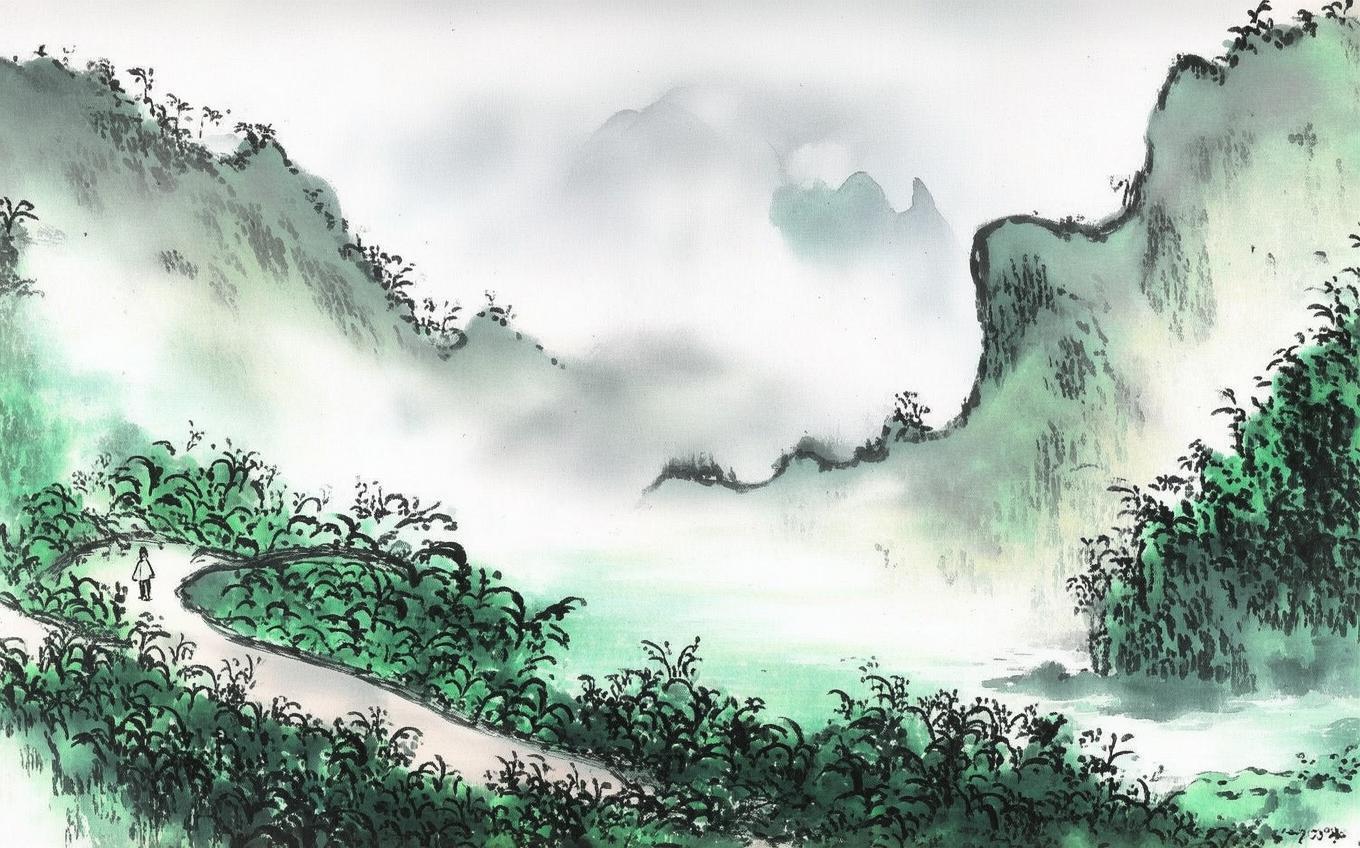
- Painterly Technique: Wang Wei uses shifting perspectives, mimicking ink-wash landscapes where emptiness (无, wú) holds meaning. -
"分野中峰变,阴晴众壑殊。"
- Cosmic Scale: The central peak "divides the starry fields," linking geography to ancient Chinese astrology.
- Yin-Yang Duality: The interplay of light/shadow across valleys mirrors the balance of opposites in Daoism. -
"欲投人处宿,隔水问樵夫。"
- Human Element: The solitary woodcutter represents harmony with nature. The poet’s distant call across water emphasizes the mountains' isolating yet serene beauty.
Themes and Symbolism
1. Nature as Sacred Space
- The Zhongnan Mountains embody the Daoist ideal of ziran (自然, "spontaneous naturalness"), where humans are minor figures in a grand, eternal landscape.
2. Illusion vs. Reality
- The vanishing mists and shifting clouds suggest the Buddhist concept of maya (illusion)—perception is unreliable, and truth lies beyond form.
3. Silence and Solitude
- The unanswered call to the woodcutter leaves the poem open-ended, inviting readers to contemplate the unspoken dialogue between humanity and nature.
Cultural Context
- Historical Significance: The Tang Dynasty (618–907 CE) was a golden age for poetry, where literati like Wang Wei often retreated to mountains to escape political turmoil.
- Philosophical Influence: The poem blends Daoist cosmology (mountains as cosmic pillars) with Chan (Zen) Buddhism’s emphasis on fleeting perceptions.
- Artistic Legacy: Wang Wei’s "word-painting" technique influenced later shanshui (山水, "mountain-water") poetry and ink paintings.
Conclusion
"终南山" is more than a description of a mountain—it is a meditation on perspective, transience, and humanity’s small but resonant place in the universe. Wang Wei’s genius lies in making the physical journey a metaphor for spiritual seeking.
For modern readers, the poem offers a timeless lesson: to truly see the world, we must embrace both its grandeur and its mysteries. Like the poet gazing at the Zhongnan peaks, we are reminded that some truths linger just beyond the mist, felt but never fully grasped.
"The clouds part, yet the mountain remains."

Comments (0)
No comments yet. Be the first to comment!