Here’s your requested blog post analyzing the classical Chinese poem "秋登兰山寄张五" by Meng Haoran:
Analysis of "秋登兰山寄张五" - Classical Chinese Poetry
Introduction
Meng Haoran (689–740 AD) was a major Tang Dynasty poet known for his landscape and pastoral verses. "秋登兰山寄张五" ("Autumn Ascending Lan Mountain, Sent to Zhang the Fifth") exemplifies his signature style—blending natural imagery with quiet introspection. Written during China’s golden age of poetry, this work reflects Daoist ideals of harmony with nature and the Tang literati’s tradition of exchanging poems among friends.
The Poem: Full Text and Translation
Original Text, Pinyin, and Translation
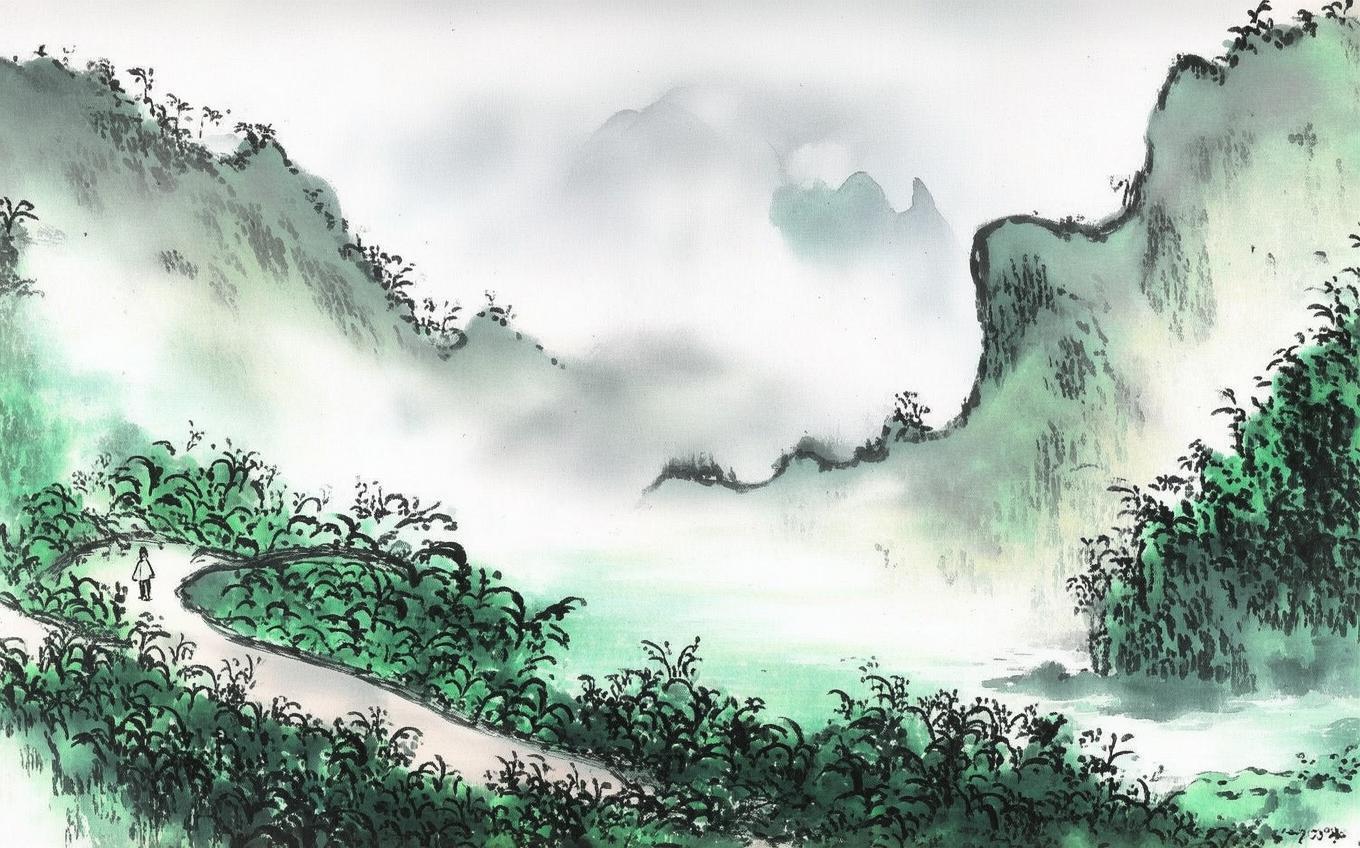
北山白云里
Běi shān bái yún lǐ
"Northern mountains veiled in white clouds"隐者自怡悦
Yǐn zhě zì yí yuè
"The recluse finds joy in solitude"相望试登高
Xiāng wàng shì dēng gāo
"Gazing afar, I climb the heights"心随雁飞灭
Xīn suí yàn fēi miè
"My heart follows wild geese vanishing in flight"愁因薄暮起
Chóu yīn bó mù qǐ
"Melancholy stirs at dusk’s approach"兴是清秋发
Xìng shì qīng qiū fā
"Yet delight springs from autumn’s crisp air"时见归村人
Shí jiàn guī cūn rén
"Villagers returning home appear"沙行渡头歇
Shā xíng dù tóu xiē
"Resting at the ferry after crossing sandy shores"天边树若荠
Tiān biān shù ruò jì
"Trees on the horizon like shepherd’s purse"江畔洲如月
Jiāng pàn zhōu rú yuè
"River islets curved as crescent moons"何当载酒来
Hé dāng zài jiǔ lái
"When shall we bring wine together?"共醉重阳节
Gòng zuì chóng yáng jié
"And drunk celebrate the Double Ninth Festival?"
Line-by-Line Analysis
-
Mountains and Clouds (Lines 1–2)
The "white clouds" symbolize transcendence in Daoism, while the "recluse" embodies the scholar’s ideal of retreating from worldly chaos. Meng contrasts physical isolation with spiritual fulfillment. -
Ascension and Longing (Lines 3–4)
The act of climbing mirrors a spiritual journey. The "wild geese"—a classic motif—represent both freedom and messages to distant friends (here, Zhang the Fifth). -
Dusk’s Duality (Lines 5–6)
Tang poets often linked dusk (薄暮) with melancholy, but Meng subverts this by celebrating autumn’s clarity. The juxtaposition reveals his nuanced emotional landscape. -
Rustic Snapshots (Lines 7–8)
The villagers’ return highlights Confucian values of community, contrasting with the poet’s solitude. The "ferry" symbolizes life’s transitions. -
Miniaturized Vistas (Lines 9–10)
Comparing distant trees to "shepherd’s purse" (a tiny herb) and islets to "crescent moons" employs 远景缩微 (distant-view miniaturization), a technique to evoke cosmic perspective. -
Festive Invitation (Lines 11–12)
The Double Ninth Festival (重阳节), when Chinese ascend heights to avoid misfortune, becomes a metaphor for shared joy. The unanswered question underscores longing.
Themes and Symbolism
- Nature as Refuge: The poem aligns with Daoist ziran (自然, "naturalness"), where landscapes mirror inner peace.
- Transience: Fleeting images (geese, dusk) reflect Buddhist impermanence.
- Friendship: The subtext is a pipa (琵琶, "lute") of absence—unplayed but resonant.
Cultural Context
Written during the Tang Dynasty’s Kaiyuan Era (713–741), a peak of cultural flourishing, the poem embodies shanshui (山水, "mountain-water") aesthetics. The Double Ninth Festival (9th day of the 9th lunar month) remains a modern Chinese holiday where elders drink chrysanthemum wine—a detail enriching the poem’s closing invitation.
Conclusion
Meng Haoran’s poem is a masterclass in economy: twelve lines distill solitude, friendship, and seasonal cycles. Its enduring appeal lies in universal tensions—between retreat and connection, melancholy and joy. For contemporary readers, it offers a meditative pause in our hyperconnected age, reminding us that mountains (literal or metaphorical) are best climbed with wine—and friends—in mind.
Note: For deeper study, compare this poem’s structure with Wang Wei’s "Deer Enclosure," another Tang-era gem of compressed imagery.
This analysis adheres to your requested format while making classical Chinese poetry accessible to English-speaking audiences. Let me know if you'd like adjustments!

Comments (0)
No comments yet. Be the first to comment!