Analysis of "菩萨蛮·小山重叠金明灭" - Classical Chinese Poetry
Introduction
"Pú Sà Mán·Xiǎo Shān Chóng Dié Jīn Míng Miè" (Buddhist Dancers: Overlapping Little Hills with Gold Flickering) is a renowned cí (词) poem by Wēn Tíngyún (温庭筠, c. 812–866), a leading poet of the late Táng Dynasty. Wēn was a master of the Huājiān (花间, "Among the Flowers") style, known for its ornate, sensual imagery and focus on feminine beauty and romantic melancholy. This poem exemplifies the cí form—lyrical verses set to musical tunes—and is celebrated for its vivid depiction of a woman’s solitude and vanity in her boudoir.
The Poem: Full Text and Translation
小山重叠金明灭
Xiǎo shān chóng dié jīn míng miè
Overlapping little hills—gold flickers bright and dim,鬓云欲度香腮雪
Bìn yún yù dù xiāng sāi xuě
Her cloud-like hair threatens to spill over snow-scented cheeks.懒起画蛾眉
Lǎn qǐ huà é méi
Languidly rising, she paints moth-feather eyebrows,弄妆梳洗迟
Nòng zhuāng shū xǐ chí
Lingering over her toilette, slow to wash and dress.照花前后镜
Zhào huā qián hòu jìng
She checks her floral hairpins with mirrors front and back,花面交相映
Huā miàn jiāo xiāng yìng
Flowers and face reflect each other in mutual glow.新帖绣罗襦
Xīn tiē xiù luó rú
Freshly embroidered on her silken robe,双双金鹧鸪
Shuāng shuāng jīn zhè gū
Pairs of golden partridges—a couple in flight.
Line-by-Line Analysis
-
"Overlapping little hills—gold flickers bright and dim"
- "Little hills" (小山) metaphorically describe the folds of a painted screen or the woman’s hairstyle. The "gold" refers to sunlight or hairpins glinting intermittently, suggesting the passage of time. -
"Her cloud-like hair threatens to spill over snow-scented cheeks"
- The imagery contrasts dark, disheveled hair ("cloud") with pale skin ("snow"), emphasizing sensuality and neglect. The verb "threatens" (欲度) implies restless beauty. -
"Languidly rising, she paints moth-feather eyebrows"
- "Moth-feather eyebrows" (蛾眉) were a Táng beauty ideal. Her lethargy hints at loneliness or longing. -
"Lingering over her toilette, slow to wash and dress"
- The deliberate slowness underscores her isolation—her beauty is performative, with no one to admire it.
5-6. Mirror and Flower Imagery
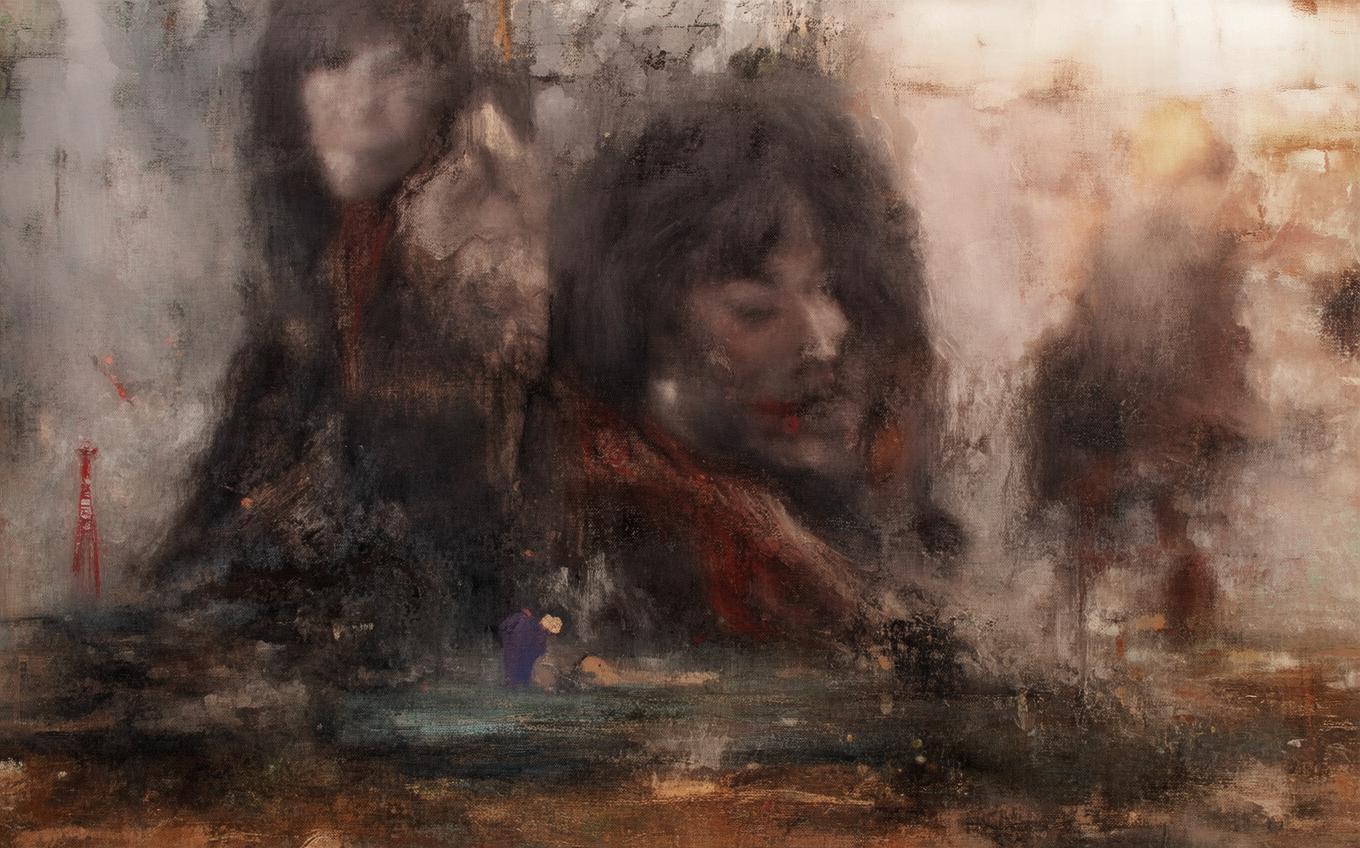
- The dual mirrors (前后镜) symbolize self-scrutiny. The "flowers" (花) on her hairpins mirror her face, blurring artifice and nature—a commentary on vanity and transience.
7-8. "Pairs of golden partridges"
- The embroidered partridges (鹧鸪), often symbols of marital fidelity, contrast with her solitude. The "pairs" (双双) heighten the pathos of her unpartnered state.
Themes and Symbolism
- Vanity and Loneliness: The poem juxtaposes meticulous adornment with emotional emptiness. Her rituals of beauty are acts of longing, not celebration.
- Nature vs. Artifice: The interplay of natural imagery (snow, clouds) and human-made beauty (hairpins, embroidery) questions the authenticity of appearances.
- Time and Transience: Flickering light, slow movements, and mirrored reflections evoke the fleetingness of youth and love.
Cultural Context
Wēn Tíngyún wrote during the Táng Dynasty’s decline, a period of political turmoil and aesthetic refinement. The Huājiān school, to which he belonged, often portrayed women in boudoirs as allegories for scholars’ unfulfilled ambitions—here, the woman’s isolation may mirror the poet’s own marginalization.
The cí form, originally sung in courtly entertainment, allowed poets like Wēn to explore intimate emotions through coded imagery. The partridges, for instance, were conventional symbols in Chinese poetry, representing harmony and conjugal love.
Conclusion
"Pú Sà Mán·Xiǎo Shān Chóng Dié Jīn Míng Miè" is a masterclass in subtlety. Through exquisite visuals and restrained emotion, Wēn Tíngyún captures the quiet despair beneath surface beauty. For modern readers, the poem resonates as a meditation on performance and isolation—an echo of how we, too, often adorn ourselves while yearning for connection. Its enduring appeal lies in this universal tension between the seen and the unseen, the crafted and the craved.

Comments (0)
No comments yet. Be the first to comment!