Analysis of "梧桐雨·醉中天" - Classical Chinese Poetry
Introduction
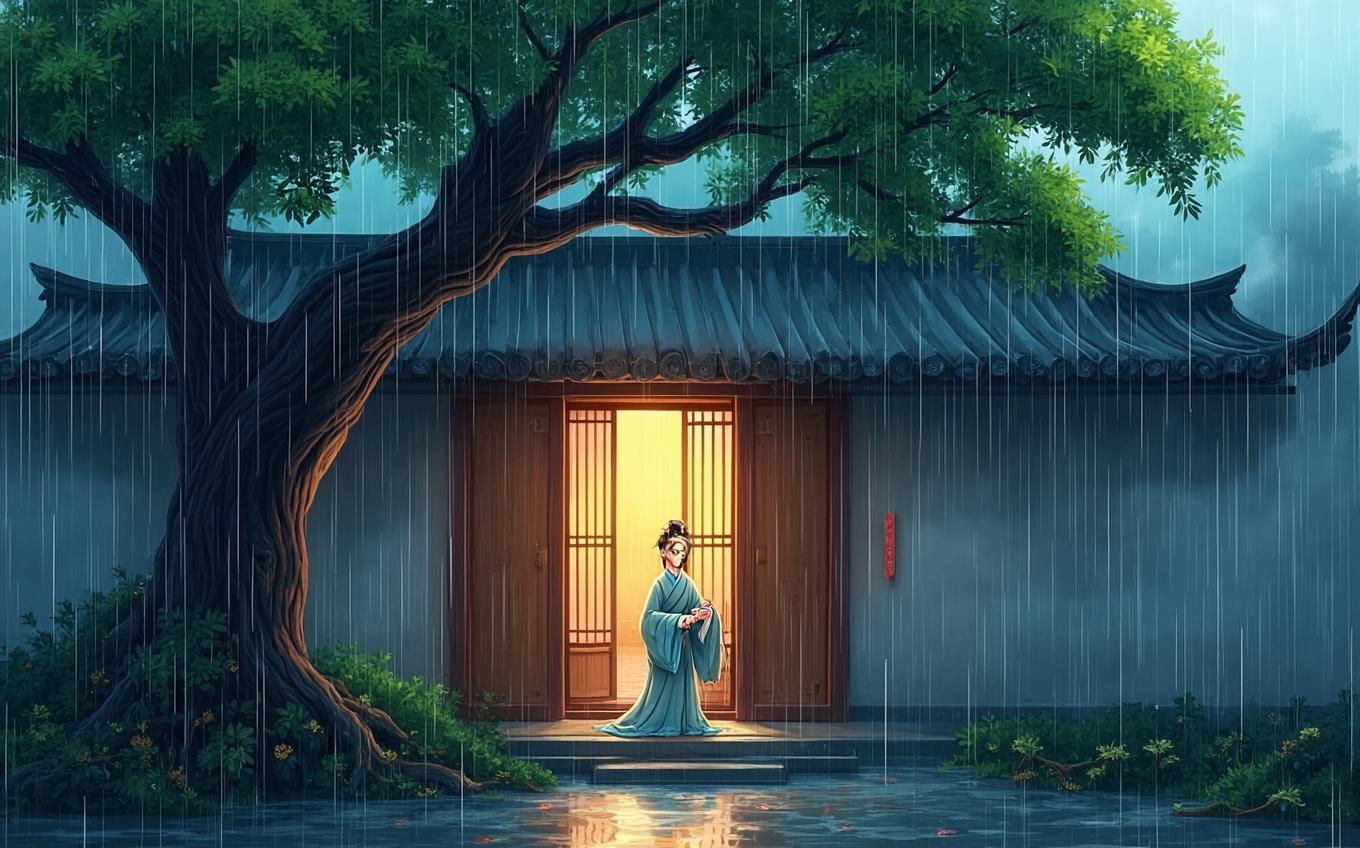
The poem "梧桐雨·醉中天" (Wútóng Yǔ·Zuì Zhōng Tiān) is a famous sanqu (散曲), a type of lyrical poetry from the Yuan Dynasty (1271–1368). It was written by Bai Pu (白朴), one of the "Four Great Yuan Playwrights." The poem blends melancholy imagery with themes of love and loss, set against the backdrop of autumn rain falling on wutong (Chinese parasol) trees.
In Chinese culture, the wutong tree is often associated with loneliness and sorrow, as its leaves rustle mournfully in the wind. The poem captures a moment of drunken introspection, where the speaker reflects on fleeting beauty and heartache.
The Poem: Full Text and Translation
梧桐雨·醉中天
Wútóng Yǔ·Zuì Zhōng Tiān
Parasol Trees in Rain – Drunk in Heaven梧桐一叶秋
Wútóng yī yè qiū
A single leaf falls—autumn is here,砧杵千家月
Zhēn chǔ qiān jiā yuè
Under the moon, pestles pound in a thousand homes,愁多梦不成
Chóu duō mèng bù chéng
Too much sorrow—dreams won’t come,何处相思苦
Hé chù xiāngsī kǔ
Where does love’s bitterness dwell?纱窗风雨黄昏后
Shā chuāng fēngyǔ huánghūn hòu
Behind gauze windows, wind and rain after dusk.
Line-by-Line Analysis
-
"A single leaf falls—autumn is here"
- The falling wutong leaf symbolizes the inevitability of time and decay. In Chinese poetry, autumn often represents decline and nostalgia. -
"Under the moon, pestles pound in a thousand homes"
- The sound of pestles (used in cloth-making) suggests domestic labor, contrasting with the speaker’s solitude. The moon enhances the melancholic mood. -
"Too much sorrow—dreams won’t come"
- The speaker’s grief is so deep that even sleep offers no escape. This reflects a common theme in classical poetry: heartache disrupting peace. -
"Where does love’s bitterness dwell?"
- A rhetorical question, emphasizing the universality of longing. The speaker searches for the source of suffering but finds no answer. -
"Behind gauze windows, wind and rain after dusk."
- The imagery of rain against gauze windows evokes a sense of isolation. Dusk (黄昏) is a liminal time, heightening the feeling of uncertainty.
Themes and Symbolism
- Transience and Sorrow: The falling leaf and autumn rain symbolize life’s fleeting nature.
- Unfulfilled Longing: The speaker’s insomnia and questioning reflect unresolved love or loss.
- Nature as a Mirror: The wutong tree and rain externalize inner sadness, a common technique in Chinese poetry.
Cultural Context
During the Yuan Dynasty, sanqu poetry was often performed in musical settings, blending folk and literary traditions. Bai Pu’s work reflects the Confucian and Daoist influences of his time—accepting life’s impermanence while lamenting its hardships.
The wutong tree appears in many Tang and Yuan poems as a symbol of loneliness, partly due to its association with the tragic love story of Emperor Xuanzong and Yang Guifei.
Conclusion
"梧桐雨·醉中天" is a masterpiece of emotional depth, using simple yet powerful imagery to convey universal human experiences. Its themes of love, loss, and the passage of time remain deeply relatable today. For readers exploring Chinese poetry, this piece offers a window into the introspective beauty of Yuan Dynasty literature.
"Behind gauze windows, the rain still falls—just as heartache endures across centuries."

Comments (0)
No comments yet. Be the first to comment!