Analysis of "次北固山下" - Classical Chinese Poetry
Introduction
"次北固山下" (Cì Běi Gù Shān Xià, Mooring Under North Fort Hill) is a famous poem by the Tang Dynasty poet Wang Wan (王湾). Written during the early 8th century, it captures the beauty of nature and the poet’s reflections on travel, time, and the vastness of the world. The poem is celebrated for its vivid imagery, philosophical depth, and elegant simplicity, making it a classic example of Tang Dynasty poetry.
The Poem: Full Text and Translation
客路青山外,行舟绿水前。
Kè lù qīng shān wài, xíng zhōu lǜ shuǐ qián.
My journey leads past green hills, my boat moves along blue waters.潮平两岸阔,风正一帆悬。
Cháo píng liǎng àn kuò, fēng zhèng yī fān xuán.
The tide swells, widening the shores; the wind fills a solitary sail.海日生残夜,江春入旧年。
Hǎi rì shēng cán yè, jiāng chūn rù jiù nián.
The sea sun rises from the fading night; river spring enters the departing year.乡书何处达?归雁洛阳边。
Xiāng shū hé chù dá? Guī yàn Luòyáng biān.
Where can I send word home? The returning wild geese fly toward Luoyang.
Line-by-Line Analysis
-
"客路青山外,行舟绿水前。"
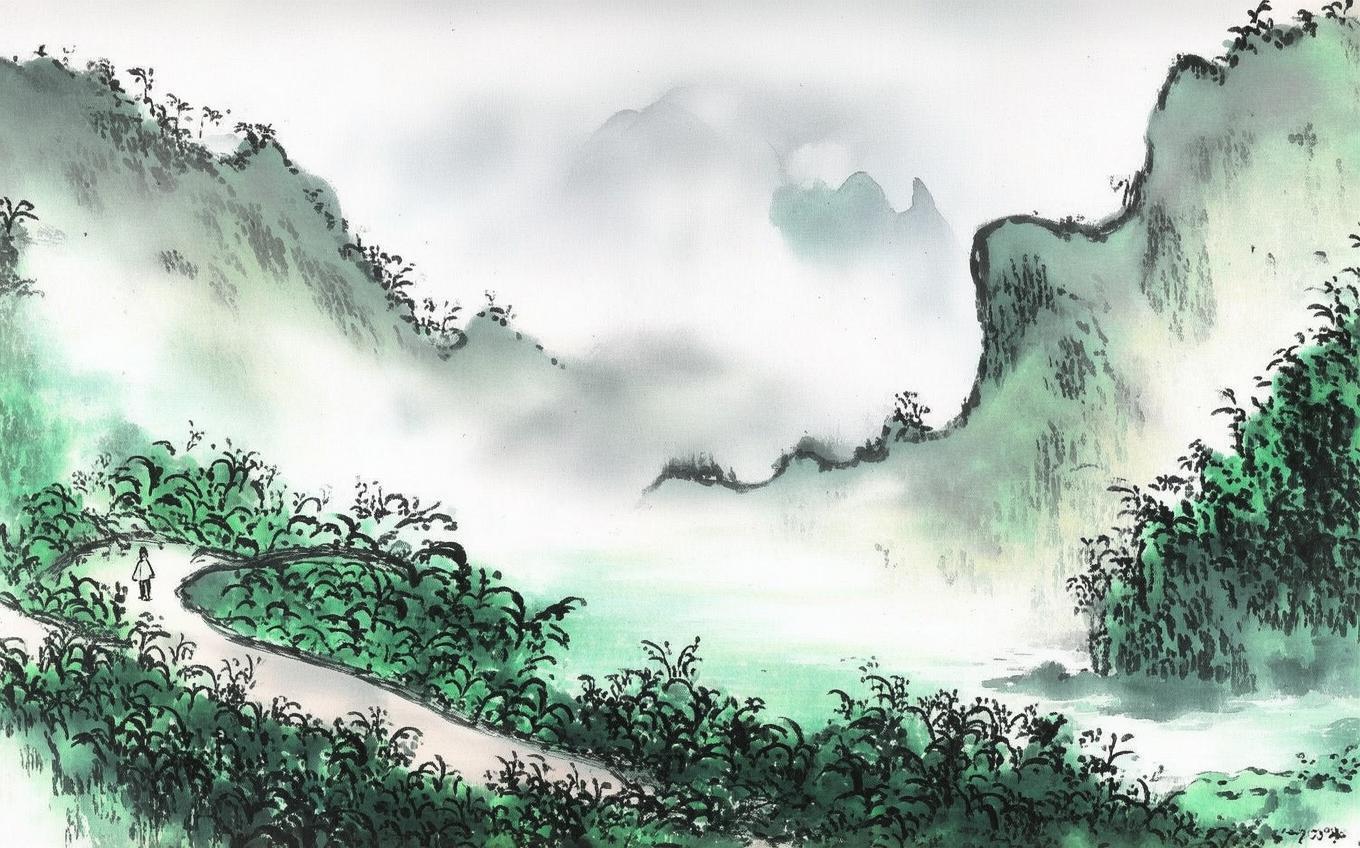
The poem opens with the poet traveling—his path stretching beyond green mountains, his boat gliding on emerald waters. The contrast between "green hills" and "blue waters" paints a serene yet expansive landscape, setting the tone for a journey both physical and introspective. -
"潮平两岸阔,风正一帆悬。"
The rising tide broadens the riverbanks, symbolizing openness and possibility. The "solitary sail" suggests the poet’s solitude, yet the "proper wind" implies favorable conditions—perhaps hope amid uncertainty. -
"海日生残夜,江春入旧年。"
This couplet is one of the most celebrated in Chinese poetry. The "sea sun" rising from the remnants of night symbolizes renewal, while "river spring" entering the old year represents the unstoppable passage of time and the inevitability of change. -
"乡书何处达?归雁洛阳边。"
The poet longs to send a letter home but must rely on wild geese—a traditional symbol of messengers in Chinese culture—to carry his thoughts to Luoyang. This ending evokes nostalgia and the universal human desire for connection.
Themes and Symbolism
- Journey and Solitude: The poem reflects the life of a traveler, a common theme in Tang poetry, where movement mirrors life’s transience.
- Nature’s Cycles: The imagery of dawn and spring symbolizes renewal, suggesting optimism amid change.
- Longing for Home: The final lines reveal the poet’s homesickness, a sentiment deeply rooted in Chinese culture, where family and homeland hold great importance.
Key symbols:
- Wild Geese: Messengers bridging distance, embodying hope and communication.
- Solitary Sail: Represents both freedom and isolation.
Cultural Context
Written during the Tang Dynasty (618–907), a golden age of Chinese poetry, this poem exemplifies the era’s appreciation for nature’s beauty and philosophical reflection. The reference to Luoyang—a major cultural and political center—highlights the poet’s connection to urban life despite being surrounded by nature.
The poem also reflects Daoist and Confucian ideals: harmony with nature (Daoism) and the importance of familial ties (Confucianism).
Conclusion
"次北固山下" is a masterpiece of economy and depth, using simple yet profound imagery to convey timeless themes of travel, change, and longing. Its beauty lies in its ability to merge the personal with the universal—capturing a moment in nature while speaking to the human condition. Today, it remains a poignant reminder of how art can bridge distances, whether across rivers or centuries.
For readers exploring Chinese poetry, this poem offers a perfect entry point: a quiet meditation on life’s journey, as relevant now as it was over a thousand years ago.

Comments (0)
No comments yet. Be the first to comment!