
Analysis of "鸟鸣涧" - Classical Chinese Poetry
Introduction
"鸟鸣涧" (Niǎo Míng Jiàn, "Birds Singing in the Valley") is a famous five-character quatrain by Wang Wei (王维, 699–759), a renowned poet and painter of the Tang Dynasty. Known as the "Poet Buddha" for his Zen-inspired works, Wang Wei excelled in depicting serene landscapes and blending nature with meditative stillness. This poem is part of his Wang River Collection (辋川集), a series of works celebrating the tranquility of his countryside retreat.
"鸟鸣涧" is celebrated for its minimalist beauty and profound sense of peace, embodying the Taoist and Buddhist ideals of harmony with nature. It remains one of the most iconic examples of Chinese landscape poetry.
The Poem: Full Text and Translation
人闲桂花落
Rén xián guìhuā luò
At leisure, osmanthus blossoms fall夜静春山空
Yè jìng chūn shān kōng
Night still, spring mountain empty月出惊山鸟
Yuè chū jīng shān niǎo
Moonrise startles mountain birds时鸣春涧中
Shí míng chūn jiàn zhōng
Their cries pierce the spring ravine
Line-by-Line Analysis
-
"人闲桂花落" (At leisure, osmanthus blossoms fall)
- The opening line sets a tone of quietude. "At leisure" suggests a meditative state, where the poet is so still that he notices the faint fall of osmanthus flowers—a delicate detail often overlooked. -
"夜静春山空" (Night still, spring mountain empty)
- The poet amplifies the silence: the night is so calm that the mountain feels "empty," a word (kōng, 空) that also carries Buddhist connotations of emptiness and detachment. -
"月出惊山鸟" (Moonrise startles mountain birds)
- A sudden contrast: the bright moon emerging breaks the stillness, startling birds. The "startle" (jīng, 惊) is fleeting, emphasizing nature's gentle dynamism. -
"时鸣春涧中" (Their cries pierce the spring ravine)
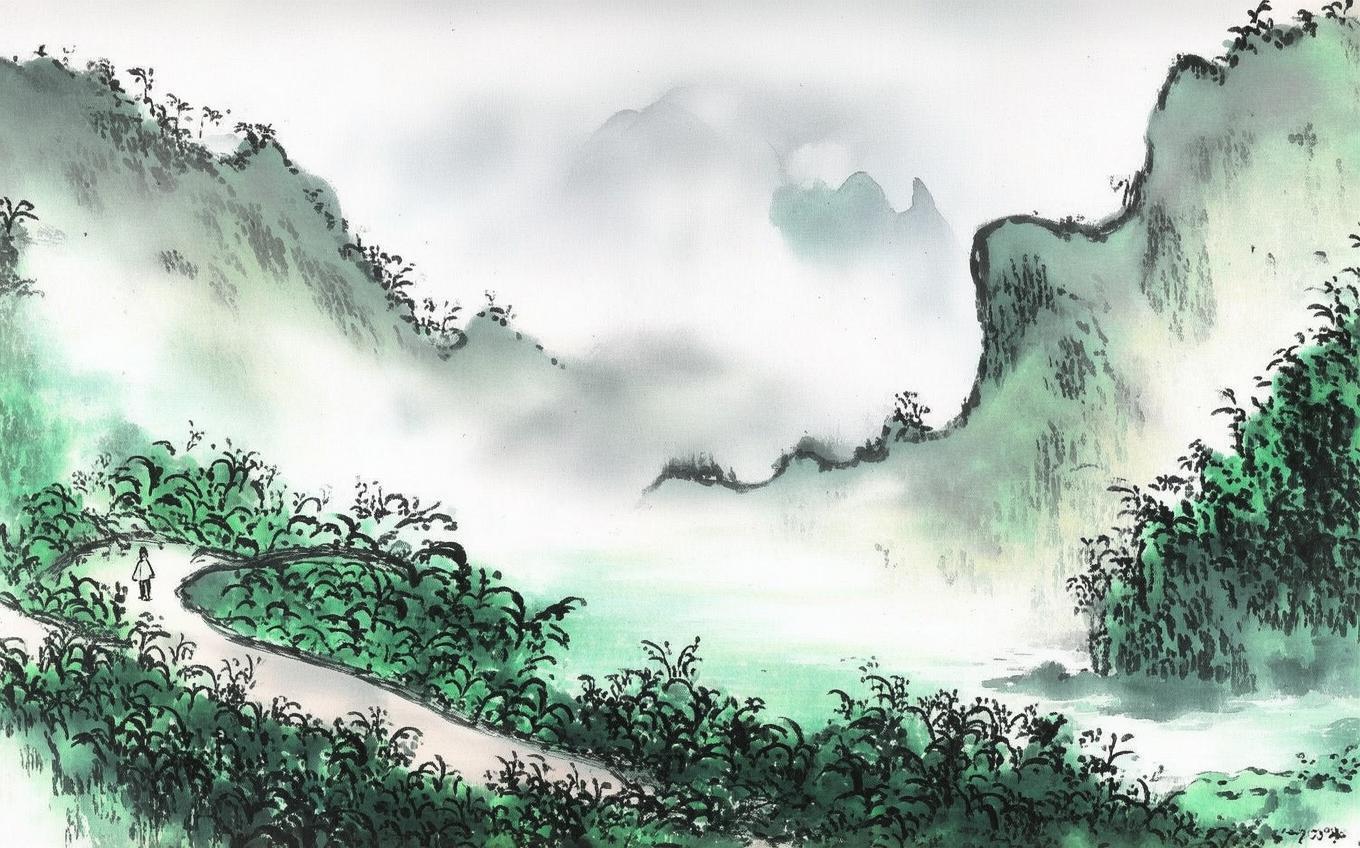
- The birds' intermittent calls (míng, 鸣) don’t disrupt the peace but deepen it, creating a soundscape that highlights the valley's vast quiet.
Themes and Symbolism
-
Harmony Between Humans and Nature
- The poem reflects Wang Wei’s belief in unity with the natural world. The poet’s "leisure" mirrors the mountain’s stillness, suggesting a spiritual alignment. -
The Beauty of Transience
- Falling blossoms, startled birds—these ephemeral moments capture the Taoist idea of wuwei (无为, effortless action) and the Buddhist appreciation for impermanence. -
Silence and Sound
- The contrast between silence ("夜静") and the birds’ cries creates a yīn-yáng balance, showing how sound enhances the perception of quiet.
Cultural Context
Wang Wei wrote this during the Tang Dynasty’s golden age of poetry, a period when landscape poetry (shanshui shi, 山水诗) flourished. His works often reflect Chan (Zen) Buddhism and Taoism, valuing simplicity and inner peace.
The "osmanthus" (桂花) is culturally significant—it symbolizes autumn in China, but here, its presence in spring hints at timelessness. The "mountain" (山) is a classic motif representing solitude and spiritual elevation.
Conclusion
"鸟鸣涧" is a masterpiece of understatement, where every word carries weight. Its depiction of stillness—interrupted yet deepened by nature’s whispers—resonates across cultures, offering a timeless meditation on presence and peace.
In today’s fast-paced world, Wang Wei’s poem reminds us to pause, listen, and find harmony in the quiet moments—an enduring lesson from Tang Dynasty China.

Comments (0)
No comments yet. Be the first to comment!