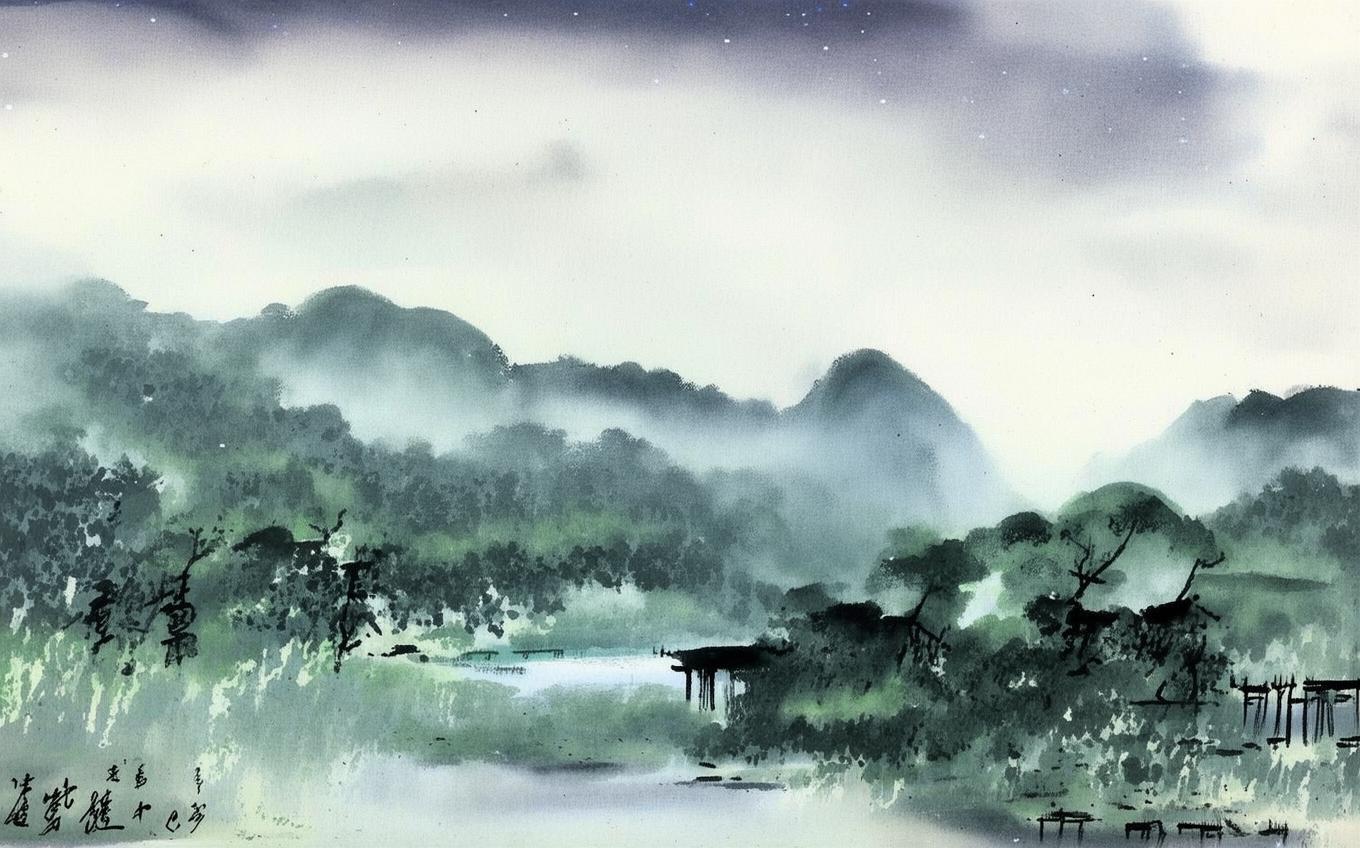
Analysis of "春夜喜雨" - Classical Chinese Poetry
Introduction
The poem "春夜喜雨" ("Joyful Rain on a Spring Night") was written by Du Fu (杜甫, 712–770), one of China's greatest poets from the Tang Dynasty. Known as the "Poet Sage," Du Fu's works often reflect deep empathy for common people and a profound connection to nature. This poem celebrates the life-giving spring rain, symbolizing hope and renewal. It is revered for its vivid imagery and emotional depth, embodying the Confucian ideal of harmony between humans and nature.
The Poem: Full Text and Translation
Original Text and Translation
好雨知时节
Hǎo yǔ zhī shíjié
The good rain knows when to fall,当春乃发生
Dāng chūn nǎi fāshēng
Coming just as spring awakens.随风潜入夜
Suí fēng qián rù yè
Drifting with the wind, it steals into the night,润物细无声
Rùn wù xì wú shēng
Moistening all things, soft and quiet.野径云俱黑
Yě jìng yún jù hēi
Country paths and clouds merge into darkness,江船火独明
Jiāng chuán huǒ dú míng
Only a boat's lantern glows on the river.晓看红湿处
Xiǎo kàn hóng shī chù
At dawn, see the reds drenched in rain—花重锦官城
Huā zhòng jǐnguān chéng
Flowers bow heavy over Brocade City.
Line-by-Line Analysis
-
"The good rain knows when to fall"
- Personifies rain as "knowing" the right time, reflecting Daoist reverence for nature's wisdom. -
"Coming just as spring awakens"
- Spring symbolizes rebirth; the rain nurtures life at the perfect moment. -
"Drifting with the wind, it steals into the night"
- The rain is gentle and unobtrusive, embodying humility (a Confucian virtue). -
"Moistening all things, soft and quiet"
- Contrasts with storms; the rain acts without fanfare, like a benevolent ruler. -
"Country paths and clouds merge into darkness"
- Paints a tranquil, unified scene—nature and humanity in harmony. -
"Only a boat's lantern glows on the river"
- A single light in darkness hints at solitude but also warmth and resilience.
7-8. "At dawn, see the reds drenched in rain— / Flowers bow heavy over Brocade City"
- "Brocade City" (Chengdu) blooms under the rain’s care, a metaphor for prosperity through nurture.
Themes and Symbolism
- Nature’s Benevolence: The rain is a life-giver, aligning with Daoist and agrarian values.
- Subtlety and Humility: The quiet rain mirrors Confucian ideals of gentle governance.
- Renewal: Spring and rain together symbolize cyclical hope, a core theme in Chinese poetry.
Cultural Context
Written during Du Fu’s exile in Chengdu (760 AD), the poem reflects his gratitude for simple blessings amid hardship. The Tang Dynasty prized 天人合一 (harmony between heaven and humanity), which this poem exemplifies. "Brocade City" references Chengdu’s silk industry, tying nature’s gifts to human prosperity.
Conclusion
"春夜喜雨" captures the quiet joy of nature’s generosity. Its enduring appeal lies in its universal message: growth comes from patience and unseen care. For modern readers, it’s a reminder to cherish small, nurturing moments—a lesson as vital today as in Du Fu’s time.
Note: Brocade City (锦官城) was an ancient nickname for Chengdu, famed for its silk production.

Comments (0)
No comments yet. Be the first to comment!