
Analysis of "送友人" - Classical Chinese Poetry
Introduction
"送友人" (Sòng Yǒurén, "Farewell to a Friend") is one of the most famous farewell poems by Li Bai (李白, 701–762), the celebrated Tang Dynasty poet known as the "Immortal Poet" for his romantic and exuberant style. Written during China's golden age of poetry, this work exemplifies the deep cultural significance of friendship and parting in Chinese society. The poem masterfully blends natural imagery with human emotion, creating a timeless expression of melancholy separation that continues to resonate with readers today.
The Poem: Full Text and Translation
青山横北郭
Qīng shān héng běi guō
Blue mountains bar the northern sky白水绕东城
Bái shuǐ rào dōng chéng
White river girds the eastern town此地一为别
Cǐ dì yī wéi bié
Here is the place to say goodbye孤蓬万里征
Gū péng wàn lǐ zhēng
You'll drift like lonely thistledown浮云游子意
Fú yún yóu zǐ yì
With floating cloud you'll float away落日故人情
Luò rì gù rén qíng
Like parting day I'll fade away挥手自兹去
Huī shǒu zì zī qù
We wave and you start on your way萧萧班马鸣
Xiāo xiāo bān mǎ míng
Your horse still neighs, "Adieu, adieu"
(Translation by Xu Yuanchong, adapted for rhythm)
Line-by-Line Analysis
Opening Couplet (Lines 1-2):
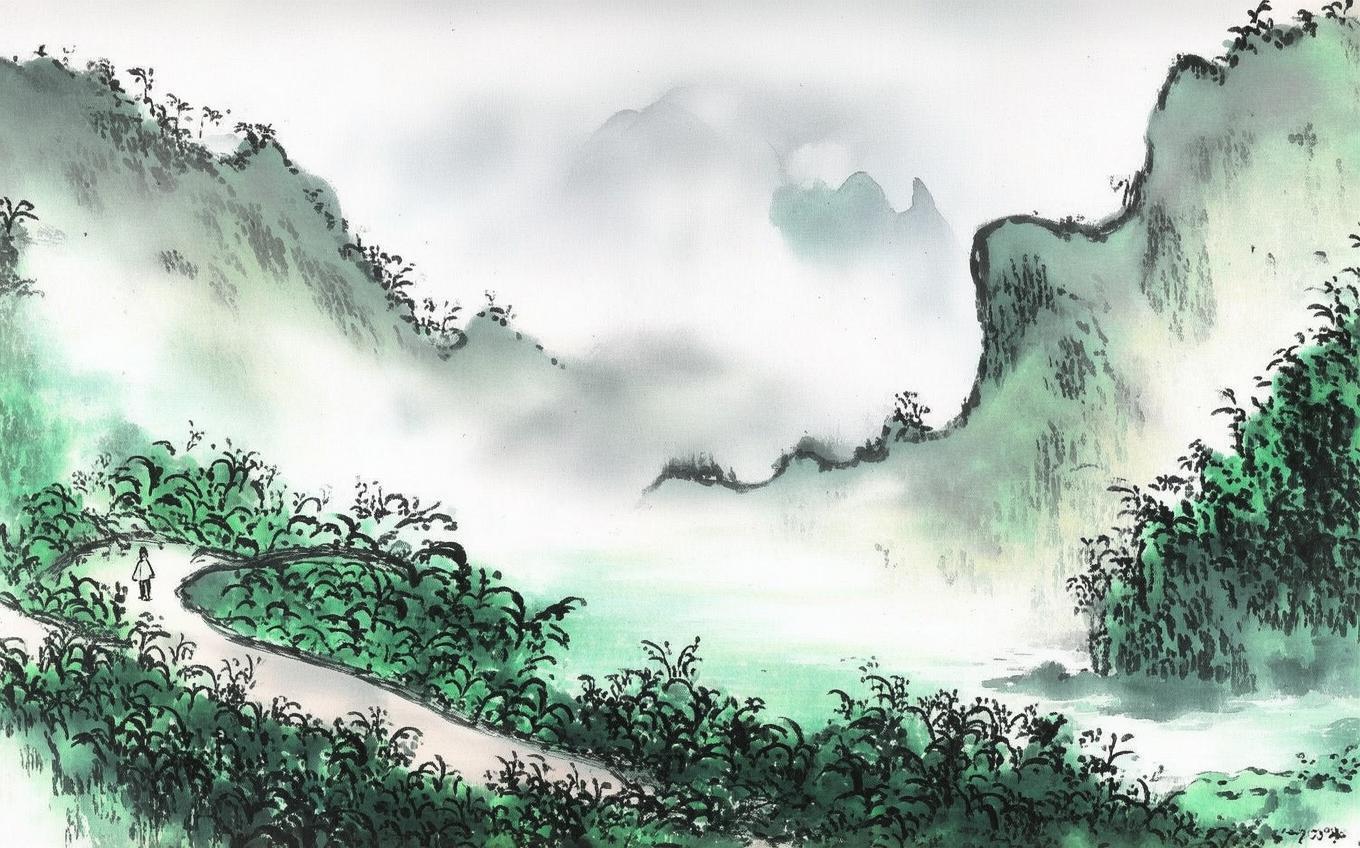
The poem begins with striking visual imagery - the "blue mountains" and "white river" form a natural frame around the city where the parting occurs. The horizontal mountains and winding river create a sense of both stability and movement, mirroring the friends' situation.
Separation Imagery (Lines 3-4):
The poet compares his friend to a "lonely thistledown" (孤蓬), a powerful metaphor suggesting both the lightness of travel and the vulnerability of solitude. The "ten thousand li journey" emphasizes the vast distance about to separate them.
Emotional Metaphors (Lines 5-6):
These lines contain two of Chinese poetry's most famous comparative images. The wandering friend is like floating clouds (游子意), free yet rootless, while the remaining poet compares himself to the setting sun (故人情), his affection lingering like twilight.
Final Parting (Lines 7-8):
The actual moment of departure comes with heartbreaking simplicity. The neighing horse (班马鸣) adds auditory impact to the visual scene, as even animals seem to lament the separation. This was a common poetic device - horses often symbolized the pain of parting.
Themes and Symbolism
Nature's Permanence vs. Human Transience:
The contrasting natural images (mountains/river vs. floating clouds/setting sun) highlight how nature remains while humans must part. This reflects Daoist concepts of constant change (易 yì).
The Wanderer Motif:
The "floating cloud" imagery connects to the Chinese literary tradition of 游子 (yóuzǐ, wandering son) figures, representing both freedom and rootlessness.
Silent Emotion:
Typical of Chinese poetry, deep feelings are expressed through nature rather than direct statement. The poem's power comes from what remains unspoken between the lines.
Cultural Context
Written during the Tang Dynasty (618-907 CE), when poetry was both art and social currency, "送友人" reflects several key Chinese cultural values:
-
Friendship Ideals: In Confucian tradition, friendship was one of the "five cardinal relationships." Parting poems (送别诗) were a respected literary genre.
-
Journey Symbolism: Ancient China's vast distances made travel dangerous and separations potentially permanent. Poems often served as emotional keepsakes.
-
Nature as Mirror: The poem exemplifies 借景抒情 (jiè jǐng shū qíng), using scenery to express emotion - a hallmark of Chinese aesthetics.
-
Horse Symbolism: The neighing horse recalls classical references like "The Book of Songs," where horses often represented separation anxiety.
Conclusion
Li Bai's "送友人" transforms a personal farewell into universal art through its exquisite balance of natural imagery and human emotion. The poem's enduring appeal lies in its ability to convey profound sadness without sentimentality, using the landscape as both setting and emotional barometer.
For modern readers, the work offers a window into traditional Chinese concepts of friendship, the philosophical acceptance of life's impermanence, and the profound artistic achievement of Tang poetry. Its images of floating clouds and setting sun continue to speak across centuries and cultures about the bittersweet nature of parting - a feeling as relevant today as in eighth-century China.
As we read these lines, we join the unbroken chain of readers who have found comfort in Li Bai's words when facing their own goodbyes, proving how great poetry transforms private emotion into shared human experience.


Comments (0)
No comments yet. Be the first to comment!