Understanding "杂乱" - Chinese Word Explanation
1. Basic Information
- Word: 杂乱
- Pinyin: zá luàn
- Literal Meaning: "Mixed and disorderly"
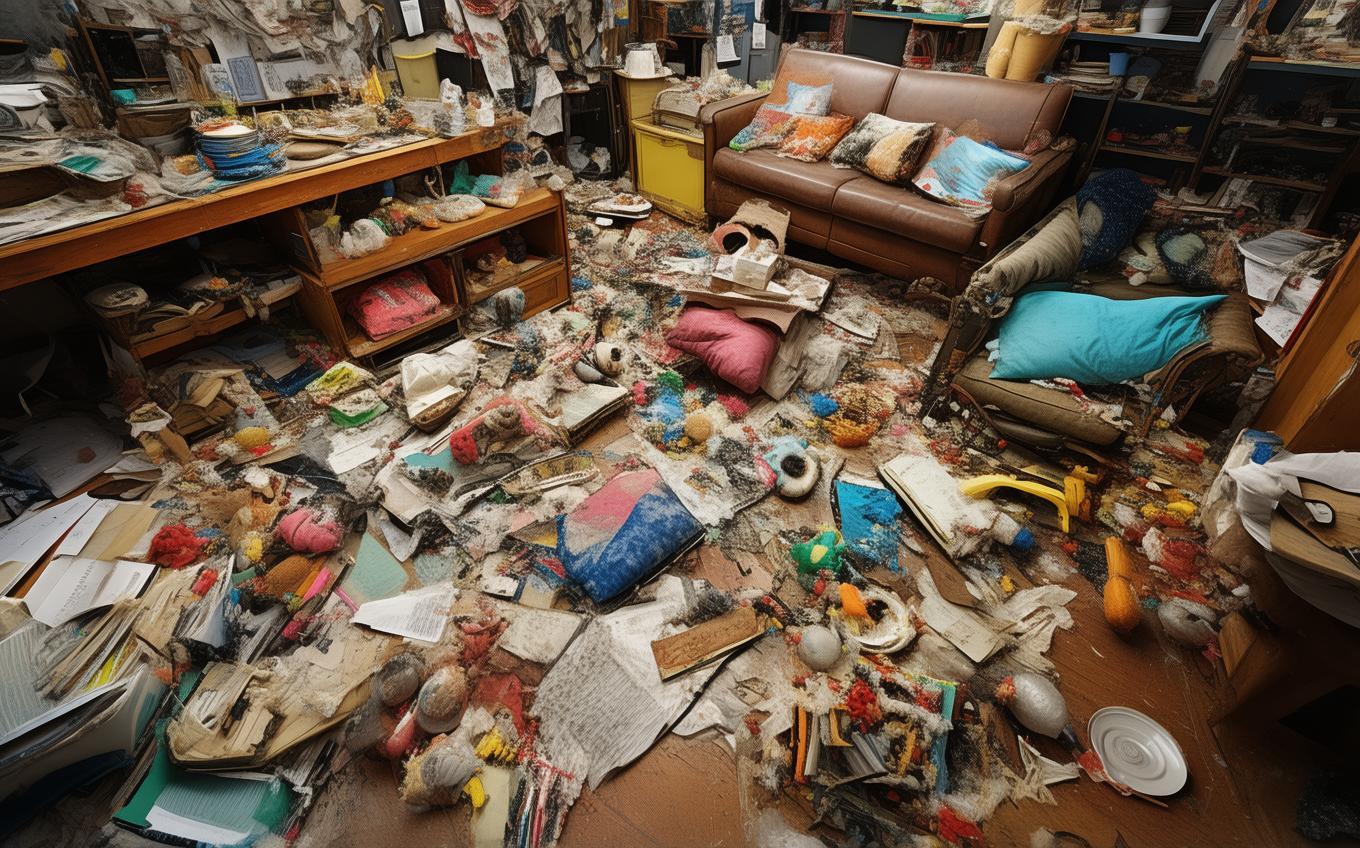
- Primary Meaning: Messy, chaotic, or disorganized; describes a state where things are in disorder or lack proper arrangement.
2. In-depth Explanation
- Context and Usage:
- "杂乱" is used to describe physical spaces (e.g., a messy room), abstract concepts (e.g., chaotic thoughts), or situations (e.g., a disorganized event).
- It carries a slightly negative connotation, implying that the disorder is undesirable or needs to be fixed.
-
Often paired with words like "无章" (wú zhāng, "without order") to emphasize chaos, e.g., "杂乱无章" (extremely disorderly).
-
Character Breakdown:
- 杂 (zá): Means "mixed," "varied," or "miscellaneous."
- 乱 (luàn): Means "disorder," "chaos," or "confusion."
- Together, they reinforce the idea of a disordered mix.
3. Example Sentences
-
Chinese: 他的房间非常杂乱。
Pinyin: Tā de fángjiān fēicháng zá luàn.
English: His room is very messy. -
Chinese: 这篇文章的内容太杂乱了,很难理解。
Pinyin: Zhè piān wénzhāng de nèiróng tài zá luàn le, hěn nán lǐjiě.
English: The content of this article is too disorganized; it's hard to understand. -
Chinese: 桌子上堆满了杂乱的纸张。
Pinyin: Zhuōzi shàng duī mǎn le zá luàn de zhǐzhāng.
English: The desk is piled with messy papers.
Cultural Notes
- In Chinese culture, maintaining order and harmony (和谐, héxié) is highly valued, so "杂乱" often implies a need for improvement.
- Feng Shui (风水) principles emphasize avoiding clutter ("杂乱") to promote positive energy flow (气, qì).
Conclusion
"杂乱" (zá luàn) describes a messy or chaotic state, whether physical or abstract. Remember it by breaking it down: "杂" (mixed) + "乱" (disorder) = disorderly mix. Use it to critique clutter or confusion in daily life!


Comments (0)
No comments yet. Be the first to comment!