Analysis of "赤壁" - Classical Chinese Poetry
Introduction
The poem "Chì Bì" (赤壁) is one of the most famous works by Du Mu (杜牧), a celebrated poet of the late Tang Dynasty (803–852 AD). Known for his lyrical and reflective style, Du Mu often wrote about historical events with a sense of melancholy and philosophical depth.
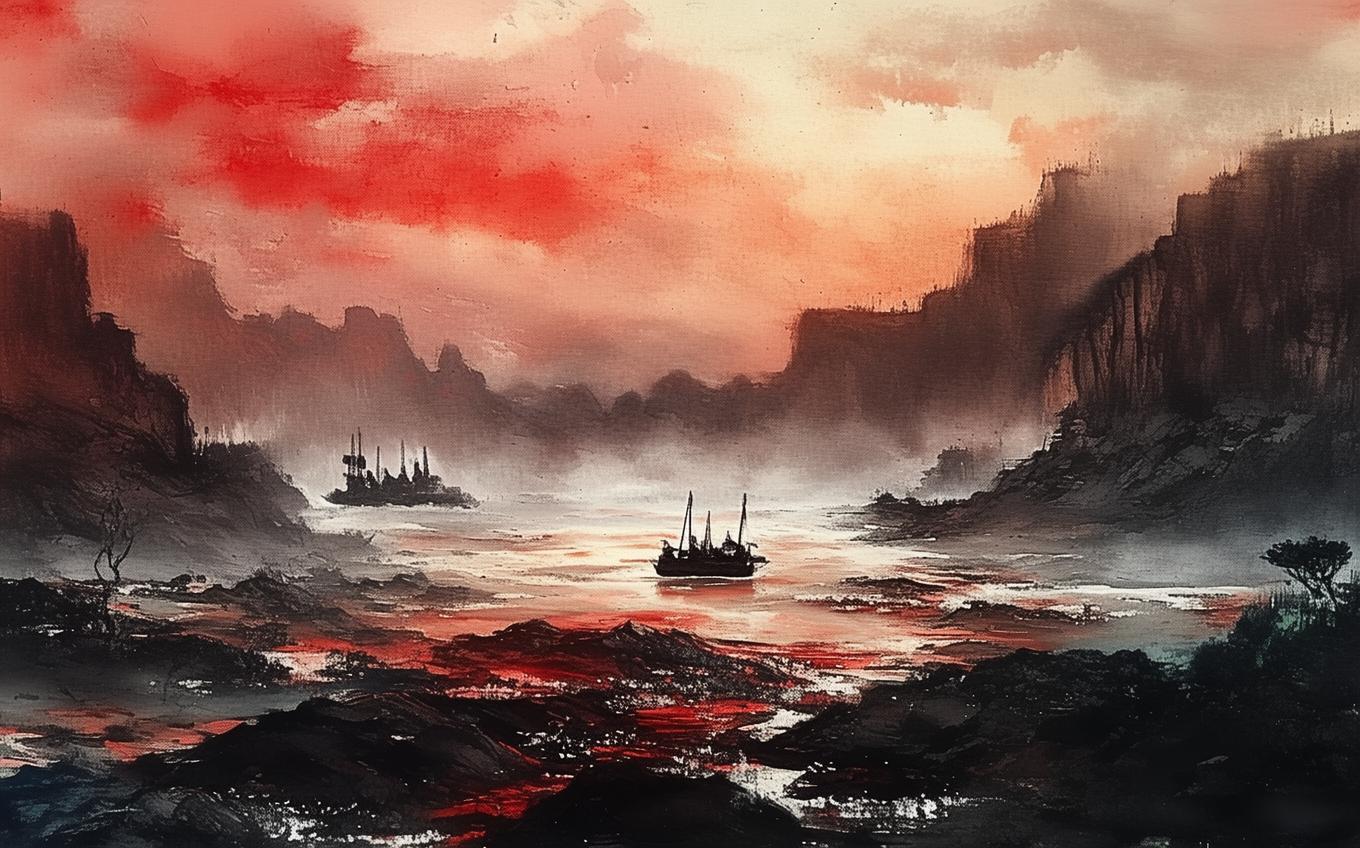
This poem reflects on the Battle of Red Cliffs (赤壁之战), a pivotal conflict in 208 AD during the Three Kingdoms period, where the allied forces of Liu Bei and Sun Quan defeated the much larger army of Cao Cao. Rather than glorifying the battle, Du Mu takes a contemplative approach, questioning the role of fate and human endeavor in history.
The Poem: Full Text and Translation
折戟沉沙铁未销
zhé jǐ chén shā tiě wèi xiāo
A broken halberd lies buried in the sand, its iron not yet rusted away.自将磨洗认前朝
zì jiāng mó xǐ rèn qián cháo
I pick it up, clean and polish it—traces of an ancient dynasty remain.东风不与周郎便
dōng fēng bù yǔ Zhōu Láng biàn
Had the east wind not favored Zhou Yu’s strategy,铜雀春深锁二乔
tóng què chūn shēn suǒ èr Qiáo
The Qiao sisters would be locked in Cao’s Bronze Bird Tower in spring’s depth.
Line-by-Line Analysis
-
"A broken halberd lies buried in the sand, its iron not yet rusted away."
- The poem begins with an image of a halberd (戟), a weapon from the ancient battle, half-buried in the sand. The fact that it hasn’t fully corroded suggests that history’s remnants still linger. -
"I pick it up, clean and polish it—traces of an ancient dynasty remain."
- The poet engages with the past by physically handling the artifact, symbolizing how history is preserved and interpreted through memory. -
"Had the east wind not favored Zhou Yu’s strategy..."
- This refers to the legendary east wind that helped Zhou Yu (a general of Wu) set fire to Cao Cao’s fleet. The line suggests that victory was not just due to skill but also luck. -
"The Qiao sisters would be locked in Cao’s Bronze Bird Tower in spring’s depth."
- The Qiao sisters were famous beauties married to Sun Ce and Zhou Yu. The Bronze Bird Tower was Cao Cao’s palace, implying that if the battle had been lost, they would have been taken as captives.
Themes and Symbolism
- Fate vs. Human Effort: The poem questions whether history is shaped by human decisions or sheer chance (e.g., the east wind).
- Transience of Glory: The broken halberd symbolizes how even great battles fade into relics.
- Irony and Hypotheticals: The last two lines imagine an alternate history, emphasizing how fragile historical outcomes can be.
Cultural Context
- Three Kingdoms Lore: The Battle of Red Cliffs is a legendary event in Chinese history, romanticized in literature like "Romance of the Three Kingdoms."
- Tang Dynasty Reflection: Du Mu, living in a declining empire, often wrote about the past to critique his own time. His poems blend historical nostalgia with philosophical doubt.
- Chinese View of History: Unlike Western epics that glorify heroes, Chinese poetry often emphasizes the cyclical, unpredictable nature of fate.
Conclusion
Du Mu’s "Chì Bì" is a masterful reflection on history’s uncertainties. Instead of celebrating victory, it asks: What if things had gone differently? The poem’s beauty lies in its quiet melancholy and the way it turns a legendary battle into a meditation on chance and legacy.
Even today, its themes resonate—reminding us that history is not just facts, but a tapestry of choices, luck, and what might have been.

Comments (0)
No comments yet. Be the first to comment!