Analysis of "使至塞上" - Classical Chinese Poetry
Introduction
"使至塞上" ("On Mission to the Frontier") is a famous Tang dynasty poem by Wang Wei (王维, 701–761), one of China's most celebrated poets. Written during Wang Wei's diplomatic mission to the northwestern frontier, this poem masterfully blends landscape imagery with subtle emotions, reflecting the poet's Buddhist-influenced perspective and the Tang dynasty's expansive frontier culture. It remains a quintessential example of "frontier poetry" (边塞诗) and is admired for its vivid depiction of the Gobi Desert's grandeur.
The Poem: Full Text and Translation
单车欲问边
Dān chē yù wèn biān
A single carriage sets off to visit the frontier,属国过居延
Shǔ guó guò Jūyán
Passing through vassal lands beyond Juyan.征蓬出汉塞
Zhēng péng chū Hàn sài
Like drifting tumbleweed leaving Han's fortress,归雁入胡天
Guī yàn rù Hú tiān
Returning geese enter the barbarian sky.大漠孤烟直
Dà mò gū yān zhí
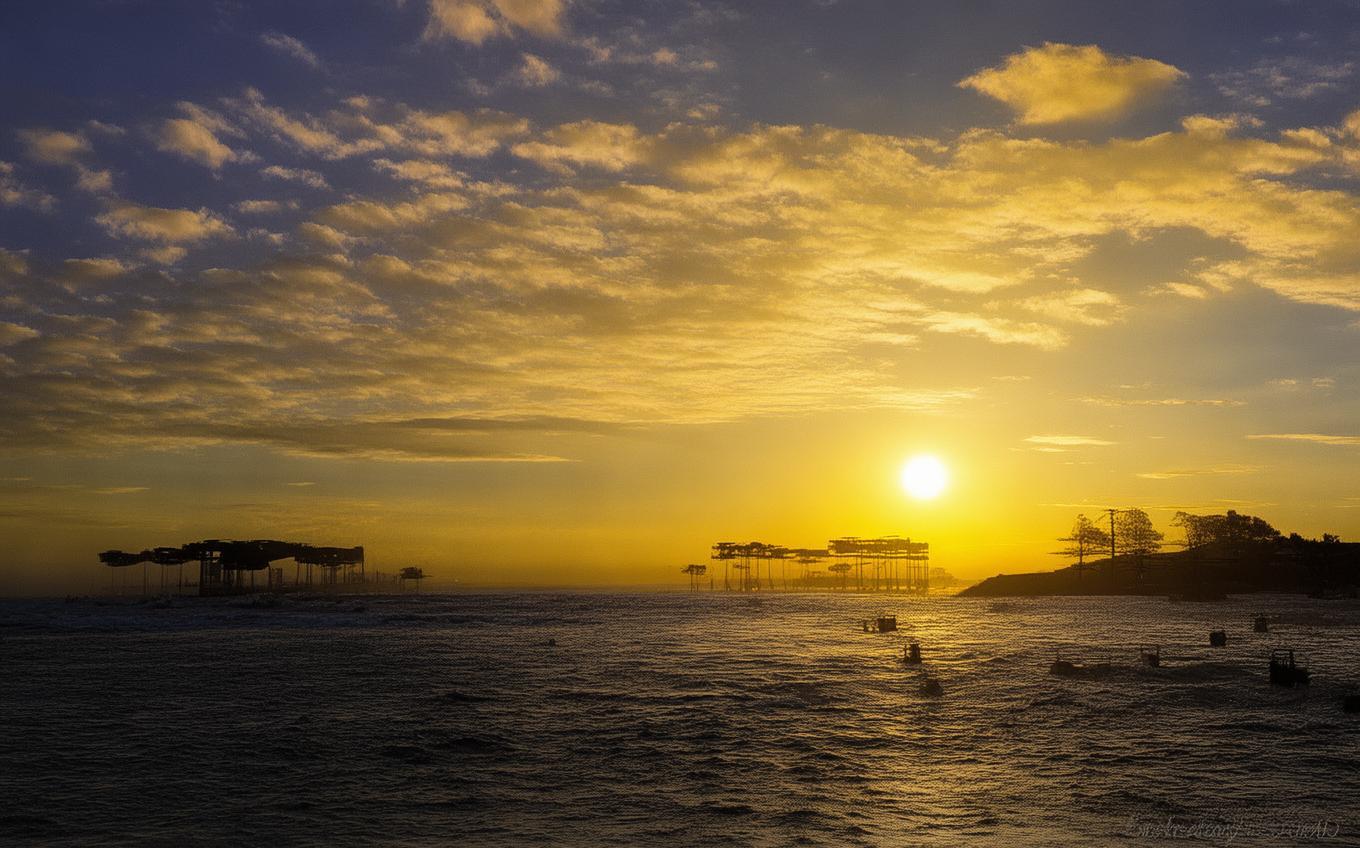
In the vast desert, a lone smoke rises straight,长河落日圆
Cháng hé luòrì yuán
Over the long river, the setting sun hangs round.萧关逢候骑
Xiāo guān féng hòu qí
At Xiaoguan, I meet a scout,都护在燕然
Dūhù zài Yānrán
Who says the general camps at Mount Yanran.
Line-by-Line Analysis
-
"A single carriage sets off..."
- The opening conveys solitude and purpose. The "single carriage" (单车) symbolizes the poet's modest, unceremonious mission. -
"Passing through vassal lands..."
- Juyan (居延) was a remote frontier region, emphasizing the journey's length and the Tang dynasty's vast territorial reach. -
"Like drifting tumbleweed..."
- The poet compares himself to "tumbleweed" (征蓬), a metaphor for transience and wandering, common in frontier poetry. -
"Returning geese enter..."
- The geese symbolize seasonal cycles and the contrast between Han (Chinese) and "barbarian" (胡) lands. -
"In the vast desert..."
- This iconic line paints the Gobi Desert's stark beauty. The "lone smoke" (孤烟) may refer to a beacon fire or a dust whirlwind, emphasizing desolation. -
"Over the long river..."
- The "round sun" (落日圆) contrasts with the straight smoke, creating a geometric harmony that embodies Buddhist balance.
7-8. The Scout's Report
- The encounter with the scout (候骑) shifts focus to military presence, subtly acknowledging the empire's power.
Themes and Symbolism
- Frontier and Isolation: The poem contrasts the vast, untamed frontier with the poet's solitary journey.
- Nature's Majesty: The desert and river symbolize eternity, dwarfing human endeavors.
- Buddhist Detachment: Wang Wei, a devout Buddhist, conveys acceptance of impermanence through imagery like the drifting tumbleweed.
Cultural Context
Written during the Tang dynasty's golden age (618–907), the poem reflects China's territorial expansion and cultural confidence. Frontier poetry often blended admiration for nature with pride in imperial strength. Wang Wei's unique contribution was his ability to infuse these themes with meditative stillness, influenced by his Buddhist beliefs.
Conclusion
"On Mission to the Frontier" captures the awe-inspiring yet desolate beauty of China's northwestern frontier. Its enduring appeal lies in Wang Wei's ability to transform a diplomatic journey into a meditation on transience and harmony. For modern readers, the poem offers a window into Tang dynasty cosmology—where human missions are fleeting against nature's timeless canvas.
"In just eight lines, Wang Wei turns the act of travel into a spiritual passage—a reminder that all journeys, whether through deserts or life, are measured not just in distance, but in moments of clarity."

Comments (0)
No comments yet. Be the first to comment!