Analysis of "春江花月夜" - Classical Chinese Poetry
Introduction
"Spring River Flower Moon Night" (《春江花月夜》) is one of the most celebrated poems in Chinese literature, written by Zhang Ruoxu (张若虚) during the Tang Dynasty (618–907 AD). Though little is known about Zhang’s life, this single surviving masterpiece has immortalized him as a poetic genius. The poem blends natural beauty with philosophical contemplation, capturing the fleeting yet eternal essence of life, love, and the cosmos.
The Poem: Full Text and Translation
Full Text with Translation
春江潮水连海平,海上明月共潮生。
Chūn jiāng cháo shuǐ lián hǎi píng, hǎi shàng míng yuè gòng cháo shēng.
The spring river’s tide merges with the sea’s level,
On the ocean, the bright moon rises with the tide.滟滟随波千万里,何处春江无月明!
Yàn yàn suí bō qiān wàn lǐ, hé chù chūn jiāng wú yuè míng!
Glittering, it follows waves for thousands of miles—
Where on this spring river is not touched by moonlight?江流宛转绕芳甸,月照花林皆似霰。
Jiāng liú wǎn zhuǎn rào fāng diàn, yuè zhào huā lín jiē sì xiàn.
The river winds through fragrant fields,
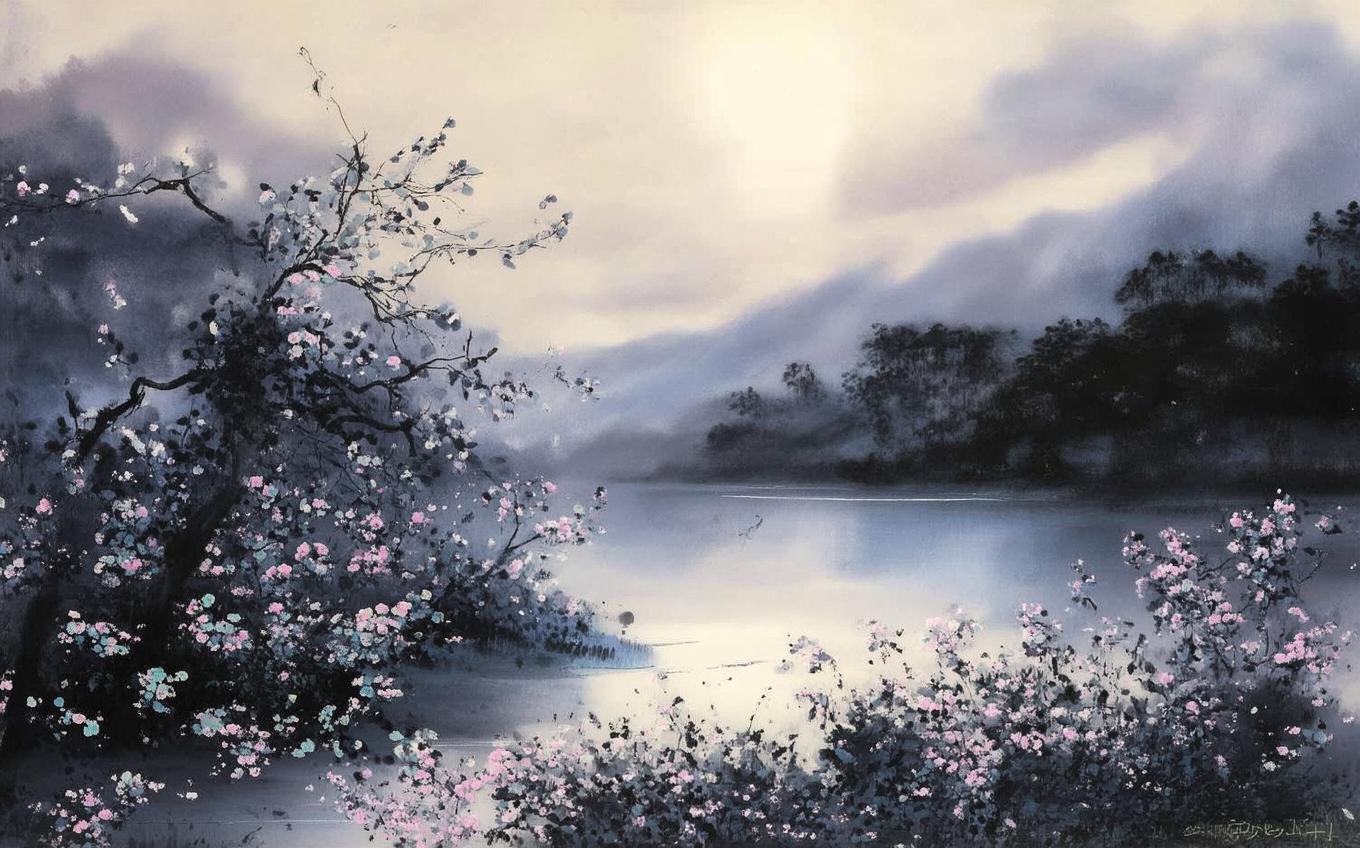
Moonlight bathes the blossoming woods like frost.空里流霜不觉飞,汀上白沙看不见。
Kōng lǐ liú shuāng bù jué fēi, tīng shàng bái shā kàn bù jiàn.
Frost drifts unseen in the air,
White sand on the banks vanishes in the glow.江天一色无纤尘,皎皎空中孤月轮。
Jiāng tiān yī sè wú xiān chén, jiǎo jiǎo kōng zhōng gū yuè lún.
River and sky—one hue without a speck of dust,
Only the bright solitary moon in the vast sky.
(The poem continues, but for brevity, we focus on the opening stanzas.)
Line-by-Line Analysis
-
"The spring river’s tide merges with the sea’s level..."
- The opening lines depict a vast, harmonious scene where river, sea, and moon converge. The imagery suggests unity between nature and the cosmos. -
"Glittering, it follows waves for thousands of miles..."
- The moon’s reflection symbolizes beauty that transcends boundaries, emphasizing the universality of nature’s wonders. -
"The river winds through fragrant fields..."
- The "fragrant fields" and "blossoming woods" evoke sensory richness, while the frost-like moonlight adds a dreamlike quality. -
"Frost drifts unseen in the air..."
- The poet blurs reality and illusion—what seems like frost is merely moonlight, illustrating the deceptive nature of perception. -
"River and sky—one hue without a speck of dust..."
- The "solitary moon" contrasts with the boundless scene, hinting at human solitude amid nature’s grandeur.
Themes and Symbolism
- Transience vs. Eternity: The moon is constant, while flowers and rivers are fleeting—mirroring life’s impermanence.
- Unity of Nature: The blending of river, sky, and moon reflects Daoist harmony.
- Loneliness and Wonder: The "solitary moon" evokes both awe and melancholy, a hallmark of Tang poetry.
Cultural Context
Written during the Tang Dynasty’s golden age, the poem embodies "shi" (诗) poetry—a refined, lyrical style. Its themes resonate with Daoist and Buddhist ideas of impermanence and interconnectedness. The moon, a classic Chinese symbol, represents purity, longing, and the passage of time.
Conclusion
"Spring River Flower Moon Night" is a meditation on beauty, time, and the human condition. Its vivid imagery and philosophical depth make it timeless. For modern readers, it invites reflection on our place in nature’s vast tapestry. As Zhang Ruoxu reminds us: the moon shines on, indifferent yet illuminating—just like great poetry.
Would you like a deeper dive into any particular stanza or theme?

Comments (0)
No comments yet. Be the first to comment!