Analysis of "欹湖" - Classical Chinese Poetry
Introduction
The poem 欹湖 (Qī Hú) is a masterpiece by the renowned Tang Dynasty poet Wang Wei (王维, 699–759 CE). Wang Wei was not only a poet but also a painter and musician, often blending these arts into his poetry. His works are celebrated for their serene depictions of nature and their deep connection to Buddhist philosophy.
欹湖 is part of Wang Wei's Wangchuan Collection, a series of poems describing the landscapes around his estate. The poem captures the tranquil beauty of Qī Lake, reflecting Wang Wei's meditative style and his ability to convey profound stillness through simple yet vivid imagery.
The Poem: Full Text and Translation
吹箫凌极浦
Chuī xiāo líng jí pǔ
Playing the flute, I reach the distant shore,日暮送夫君
Rì mù sòng fū jūn
At dusk, I bid farewell to my lord.湖上一回首
Hú shàng yī huí shǒu
On the lake, I turn my head once more—山青卷白云
Shān qīng juǎn bái yún
Green mountains roll with white clouds.
Line-by-Line Analysis
-
吹箫凌极浦 (Chuī xiāo líng jí pǔ)
- The poet plays a flute, a traditional Chinese instrument often associated with solitude and transcendence. The "distant shore" suggests a spiritual or emotional journey. -
日暮送夫君 (Rì mù sòng fū jūn)
- "At dusk" evokes a melancholic mood, as twilight often symbolizes parting in Chinese poetry. "Fū jūn" could refer to a friend, a nobleman, or even an abstract ideal. -
湖上一回首 (Hú shàng yī huí shǒu)
- The poet looks back, a gesture of nostalgia or reluctance to leave. The lake acts as a mirror, reflecting both the external scenery and inner emotions. -
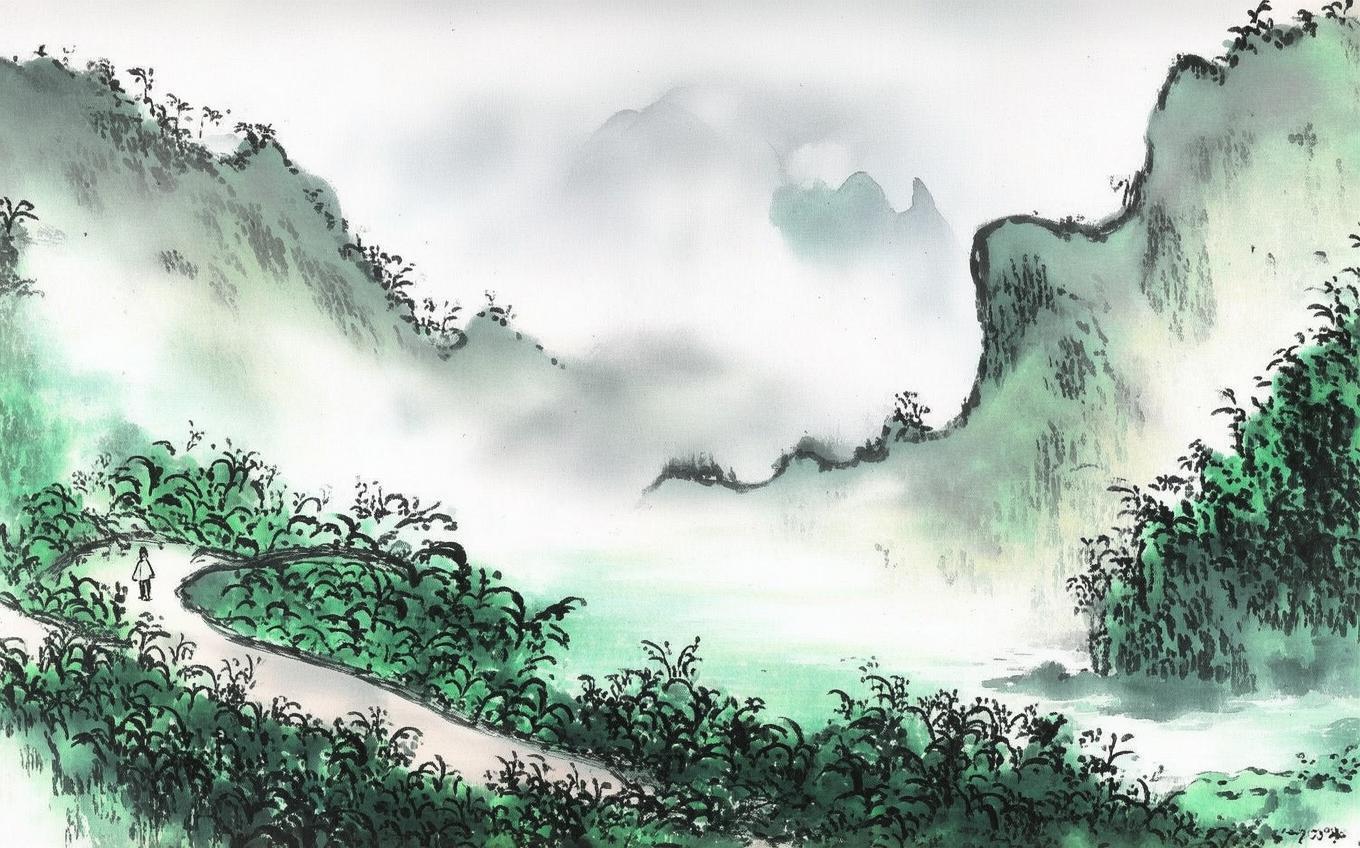
山青卷白云 (Shān qīng juǎn bái yún)
- The final line paints a breathtaking image: lush green mountains merging with drifting white clouds. This symbolizes harmony between humanity and nature, a core theme in Wang Wei’s work.
Themes and Symbolism
- Nature and Stillness: The poem embodies shanshui (山水, "mountain-water") aesthetics, where nature is not just a backdrop but a living entity.
- Transience and Farewell: The dusk setting and the act of parting highlight the Buddhist idea of impermanence.
- Musical Imagery: The flute’s music represents the poet’s voice, blending with the natural world.
Cultural Context
Wang Wei lived during the Tang Dynasty, a golden age of Chinese poetry. Influenced by Chan (Zen) Buddhism, his works often convey wúwéi (无为, "effortless action") and the unity of all things. 欹湖 reflects the Daoist-Buddhist ideal of finding peace in nature’s rhythms.
Conclusion
欹湖 is a miniature masterpiece, capturing a fleeting moment of beauty and introspection. Its simplicity belies a deep philosophical resonance, reminding us of the timeless connection between humans and the natural world. For modern readers, the poem offers a meditative escape, inviting us to pause and appreciate the quiet wonders around us.
Wang Wei’s genius lies in his ability to turn a single glance into an eternal truth—one that still speaks across centuries and cultures.

Comments (0)
No comments yet. Be the first to comment!