
Analysis of "南垞" - Classical Chinese Poetry
Introduction
The poem "南垞" (Nán Chá) is a celebrated work by Wang Wei (王维), one of the most renowned poets of the Tang Dynasty (618–907 CE). Known for his mastery of landscape poetry and Buddhist-inspired tranquility, Wang Wei often depicted nature as a refuge from worldly chaos. "南垞" is part of his Wangchuan Collection (辋川集), a series of poems describing the scenic beauty of his estate. The poem exemplifies the classical Chinese aesthetic of "shanshui" (山水, "mountain-water") poetry, blending serene imagery with philosophical depth.
The Poem: Full Text and Translation
南垞
Nán Chá
Southern Hillock轻舟南垞去
Qīng zhōu nán chá qù
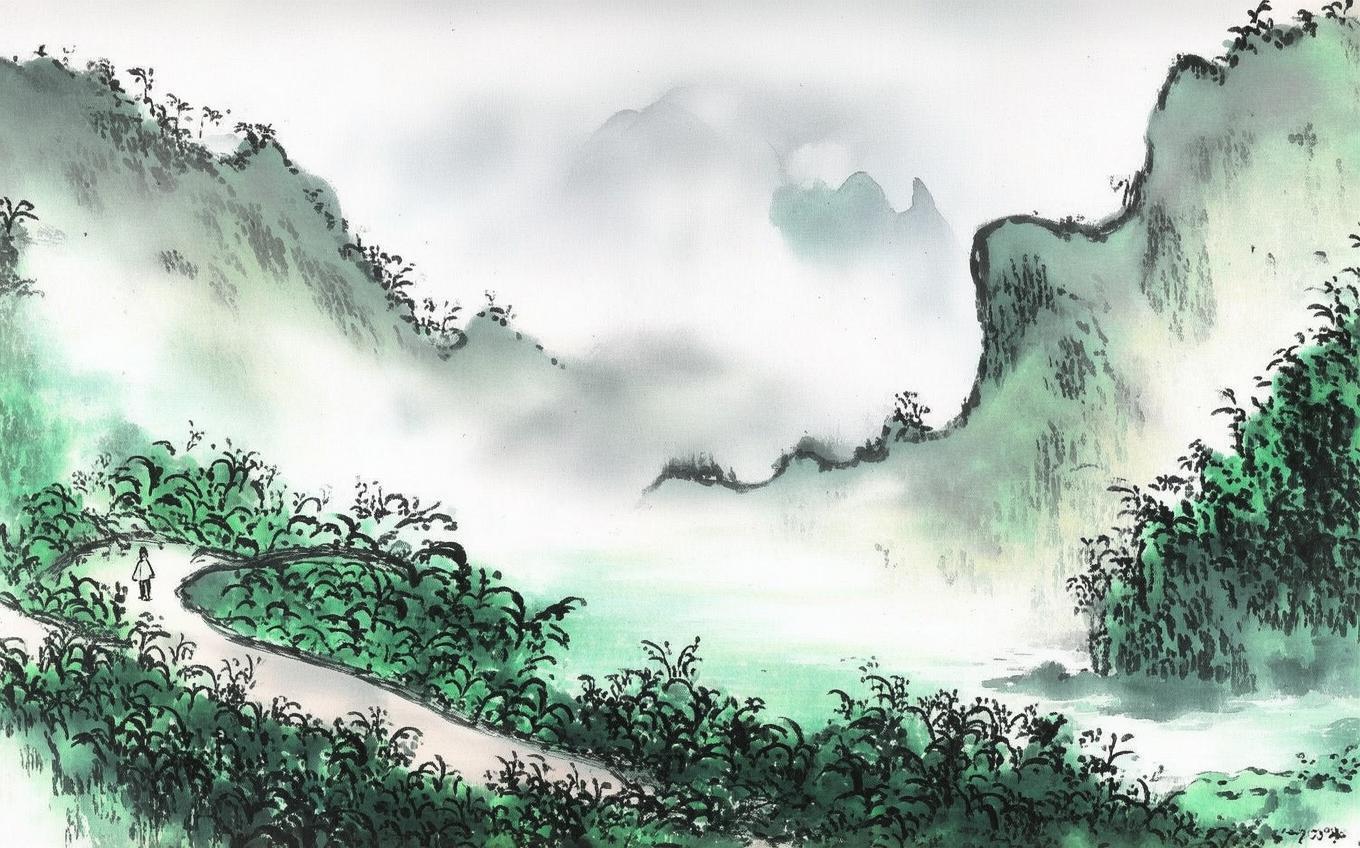
A light boat drifts toward the southern hillock,北垞淼难即
Běi chá miǎo nán jí
The northern shore lies distant, blurred in mist.隔浦望人家
Gé pǔ wàng rén jiā
Across the water, I glimpse a village,遥遥不相识
Yáo yáo bù xiāng shí
Far away—unknown, yet quietly intimate.
Line-by-Line Analysis
-
"A light boat drifts toward the southern hillock"
- The opening line sets a tranquil scene of movement, with the "light boat" (qīng zhōu) suggesting ease and harmony with nature. The southern hillock symbolizes a destination, perhaps a retreat. -
"The northern shore lies distant, blurred in mist"
- Contrasting the clarity of the southern journey, the northern shore is obscured, hinting at life's uncertainties or the poet's detachment from worldly concerns. -
"Across the water, I glimpse a village"
- The "village" (rén jiā) represents human presence, but it is observed from a distance, emphasizing Wang Wei’s contemplative solitude. -
"Far away—unknown, yet quietly intimate"
- The paradox of distance and intimacy reflects Wang Wei’s Buddhist outlook: the world is both separate and interconnected. The "unfamiliar" village feels close spiritually.
Themes and Symbolism
- Nature as a Spiritual Refuge: The boat and hillock symbolize a journey toward inner peace, a common theme in Wang Wei’s poetry.
- Transience and Distance: The mist and faraway village evoke the Buddhist idea of impermanence (无常, wúcháng).
- Harmony and Detachment: The poet observes life without attachment, embodying Daoist and Zen principles.
Cultural Context
Wang Wei wrote "南垞" during the Tang Dynasty’s golden age of poetry, a period when art and philosophy flourished. As a devout Buddhist, he infused his works with meditative stillness, contrasting with the era’s more exuberant poets like Li Bai. The poem reflects the Chinese ideal of "yuǎn yì" (远意, "far-reaching mood")—finding depth in simplicity.
Conclusion
"南垞" captures the essence of Wang Wei’s genius: a fleeting moment in nature becomes a meditation on existence. Its quiet beauty resonates across centuries, inviting readers to pause and reflect. In today’s fast-paced world, the poem’s message of mindful observation and serenity remains profoundly relevant.
"To see the world in a hillock, eternity in a ripple—that is the art of Wang Wei."
Would you like a deeper exploration of another poem from the Wangchuan Collection? Let me know in the comments!

Comments (0)
No comments yet. Be the first to comment!