
Analysis of "宫槐陌" - Classical Chinese Poetry
Introduction
"宫槐陌" (Gōng Huái Mò, "Path of Palace Locust Trees") is a serene and contemplative poem by the renowned Tang Dynasty poet Wang Wei (王维, 699–759). Wang Wei was a master of landscape poetry and a devout Buddhist, known for blending natural imagery with spiritual introspection. This poem reflects his signature style—simple yet profound, capturing the quiet beauty of nature while hinting at deeper philosophical truths.
Set in Wang Wei’s private estate, Wangchuan Villa, "宫槐陌" is part of a larger collection of poems depicting the harmony between humans and nature. It holds significance in Chinese literature as a prime example of "poetry as painting," where words create vivid, meditative landscapes.
The Poem: Full Text and Translation
宫槐陌
Gōng Huái Mò
Path of Palace Locust Trees仄径荫宫槐
Zè jìng yīn gōng huái
A narrow path shaded by palace locust trees,幽阴多绿苔
Yōu yīn duō lǜ tái
In deep shade, green moss grows thick.应门但迎扫
Yìng mén dàn yíng sǎo
The gatekeeper merely sweeps to welcome,畏有山僧来
Wèi yǒu shān sēng lái
Fearing a mountain monk might visit.
Line-by-Line Analysis
-
"A narrow path shaded by palace locust trees"
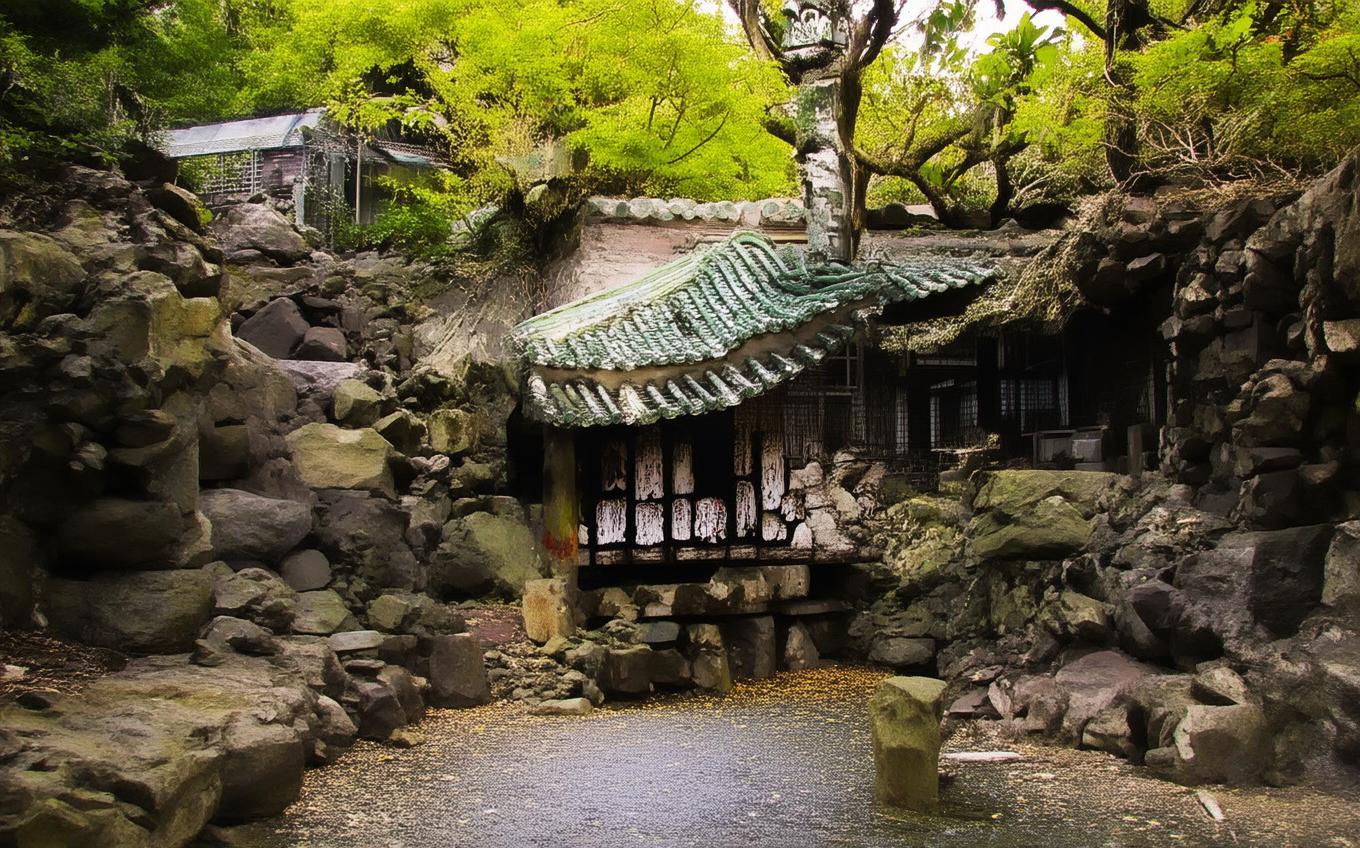
- The opening line sets the scene with a quiet, secluded path lined with locust trees, which were traditionally planted near imperial palaces. The word "shaded" suggests tranquility and refuge from the outside world. -
"In deep shade, green moss grows thick"
- The "deep shade" reinforces the sense of solitude, while the moss symbolizes time passing slowly, undisturbed. Moss often appears in Chinese poetry to represent neglect or a return to nature’s embrace. -
"The gatekeeper merely sweeps to welcome"
- The gatekeeper’s minimal action—sweeping—hints at simplicity and humility. There’s no grand preparation, only quiet readiness. -
"Fearing a mountain monk might visit"
- The last line reveals the speaker’s mindfulness. The "mountain monk" represents spiritual wisdom or an enlightened visitor. The word "fearing" (wèi) doesn’t imply fear but rather reverence and anticipation for a meaningful encounter.
Themes and Symbolism
-
Solitude and Harmony with Nature
The poem celebrates a quiet life in tune with the natural world. The locust trees and moss create a self-sufficient, almost sacred space. -
Spiritual Anticipation
The gatekeeper’s readiness suggests a Buddhist influence—being prepared for enlightenment or wisdom (symbolized by the monk) to arrive unexpectedly. -
Time and Impermanence
The moss, growing undisturbed, reflects the passage of time and the beauty of impermanence, a key theme in Wang Wei’s Buddhist-inspired works.
Cultural Context
Wang Wei lived during the Tang Dynasty (618–907), a golden age of Chinese poetry. As a devout Buddhist, his works often merge Daoist and Zen ideals, emphasizing simplicity, stillness, and the unity of humanity and nature.
"宫槐陌" reflects the Chinese literati tradition of retreating to nature to cultivate inner peace. The "mountain monk" is a common motif, representing the pursuit of wisdom beyond worldly concerns. The poem also aligns with the Chinese aesthetic of yijing (意境)—creating a mood or atmosphere that transcends the literal scene.
Conclusion
"宫槐陌" is a masterpiece of understated elegance, where every word paints a picture and carries deeper meaning. Wang Wei’s ability to convey profound spirituality through simple natural imagery makes this poem timeless.
In today’s fast-paced world, the poem’s message—valuing stillness, mindfulness, and harmony with nature—resonates deeply. It invites readers to slow down, observe the quiet beauty around them, and remain open to moments of unexpected wisdom.
As Wang Wei shows us, sometimes the most profound truths are found on a shaded path, waiting patiently to be noticed.

Comments (0)
No comments yet. Be the first to comment!