Analysis of "出塞·秦时明月汉时关" - Classical Chinese Poetry
Introduction
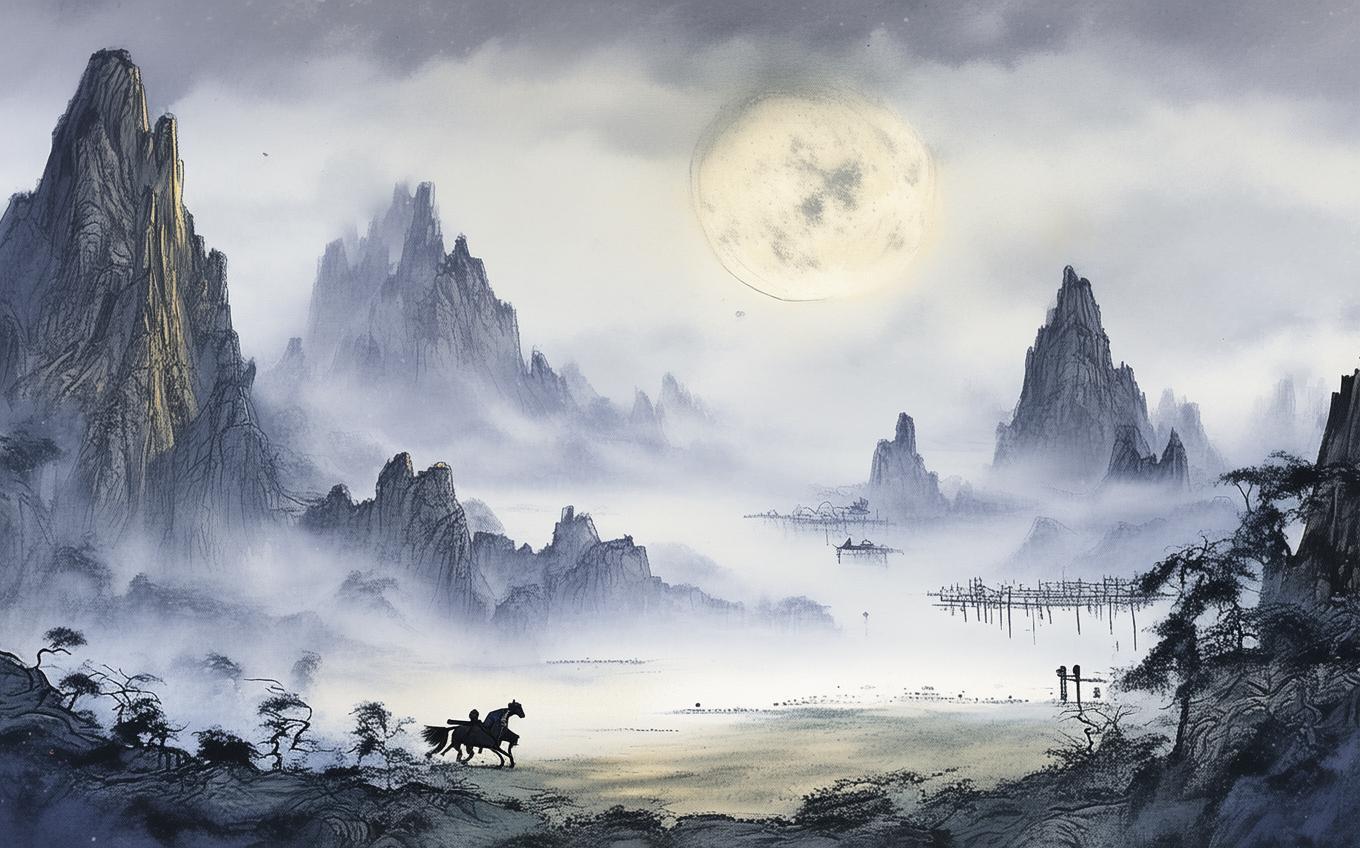
"出塞·秦时明月汉时关" (Chū Sài: Qín Shí Míng Yuè Hàn Shí Guān) is one of the most famous frontier poems (biānsài shī) in Chinese literature, written by Wang Changling (王昌龄, 698–756), a prominent Tang Dynasty poet. Known for his mastery of the qijue (seven-character quatrain) form, Wang often depicted themes of war, separation, and the hardships of frontier life. This poem reflects the enduring struggles of soldiers guarding China’s borders, blending historical nostalgia with a lament for endless conflict.
The Poem: Full Text and Translation
Full Text:
出塞 (其一)
秦时明月汉时关,
万里长征人未还。
但使龙城飞将在,
不教胡马度阴山。
Translation with Pinyin:
秦时明月汉时关
Qín shí míng yuè Hàn shí guān
The moon still shines as in Qin days, the passes stand as in Han times.万里长征人未还
Wàn lǐ cháng zhēng rén wèi huán
But warriors march ten thousand miles and never have come back.但使龙城飞将在
Dàn shǐ Lóng chéng fēi jiàng zài
If only the winged general of Dragon City were here,不教胡马度阴山
Bù jiào hú mǎ dù Yīn shān
No Tartar steeds would dare to cross the Yin Mountains.
Line-by-Line Analysis
-
秦时明月汉时关
- Imagery: The poet juxtaposes the moon (míng yuè) and frontier passes (guān), symbols of timelessness, to evoke continuity between the Qin (221–206 BCE) and Han (206 BCE–220 CE) dynasties. Despite dynastic changes, the borderlands remain contested.
- Emotion: A sense of historical weight and melancholy permeates the line, suggesting that little has changed for soldiers across centuries. -
万里长征人未还
- Metaphor: "Ten thousand miles" (wàn lǐ) exaggerates the vast distance, emphasizing the soldiers' isolation and the futility of war.
- Theme: The tragedy of conscription—families wait indefinitely for loved ones who may never return. -
但使龙城飞将在
- Allusion: "Winged General" (fēi jiàng) refers to Li Guang, a Han Dynasty general famed for defending China against the Xiongnu (nomadic "Tartars").
- Rhetoric: The hypothetical "if only" (dàn shǐ) expresses longing for a heroic leader to end suffering. -
不教胡马度阴山
- Symbolism: The Yin Mountains represent China’s northern frontier. The poet’s wish—to repel invaders—reveals both patriotism and war-weariness.
Themes and Symbolism
-
Timelessness of War
The poem critiques the cyclical nature of conflict, using the Qin-Han parallel to show how little has improved for frontier soldiers. -
Heroism vs. Futility
The reference to Li Guang contrasts idealized leadership with the reality of endless, unglamorous battles. -
Nature as Witness
The moon and mountains are silent observers of human strife, underscoring the insignificance of war in the grand cosmos.
Cultural Context
- Tang Frontier Poetry: Wang wrote during the Tang Dynasty (618–907), when China frequently clashed with nomadic tribes. Frontier poems blended admiration for bravery with sorrow over loss.
- Yin Mountains: A strategic border zone, often romanticized in poetry as a barrier between civilization and chaos.
- Li Guang’s Legacy: His legend symbolized military excellence, reflecting Confucian values of loyalty and duty.
Conclusion
Wang Changling’s "出塞" is a masterpiece of economy and depth. In just 28 characters, it captures the despair of soldiers, the weight of history, and a fragile hope for peace. Its enduring appeal lies in its universal message: the human cost of war transcends time and borders. Today, as conflicts persist worldwide, the poem reminds us that the cries of ancient sentries still echo in modern battlefields.
For further reading: Explore Wang Changling’s other frontier poems, such as "从军行" ("On Campaign"), to delve deeper into Tang Dynasty military culture.

Comments (0)
No comments yet. Be the first to comment!