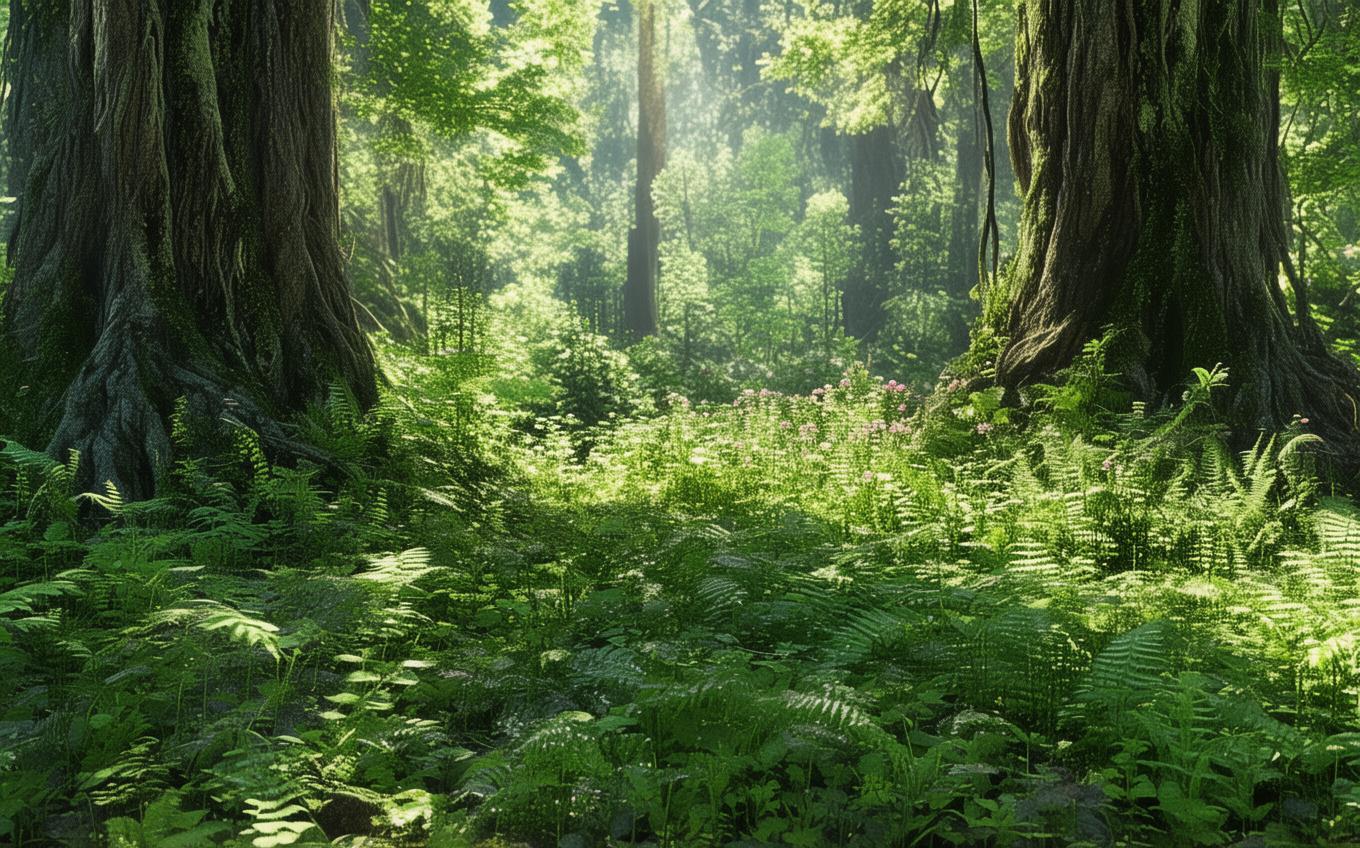
1. Basic Information
- Word: 植物
- Pinyin: zhí wù
- Literal Meaning: "plant" (植: to plant; 物: thing, object)
- Primary Meaning: Refers to plants in general, including trees, flowers, grasses, and other flora.
2. In-depth Explanation
Context and Usage
The word "植物" is a general term for all plant life, similar to the English word "plants." It is used in both everyday conversations and scientific contexts. For example, you might use it when talking about gardening, nature, or biology. Unlike some more specific terms (e.g., 花 for "flower" or 树 for "tree"), "植物" covers the entire category.
Character Breakdown
- 植 (zhí): Means "to plant" or "to grow." It often appears in words related to planting or vegetation, such as 种植 (zhòng zhí, "to cultivate").
- 物 (wù): Means "thing" or "object." It is a common character in words referring to objects or living things, like 动物 (dòng wù, "animal").
Together, "植物" literally means "planted things" or "things that grow," referring to the plant kingdom.
3. Example Sentences
-
Chinese: 我家有很多植物。
Pinyin: Wǒ jiā yǒu hěn duō zhí wù.
English: There are many plants in my house. -
Chinese: 植物需要阳光和水才能生长。
Pinyin: Zhí wù xū yào yáng guāng hé shuǐ cái néng shēng zhǎng.
English: Plants need sunlight and water to grow. -
Chinese: 这个公园里的植物种类很丰富。
Pinyin: Zhè gè gōng yuán lǐ de zhí wù zhǒng lèi hěn fēng fù.
English: The plants in this park are very diverse.
Cultural Notes
In Chinese culture, plants often carry symbolic meanings. For example:
- Bamboo (竹子, zhú zi) represents resilience and humility.
- The lotus (莲花, lián huā) symbolizes purity and enlightenment.
- Pine trees (松树, sōng shù) stand for longevity and steadfastness.
Gardening and bonsai (盆栽, pén zāi) are also deeply appreciated as art forms, reflecting harmony with nature.
Conclusion
"植物" (zhí wù) is a fundamental word for talking about plants in Chinese. Remember it as a combination of "植" (to plant) and "物" (thing), covering all types of flora. Use it in conversations about nature, gardening, or science, and explore the cultural significance of plants in China!
Sources and Further Reading
Dictionary links are provided for independent reference. Example sentences and learning notes on this page are educational explanations rather than dictionary quotations.


Comments (0)
No comments yet. Be the first to comment!