1. Basic Information
- Word: 杂乱
- Pinyin: zá luàn
- Literal Meaning: "Mixed and disorderly"
- Primary Meaning: Messy, chaotic, or disorganized; describes a state where things are in disorder or lack proper arrangement.
2. In-depth Explanation
- Context and Usage:
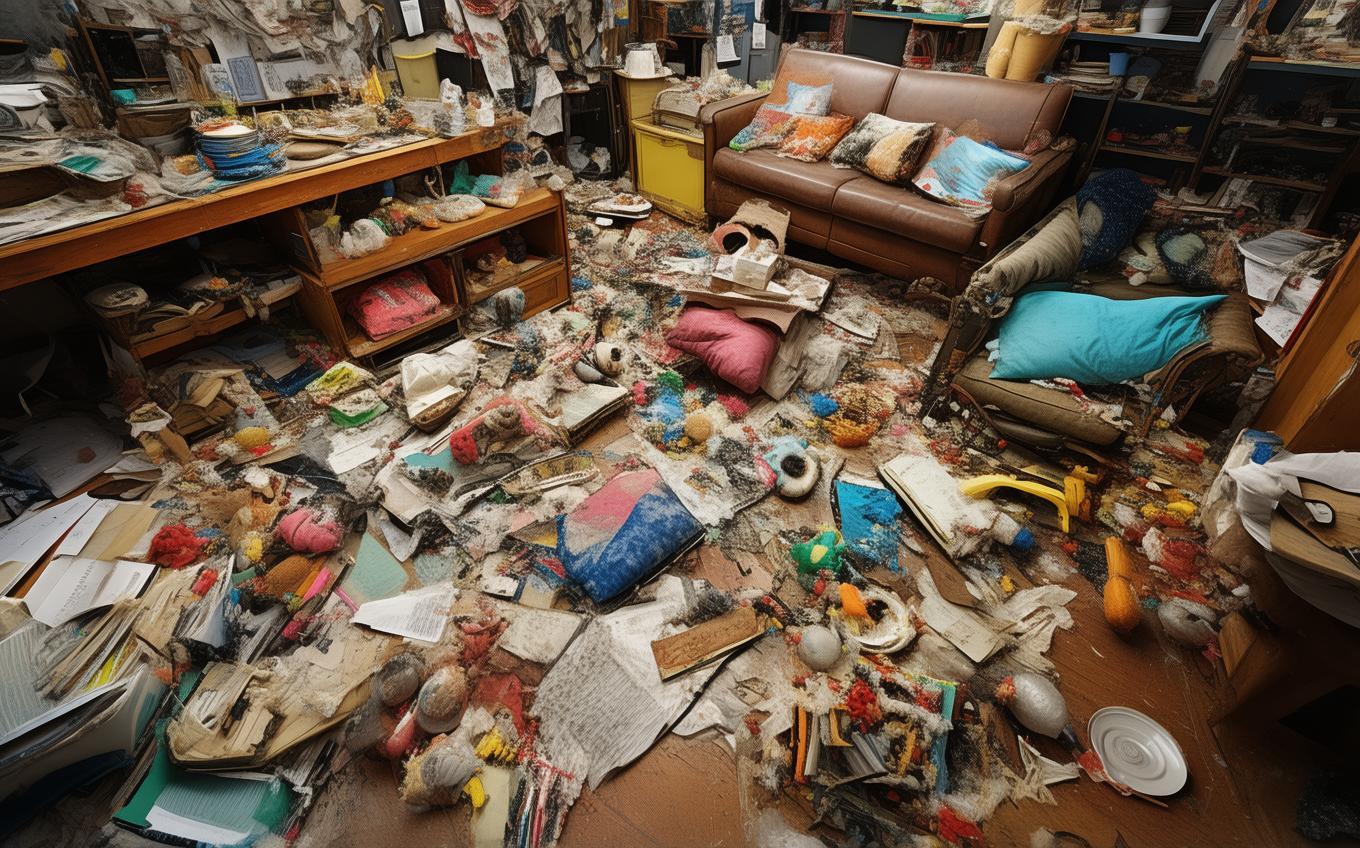
- "杂乱" is used to describe physical spaces (e.g., a messy room), abstract concepts (e.g., chaotic thoughts), or situations (e.g., a disorganized event).
- It carries a slightly negative connotation, implying that the disorder is undesirable or needs to be fixed.
-
Often paired with words like "无章" (wú zhāng, "without order") to emphasize chaos, e.g., "杂乱无章" (extremely disorderly).
-
Character Breakdown:
- 杂 (zá): Means "mixed," "varied," or "miscellaneous."
- 乱 (luàn): Means "disorder," "chaos," or "confusion."
- Together, they reinforce the idea of a disordered mix.
3. Example Sentences
-
Chinese: 他的房间非常杂乱。
Pinyin: Tā de fángjiān fēicháng zá luàn.
English: His room is very messy. -
Chinese: 这篇文章的内容太杂乱了,很难理解。
Pinyin: Zhè piān wénzhāng de nèiróng tài zá luàn le, hěn nán lǐjiě.
English: The content of this article is too disorganized; it's hard to understand. -
Chinese: 桌子上堆满了杂乱的纸张。
Pinyin: Zhuōzi shàng duī mǎn le zá luàn de zhǐzhāng.
English: The desk is piled with messy papers.
Cultural Notes
- In Chinese culture, maintaining order and harmony (和谐, héxié) is highly valued, so "杂乱" often implies a need for improvement.
- Feng Shui (风水) principles emphasize avoiding clutter ("杂乱") to promote positive energy flow (气, qì).
Conclusion
"杂乱" (zá luàn) describes a messy or chaotic state, whether physical or abstract. Remember it by breaking it down: "杂" (mixed) + "乱" (disorder) = disorderly mix. Use it to critique clutter or confusion in daily life!
Sources and Further Reading
Dictionary links are provided for independent reference. Example sentences and learning notes on this page are educational explanations rather than dictionary quotations.
Comments (0)
No comments yet. Be the first to comment!