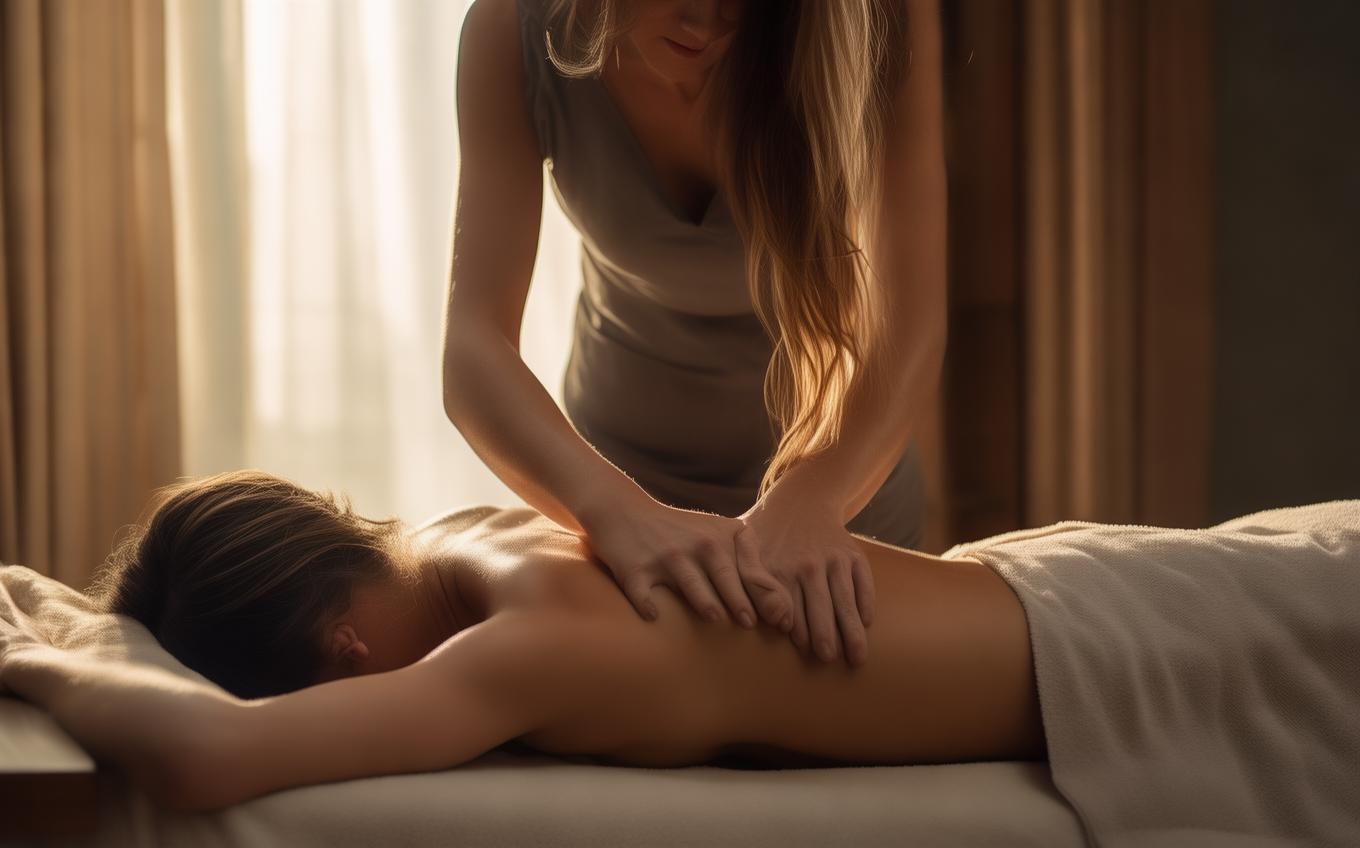
1. Basic Information
- Word: 按摩
- Pinyin: àn mó
- Literal Meaning: press – rub
- Primary Meaning: massage (both as a noun and a verb)
2. In-depth Explanation
-
Context and Usage:
The word 按摩 (àn mó) is the standard, everyday term for "massage" in Chinese. It can be used as both a noun and a verb, and it's neutral in tone — suitable for formal contexts (e.g., medical or therapeutic settings) as well as casual conversation (e.g., talking about a relaxing spa treatment). You can use it to refer to a full-body massage, a neck rub, a foot massage, or even the simple act of rubbing your own temples. Unlike the more specialized term 推拿 (tuīná), which is strongly linked to Traditional Chinese Medicine (TCM) and involves techniques like pushing and grasping, 按摩 is the broader, more general term that covers relaxation massage, sports massage, and other non-TCM styles. So when in doubt, 按摩 is the safe, all-purpose choice. -
Character Breakdown:
- 按 (àn):
The left part is the “hand” radical (扌), indicating the meaning involves an action done with the hand. The right part is 安 (ān), which gives a sound hint. The core meaning of 按 is “to press,” “to push down,” or “to hold down.” Think of pressing a button or pressing your palms onto a surface. - 摩 (mó):
Again, the “hand” radical (扌, in its full form 手) on the left shows manual action. The component 麻 (má) mainly provides the sound. The character 摩 means “to rub,” “to stroke,” or “to scrape” — a back-and-forth or circular motion with friction. Together, 按 (press) + 摩 (rub) perfectly captures the fundamental actions of a massage: applying pressure and rubbing.
3. Example Sentences
-
Chinese: 我喜欢按摩。
Pinyin: Wǒ xǐhuan àn mó.
English: I like massage. (or: I like getting massages.) -
Chinese: 他学会了按摩技巧。
Pinyin: Tā xuéhuìle àn mó jìqiǎo.
English: He learned massage techniques. -
Chinese: 这家店提供专业的按摩服务。
Pinyin: Zhè jiā diàn tígōng zhuānyè de àn mó fúwù.
English: This store provides professional massage services.
Cultural Notes
- Massage in Chinese culture: While 按摩 is the general term, China also has a deeply rooted tradition of therapeutic massage called 推拿 (tuīná), which is part of TCM. In a hospital or TCM clinic, you might see 推拿科 (tuīná kē, Tuina department), where practitioners treat issues like back pain or insomnia. In everyday life, however, people use 按摩 for most types of massage, whether at a spa, a barbershop, or even from a massage chair.
- Foot massage culture: In China, foot massage (足底按摩, zúdǐ àn mó) is extremely popular and often enjoyed socially. It is considered a way to relax and improve health according to reflexology principles. Specialized foot-massage parlors are common, and many locals go with friends or family.
- Typical expressions: You’ll often hear “做个按摩” (zuò ge àn mó) — “get a massage,” or “按摩一下” (àn mó yíxià) — “give a little massage.” These sound very natural in casual speech.
Conclusion
Think of 按摩 as “press and rub” — the two core actions of a massage. The character 按 adds pressure, and 摩 adds the soothing rubbing motion. The word works for almost any massage context, from a spa trip to a medical treatment, and it’s a key vocabulary item for anyone wanting to talk about relaxation, wellness, or everyday services in Chinese. Remember: àn (press) + mó (rub) = massage.
Sources and Further Reading
Dictionary links are provided for independent reference. Example sentences and learning notes on this page are educational explanations rather than dictionary quotations.


Comments (0)
No comments yet. Be the first to comment!