1. Basic Information
- Word: 把戏
- Pinyin: bǎxì
- Literal Meaning: "handle trick" or "grip play"
- Primary Meaning: A trick, gimmick, or sleight of hand; often a deceptive or cheap maneuver meant to fool someone.
2. In-depth Explanation
- Context and Usage:
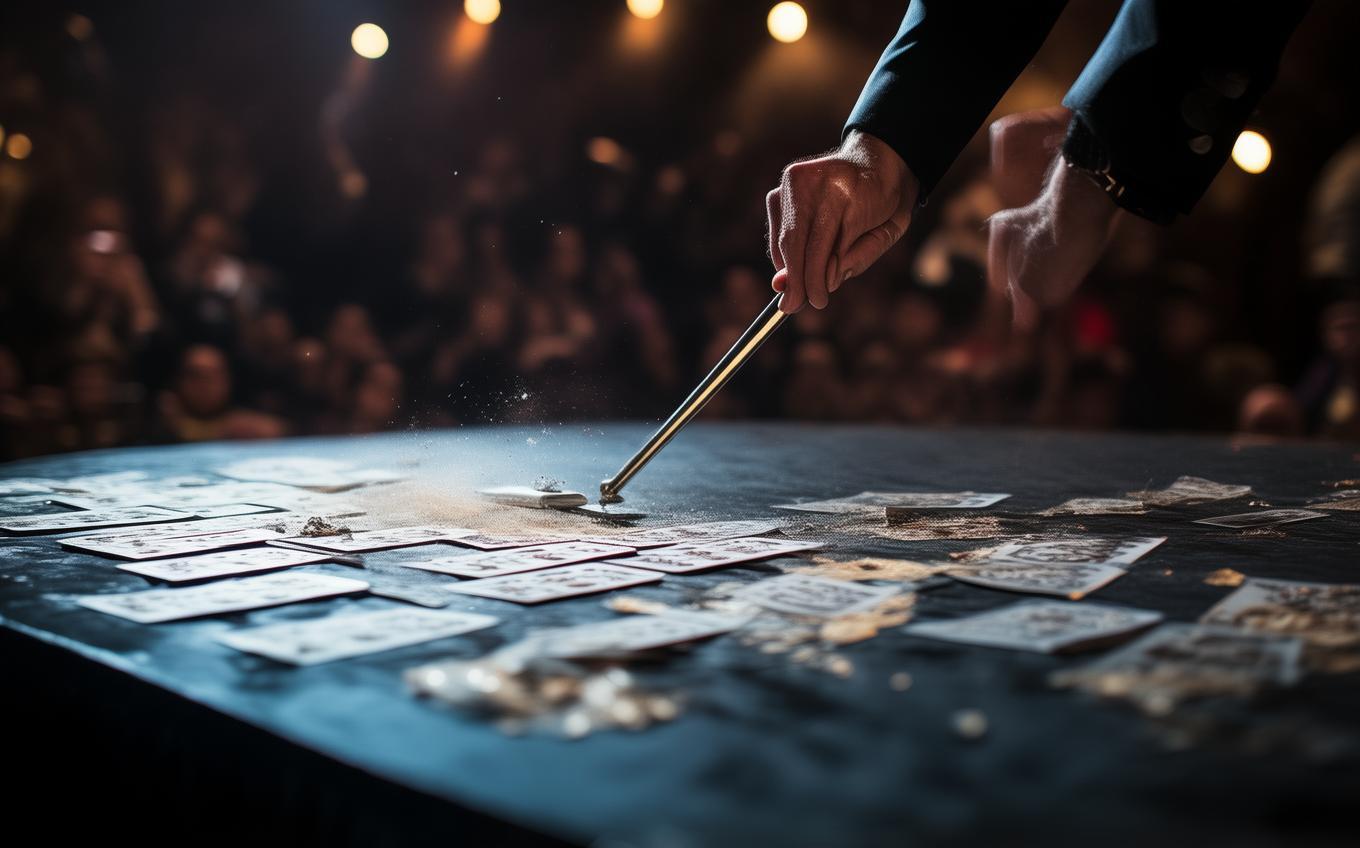
"把戏" is used to describe a clever but usually dishonest or superficial act. In everyday speech, it can refer to: - A magician’s trick (neutral tone, but less common today than 魔术).
- A scheme or cunning ploy to deceive someone (negative connotation).
- A gimmick or stunt intended to attract attention or manipulate others.
The word frequently appears in the phrase 耍把戏 (shuǎ bǎxì) — "to perform a trick" or "to pull a stunt." When used about people's behavior, it often implies the trick is transparent or cheap. For example, saying "别耍把戏了!" means "Stop playing tricks!" or "Cut the nonsense!"
Nuance: "把戏" carries a dismissive, slightly folk-ish flavor. It’s not high-register; it’s the kind of word you’d use to scold a child or call out a dishonest salesperson.
- Character Breakdown:
- 把 (bǎ): Literally means "to hold" or "handle." In this context, it suggests manipulating something with the hands, as in a manual trick. By itself, 把 has many grammatical functions, but here it contributes the idea of physical control.
- 戏 (xì): Means "play," "drama," or "performance." Combined with 把, it denotes a performed act of manual dexterity or a staged deception.
Together, the two characters paint a picture of "a trick done with quick hands" — originally a neutral description of juggling or acrobatics, but later gaining a negative spin.
3. Example Sentences
-
Chinese: 别信他那些花招,都是老把戏了。
Pinyin: Bié xìn tā nàxiē huāzhāo, dōu shì lǎo bǎxì le.
English: Don't fall for his tricks — they're all old gimmicks. -
Chinese: 这个魔术师表演的把戏让孩子们看得入迷。
Pinyin: Zhège móshùshī biǎoyǎn de bǎxì ràng háizimen kàn de rùmí.
English: The tricks performed by this magician mesmerized the children. -
Chinese: 别在我面前耍把戏,我知道真相。
Pinyin: Bié zài wǒ miànqián shuǎ bǎxì, wǒ zhīdào zhēnxiàng.
English: Don't pull any stunts in front of me; I know the truth.
Cultural Notes
Historically, "把戏" referred to street performers’ acts — juggling, acrobatics, and sleight of hand. These entertainers were often viewed with suspicion, so the word naturally took on a negative tint when applied to personal conduct. Today, it’s rarely used for genuine stage magic (where 魔术, móshù, is preferred). Instead, it lives on in everyday speech to call out dishonesty. A related chengyu is 鬼把戏 (guǐbǎxì, "devilish trick"), which intensifies the sense of malicious scheming.
Conclusion
Think of "把戏" as a "hand-played trick" — it started as harmless entertainment but now mostly points to deceptive, old-hat stunts. Remember: if someone is 耍把戏, they’re likely trying to pull a fast one on you. Use it to scold, dismiss, or describe transparent trickery.
Sources and Further Reading
Dictionary links are provided for independent reference. Example sentences and learning notes on this page are educational explanations rather than dictionary quotations.



Comments (0)
No comments yet. Be the first to comment!