1. Basic Information
- Word: 罢工
- Pinyin: bà gōng
- Literal Meaning: "stop work" or "cease work"
- Primary Meaning: strike (a collective refusal to work, usually by employees as a form of protest)
2. In-depth Explanation
Context and Usage
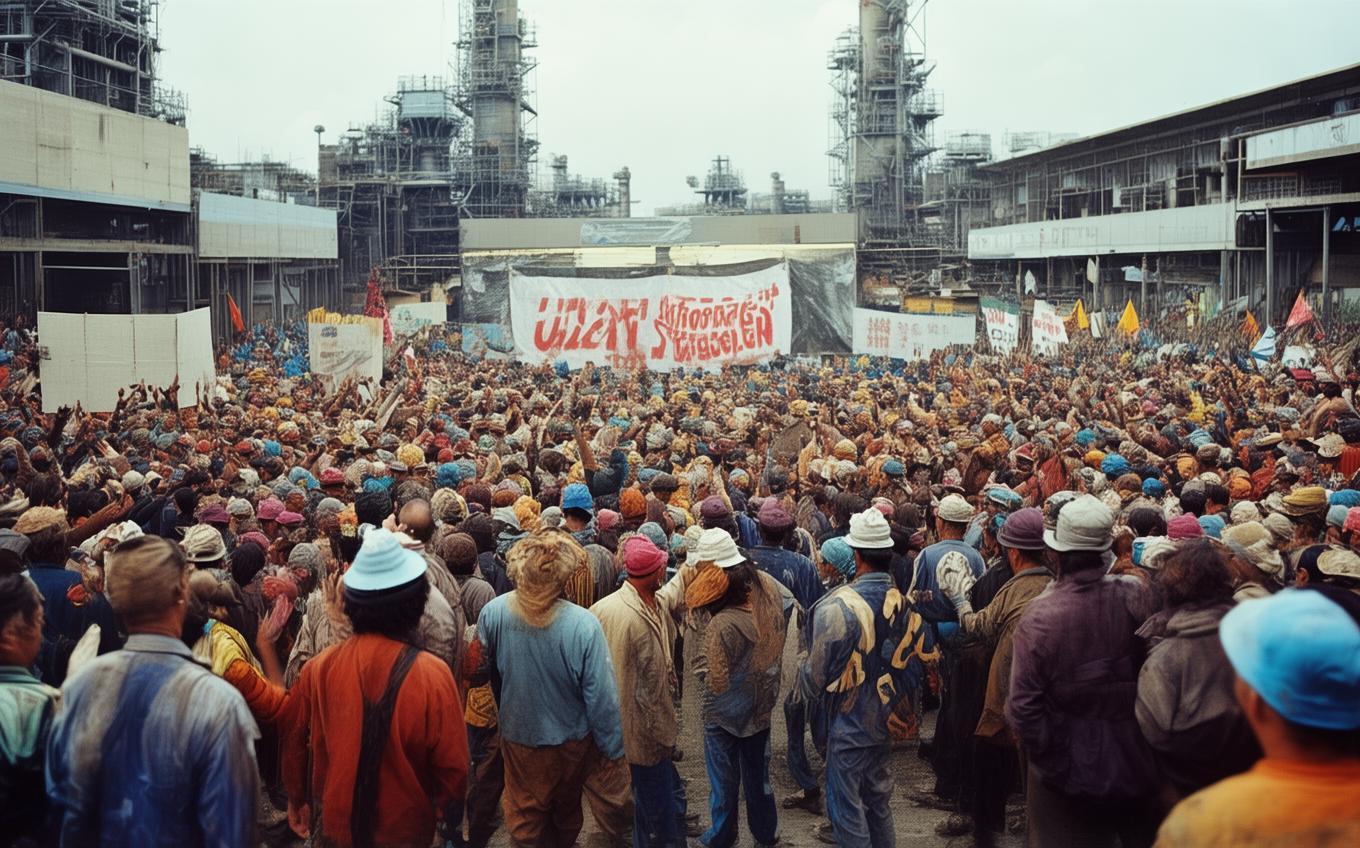
"罢工" is the standard Chinese word for a labor strike. It is used when a group of workers collectively stops working to demand better working conditions, higher wages, or other rights. The term can apply to any industry—factories, schools, transportation, etc. In modern Chinese, it is a neutral descriptive word, though the attitude toward strikes in Chinese society may be complex due to legal and political considerations.
You will also encounter "罢工" in informal, metaphorical contexts. For example, if a machine, device, or even a part of your body suddenly stops functioning, you can humorously say it "罢工" (went on strike). This figurative usage is common in everyday speech and adds a playful, personifying tone.
Nuance: Unlike the English word "strike," which can refer to hitting or a sudden military attack, "罢工" is exclusively about ceasing work. There is no physical striking involved.
Character Breakdown
- 罢 (bà): This character means to stop, cease, dismiss, or finish. In classical Chinese, it could also mean “to remove from office.” In the context of "罢工," it indicates the stopping of an activity. Other common words: 罢了 (bà le, "let it be"), 罢休 (bà xiū, "give up").
- 工 (gōng): This character means work, labor, or a worker. It appears in many job-related words: 工人 (gōng rén, "worker"), 工作 (gōng zuò, "job/work"), 工厂 (gōng chǎng, "factory").
Together, "罢工" literally pictures the act of “ceasing work.” The logic is direct: when workers stop working, they are “罢” (ceasing) their “工” (labor).
3. Example Sentences
- Chinese: 工人们为了涨工资而举行罢工。
- Pinyin: Gōngrén men wèile zhǎng gōngzī ér jǔxíng bàgōng.
-
English: The workers held a strike to demand a wage increase.
-
Chinese: 我的手机突然罢工了,怎么也打不开。
- Pinyin: Wǒ de shǒujī tūrán bàgōng le, zěnme yě dǎ bu kāi.
-
English: My phone suddenly went on strike; I couldn’t turn it on no matter what.
-
Chinese: 如果谈判失败,工会威胁要罢工。
- Pinyin: Rúguǒ tánpàn shībài, gōnghuì wēixié yào bàgōng.
- English: If the negotiations fail, the labor union is threatening to strike.
Cultural Notes
In Mainland China, labor strikes exist in a legal gray area. The Chinese Constitution once included the right to strike, but it was removed in 1982. Today, strikes are not explicitly prohibited, but they are not legally protected mechanisms for resolving labor disputes, and organized strikes are often discouraged or quickly resolved through government mediation. The official term for a work stoppage is sometimes euphemistically called “停工” (tíng gōng, “work halt”) in Chinese media to avoid the politically charged word “罢工.”
In Taiwan and Hong Kong, "罢工" is a legally defined right, and the term is used in public discourse more freely to describe organized labor actions.
The metaphorical use of "罢工" (for broken appliances or body parts) is universally understood across all Chinese-speaking regions and carries no political weight—it’s simply a lively way to say something is refusing to work.
Conclusion
"罢工" (bà gōng) is built from two straightforward characters—“stop” and “work”—and it maps clearly to the English concept of a labor strike. Remember it by visualizing workers putting down their tools. The word is also easily extended to humorous situations involving broken devices. When you encounter "罢工" in Chinese media or conversation, context will clarify whether it’s a serious labor action or just your computer “going on strike.”
Sources and Further Reading
Dictionary links are provided for independent reference. Example sentences and learning notes on this page are educational explanations rather than dictionary quotations.



Comments (0)
No comments yet. Be the first to comment!