1. Basic Information
- Word: 半夜
- Pinyin: bànyè
- Literal Meaning: “half night” — half (半 bàn) + night (夜 yè)
- Primary Meaning: midnight; the middle of the night; late at night (often when most people are asleep)
2. In-depth Explanation
Context and Usage
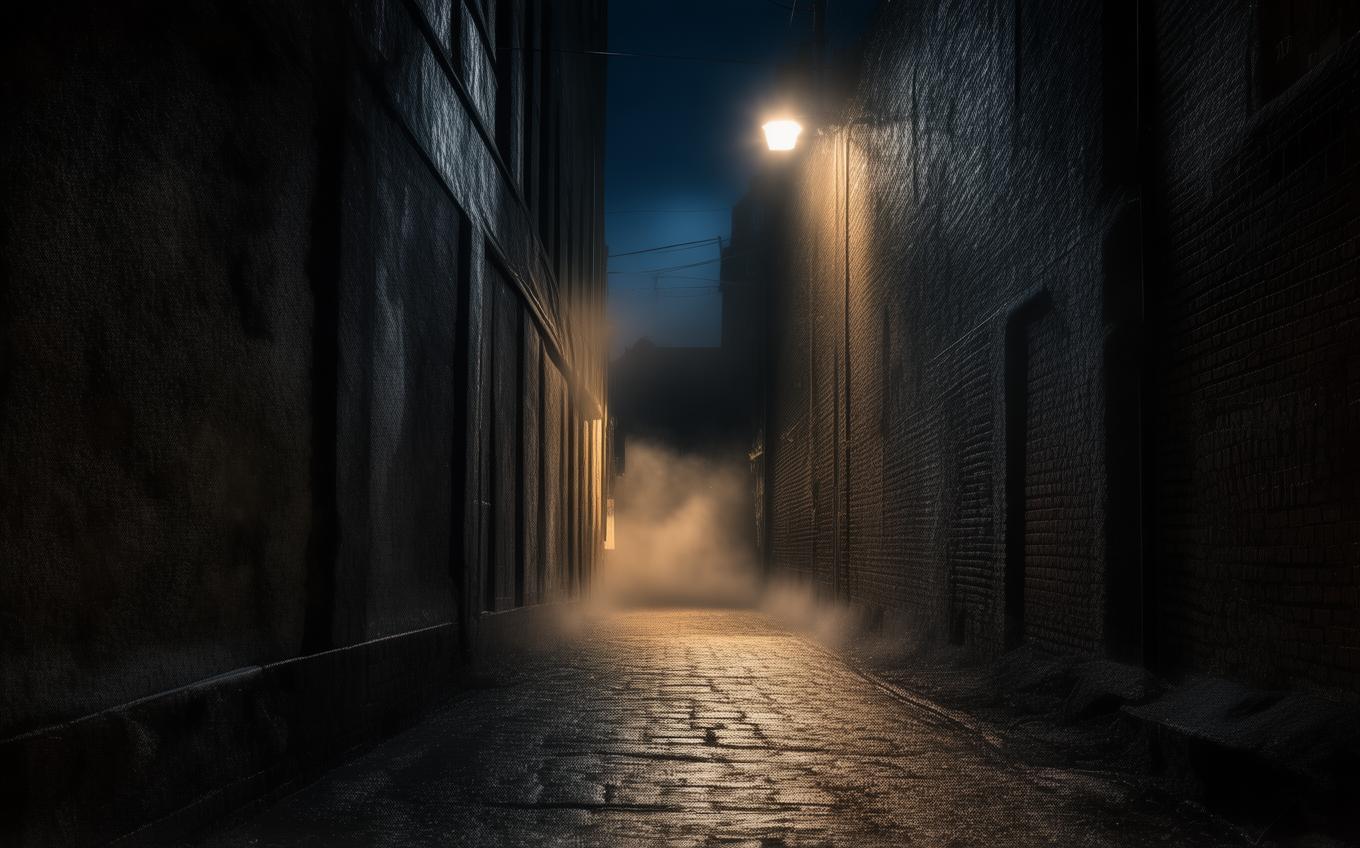
半夜 is used to refer to the time deep in the night, typically around midnight and the early hours of the morning. It can pinpoint the exact midnight hour (e.g., 半夜十二点 “12 o’clock at midnight”) or describe a general stretch of time when it is very late, dark, and quiet (“in the middle of the night”).
The word often carries a nuance of untimeliness or disturbance—something happening when people are normally resting. For example, waking up, working late, or noise occurring “at” 半夜 implies an interruption of the usual sleep cycle.
Common set phrases:
- 半夜三更 (bànyè sāngēng) – the dead of night (emphatic, literally “midnight, the third watch”)
- 深更半夜 (shēngēng bànyè) – late at night, the wee hours (another emphatic expression)
Character Breakdown
- 半 (bàn): half. Represents the idea of splitting something into two equal parts.
- 夜 (yè): night; the period from sunset to sunrise.
Together, “half of the night” evokes the image of the night being cut at its midpoint—midnight. This literal sense makes the word easy to remember.
3. Example Sentences
Sentence 1
- Chinese: 我半夜醒了,再也睡不着。
- Pinyin: Wǒ bànyè xǐng le, zài yě shuì bù zháo.
- English: I woke up in the middle of the night and couldn’t fall back asleep.
Sentence 2
- Chinese: 他经常工作到半夜。
- Pinyin: Tā jīngcháng gōngzuò dào bànyè.
- English: He often works until midnight (until very late at night).
Sentence 3
- Chinese: 半夜三更别大声说话。
- Pinyin: Bànyè sāngēng bié dàshēng shuōhuà.
- English: Don’t talk loudly in the dead of night.
4. Cultural Notes
In traditional Chinese timekeeping, the night was divided into five two-hour “watches” (更, gēng) from 7 p.m. to 5 a.m. The third watch (三更, sāngēng) covered roughly 11 p.m. to 1 a.m., centering on midnight. Because 半夜 also points to this exact span, the phrase 半夜三更 became a fixed way to say “the dead of night.” So while you can use 半夜 alone, adding 三更 adds an old-fashioned, vivid punch—perfect for complaining about noise or describing a very late hour.
5. Conclusion
半夜 (bànyè) is your go‑to word for “midnight” or “the middle of the night.” Think of it as “cutting the night in half,” and you’ll never forget it. Use it on its own for late‑night events, or pair it with 三更 to emphasize the deep, quiet stillness—or the irritation—of the midnight hour.
Sources and Further Reading
Dictionary links are provided for independent reference. Example sentences and learning notes on this page are educational explanations rather than dictionary quotations.



Comments (0)
No comments yet. Be the first to comment!