Analysis of "立春日游苑迎春" - Classical Chinese Poetry
Introduction
Emperor Zhongzong of Tang (唐中宗, 656–710), personal name Li Xian (李显), was the fourth son of Emperor Gaozong and Empress Wu Zetian. His reign was brief and turbulent, sandwiched between his mother’s iron rule and the power struggles that followed. Despite his political fragility, Zhongzong was a patron of literature, and his extant poems often portray the elegant, ritualistic life of the Tang court. “立春日游苑迎春” (Strolling in the Imperial Garden to Welcome Spring on Spring’s Beginning) is one such work: composed on Lìchūn, the first of the twenty-four solar terms, it captures an imperial outing to greet the new season. In Chinese literature, this poem stands out as a rare example of a sitting emperor’s lyric voice, blending grandeur, philosophical reflection, and a heartfelt wish for longevity — not just his own, but of the state itself.
The Poem: Full Text and Translation
神皋福地三秦邑,
shén gāo fú dì sān qín yì,
A sacred stretch of land, blessed region of the Three Qin,
玉台金阙九仙家。
yù tái jīn què jiǔ xiān jiā.
Jade terraces and golden towers are homes of the Nine Immortals.
寒冰未解曲池冻,
hán bīng wèi jiě qǔ chí dòng,
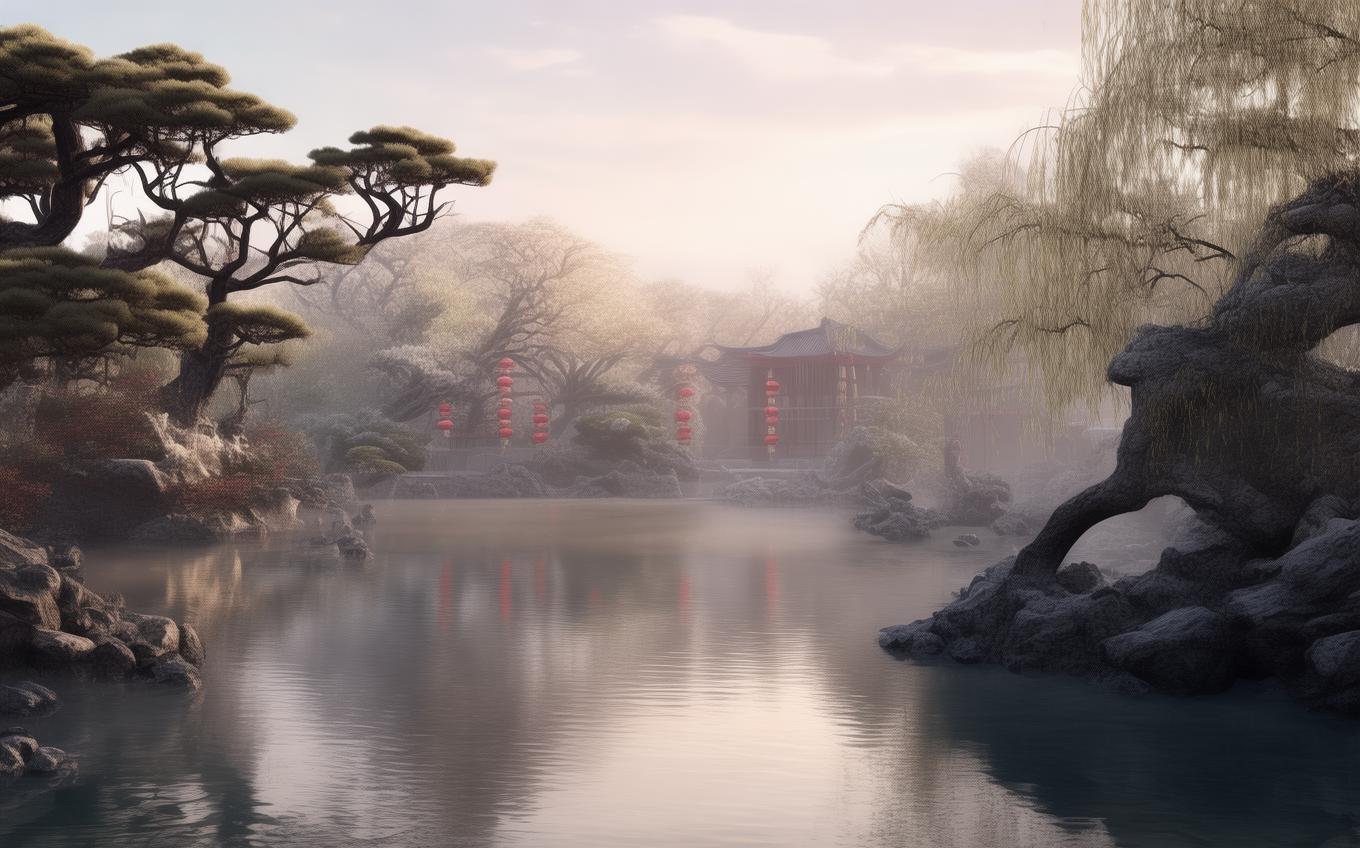
The winding pond still lies frozen, its cold ice unmelted,
新莺已啼芳树花。
xīn yīng yǐ tí fāng shù huā.
Yet new orioles already warble among fragrant trees and blossoms.
自有长绳能系日,
zì yǒu cháng shéng néng jì rì,
They say one might tie the sun with a long rope to stop its course,
始信无绳可系年。
shǐ xìn wú shéng kě jì nián.
But now I truly know — no rope can bind the passing years.
惟愿圣主南山寿,
wéi yuàn shèng zhǔ nán shān shòu,
I only wish that our sagely lord may live as long as the Southern Mountain,
何愁不赏万年春。
hé chóu bù shǎng wàn nián chūn.
Then why should we worry about not enjoying ten thousand springs?
Line-by-Line Analysis
The opening couplet sets a tone of majestic permanence. “神皋福地” (sacred stretch of blessed land) alludes to the environs of the Tang capital Chang’an, historically the territory of the “Three Qin” kingdoms after the fall of the Qin dynasty. By calling the imperial garden a dwelling place of the “Nine Immortals” — a Daoist reference to celestial beings — the poet elevates the imperial residence to a transcendent realm. The scene is not merely earthly; it is a paradise where the emperor communes with immortality.
In the second couplet, the poet shifts from mythic grandeur to direct sensory observation. The winding pond remains frozen, a stubborn remnant of winter, but orioles sing amid budding flowers — the first stirrings of spring. The contrast between “寒冰未解” (cold ice not yet melted) and “新莺已啼” (new orioles already singing) portrays nature’s threshold moment, where winter’s grip lingers even as life eagerly bursts forth. This duality subtly mirrors the human condition: the old reluctantly giving way to the new.
The third couplet takes a philosophical turn. “长绳系日” (tying the sun with a long rope) is an ancient motif — a metaphor for halting time’s flow, famously appearing in mythological tales of chasing the sun. The poet admits that while myth imagines such a feat, reality proves no rope can bind the years. This realization is bittersweet, acknowledging the relentless passage of time even in a paradise-like garden. It exposes an existential anxiety beneath the imperial splendor.
The final couplet resolves the melancholy with a wish. “南山寿” (longevity of the Southern Mountain) is a classical blessing for the emperor, likening his life to the enduring, unmovable Zhongnan Mountain south of Chang’an. By declaring “何愁不赏万年春” (why worry about not enjoying ten thousand springs), the poet transforms the earlier temporal despair into a confident celebration. As long as the sagely ruler lives long, an eternal spring — both literal and political — will be there to savor. The double meaning of “春” as spring and as years of reign reinforces the poem’s imperial optimism.
Themes and Symbolism
The dominant theme is the tension between transience and permanence. The frozen pond and fleeting warblers mark the cycle of seasons; the unattainable rope underscores the unstoppable march of time. Yet the poet responds not with defeat, but with a consolatory vision: collective well-being hinges on the ruler’s endurance, which can guarantee a perpetual spring. This reflects the Confucian ideal of a virtuous monarch whose longevity ensures harmony between heaven, earth, and humanity.
Key symbols include the “winding pond” (曲池), evoking the famed meandering waterscapes in imperial gardens, a microcosm of controlled nature; the “Nine Immortals” (九仙), representing Daoist aspiration for immortality; and “南山” (Southern Mountain), a timeless emblem of stability. The oriole, harbinger of spring, symbolizes renewal and hope, while the “long rope” is a poignant symbol of human attempts to master time.
Cultural Context
立春 (Lìchūn), the Beginning of Spring, far predates the Tang dynasty as a pivotal agricultural and ritual marker. For the emperor, welcoming spring was a semi-sacred duty — a public reaffirmation of cosmic order and imperial authority. Tang gardens like the one depicted were not merely leisured retreats but carefully designed landscapes embodying Daoist and Buddhist ideals of harmony, earthly paradise, and mysterious transformation. Zhongzong’s poem draws on this rich cultural vocabulary.
Moreover, the reference to “圣主” (sagely lord) reflects the courtly convention of praising the reigning emperor — often himself, though here perhaps a wish for future stability given Zhongzong’s precarious grip on power. The longing for “万年春” (ten-thousand-year spring) echoes the auspicious salutation “万岁” (ten thousand years) commonly offered to the emperor, merging personal and national destinies. This poem thus encapsulates the medieval Chinese worldview where poetry, politics, and philosophy were inseparable.
Conclusion
“立春日游苑迎春” is far more than an imperial spring outing diary. Through vivid, contrasting imagery and introspective reflection, it weaves together nature’s awakening, the ache of fleeting time, and a resilient faith in long-lived rule. Emperor Zhongzong’s voice reaches across centuries to remind us that spring is both a seasonal event and a state of mind — one that depends, ultimately, on the endurance of what we hold dear. For modern readers, the poem invites quiet contemplation: Despite the untyable years, may we all find our own eternal spring in moments of hope, beauty, and renewal.
Comments (0)
No comments yet. Be the first to comment!