1. Basic Information
- Word: 爆发
- Pinyin: bào fā
- Literal Meaning: explode + emit / burst forth
- Primary Meaning: to break out; to erupt; to burst out (used for wars, diseases, applause, emotions, volcanic eruptions, etc.)
2. In-depth Explanation
- Context and Usage:
"爆发" is a verb used to describe a sudden, powerful, and often large-scale occurrence that seems to come from within and spread outward quickly. It conveys a sense of pent-up force finally being released. You can use "爆发" when talking about: - Wars, conflicts, and revolutions (e.g., "war broke out")
- Epidemics or disease outbreaks
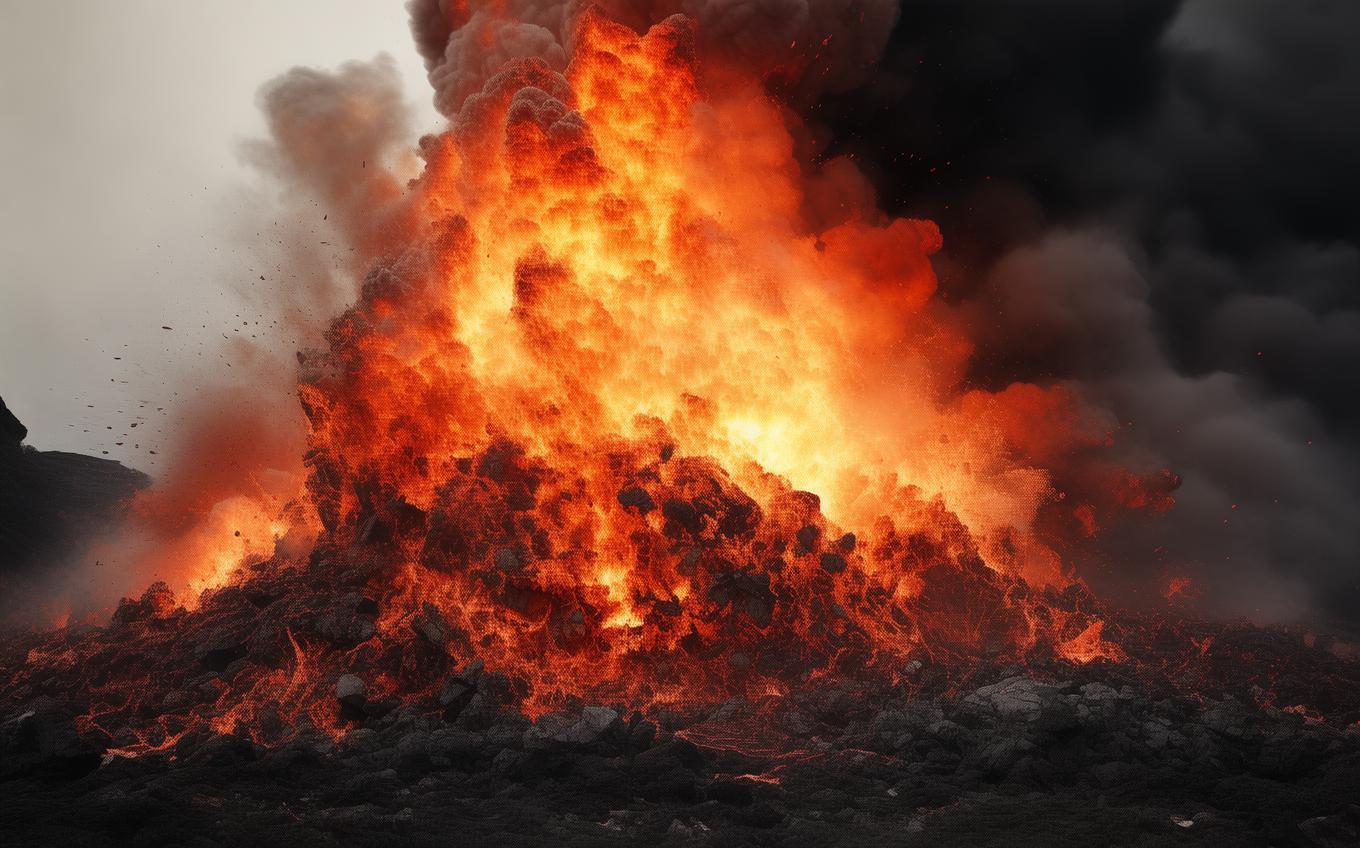
- Volcanic eruptions
- Applause, laughter, cheers, or shouting that suddenly fills a space
- Emotions like anger or passion that burst forth
-
A sudden release of energy or a rapid rise in something (e.g., a field of study "exploded" in popularity)
One nuance: "爆发" is often confused with its homophone "暴发" (bào fā). While both can sometimes describe a sudden outbreak, "爆发" emphasizes the violent release of internal energy (like an explosion), whereas "暴发" emphasizes a sudden, sharp, and often short-lived surge, typically used for things like "getting rich quick" (暴发户) or flash floods (山洪暴发). In modern Mandarin, for epidemics and volcanic eruptions, "爆发" is the standard, preferred choice. -
Character Breakdown:
- 爆 (bào): means to explode, burst, or pop. Think of fireworks, a balloon popping, or a bomb detonating. The fire radical (火) hints at heat and violent expansion.
- 发 (fā): means to send out, emit, happen, or develop. It appears in many words about growth, emission, or initiation (e.g., 发生, to happen; 发出, to send out). Together, "爆" + "发" paints the image of something that explodes and then spreads outward suddenly.
3. Example Sentences
-
Chinese: 第二次世界大战于1939年爆发。
Pinyin: Dì Èr Cì Shìjiè Dàzhàn yú 1939 nián bàofā.
English: World War II broke out in 1939. -
Chinese: 老师讲了一个笑话,教室里爆发出一阵笑声。
Pinyin: Lǎoshī jiǎng le yī ge xiàohuà, jiàoshì lǐ bàofā chū yī zhèn xiàoshēng.
English: The teacher told a joke, and a burst of laughter erupted in the classroom. -
Chinese: 这座火山已经沉睡了几百年,今天突然爆发了。
Pinyin: Zhè zuò huǒshān yǐjīng chénshuì le jǐ bǎi nián, jīntiān tūrán bàofā le.
English: This volcano had been dormant for hundreds of years; today it suddenly erupted.
Cultural Notes
Many learners mix up "爆发" and "暴发". A helpful memory trick: "爆发" has the fire radical (火) in "爆", so it often relates to fire, heat, and the explosive release of internal pressure—like a volcano, a war, or a passionate outburst. "暴发", on the other hand, contains "暴" (violent, sudden, in a bad way) and is used more for sudden wealth, flash floods, or a disease that appears abruptly without warning. Still, for disease outbreaks, "爆发" is now more common in standard usage (e.g., 疫情爆发, epidemic outbreak), because the focus is on the rapid spread from a source. When in doubt, for anything that feels like an explosion of energy from within, choose "爆发".
Conclusion
Remember "爆发" as a verb for anything that "explodes onto the scene"—wars, volcanoes, applause, and laughter. The two characters give you the clue: something inside (爆) bursts and sends its effect outward (发). Use it whenever you need to describe a sudden, intense, and often dramatic eruption.
Sources and Further Reading
Dictionary links are provided for independent reference. Example sentences and learning notes on this page are educational explanations rather than dictionary quotations.



Comments (0)
No comments yet. Be the first to comment!