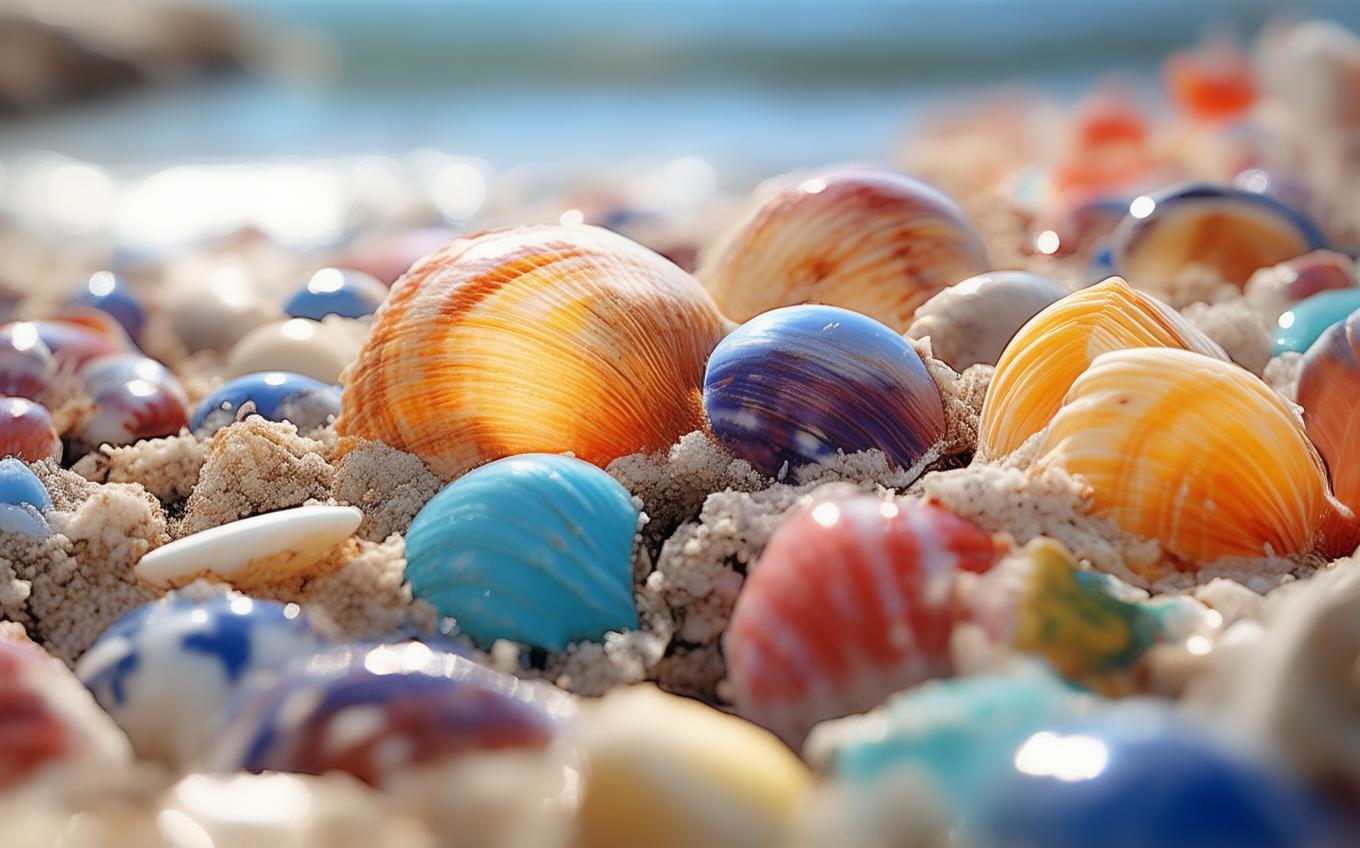
1. Basic Information
- Word: 贝壳
- Pinyin: bèi ké
- Literal Meaning: shellfish shell (贝 = shellfish/cowrie; 壳 = shell/husk)
- Primary Meaning: seashell; the hard protective outer layer of a marine mollusk, such as a clam, oyster, or snail
2. In-depth Explanation
-
Context and Usage:
In everyday Chinese, 贝壳 (bèi ké) is the most common word for “seashell.” It refers specifically to the shells of mollusks—the hard, often calcareous structures that protect the soft-bodied animal inside. You might use it when talking about shells found on the beach, shells used in jewelry or decoration, or the shells of sea creatures in biology.
The word is casual and widely understood. When you want to describe a shell you picked up by the sea, 贝壳 is the natural choice. It can also appear in metaphorical or poetic expressions, but usually retains its literal meaning. For land snails’ shells, you would normally say 蜗牛壳 (wō niú ké), not 贝壳, because 贝 specifically implies a marine or aquatic origin. So 贝壳 is firmly anchored to the ocean. -
Character Breakdown:
- 贝 (bèi): Originally a pictograph of a cowrie shell. In ancient China, cowrie shells were used as currency, so this character later became a radical in many money-related words (e.g., 财 “wealth”, 货 “goods”, 贵 “expensive”). By itself, 贝 now means “shellfish” or “mollusk” in the context of 贝壳.
- 壳 (ké): Means “shell,” “husk,” or “hard outer covering.” It can refer to eggshells (蛋壳 dàn ké), nut shells (果壳 guǒ ké), or the hard casing of an animal. Pronounced as “ké” in informal or general contexts, though in some technical or literary readings it is “qiào” (e.g., 地壳 dì qiào “the earth’s crust”). For 贝壳, the standard mainland pronunciation is bèi ké.
Together, 贝壳 literally means “shellfish shell”—an elegant compound word that makes perfect sense when you understand the characters.
3. Example Sentences
-
Chinese: 孩子们在沙滩上捡了许多漂亮的贝壳。
Pinyin: Hái zi men zài shā tān shàng jiǎn le xǔ duō piào liang de bèi ké.
English: The children picked up many beautiful seashells on the beach. -
Chinese: 这个贝壳项链是手工制作的。
Pinyin: Zhè ge bèi ké xiàng liàn shì shǒu gōng zhì zuò de.
English: This shell necklace is handmade. -
Chinese: 寄居蟹住在一个空的贝壳里。
Pinyin: Jì jū xiè zhù zài yī ge kōng de bèi ké lǐ.
English: The hermit crab lives inside an empty seashell.
Cultural Notes
Cowrie shells (贝壳) hold a special place in Chinese culture because they were used as one of the earliest forms of money in ancient times. This history is preserved in the written language: many characters involving wealth and trade contain the “贝” radical, such as 买 (mǎi, “buy”), 卖 (mài, “sell”), and 赚 (zhuàn, “earn”). When you learn 贝壳, you gain insight into why so many financial terms look the way they do.
In art and decoration, shells symbolize the ocean’s beauty and are common motifs in traditional crafts, jewelry, and even classical poetry. Finding a perfect shell on the beach is often seen as a small, natural treasure—a feeling shared across cultures.
Conclusion
To remember 贝壳 (bèi ké), think of the character 贝 as the cowrie-shaped key to both the ocean and ancient money, and 壳 as the hard cover that protects it. Together they give you the word for “seashell.” Use it whenever you’re talking about the shells of marine mollusks, whether you’re collecting them, crafting with them, or simply describing the treasures of the shoreline.
Sources and Further Reading
Dictionary links are provided for independent reference. Example sentences and learning notes on this page are educational explanations rather than dictionary quotations.



Comments (0)
No comments yet. Be the first to comment!