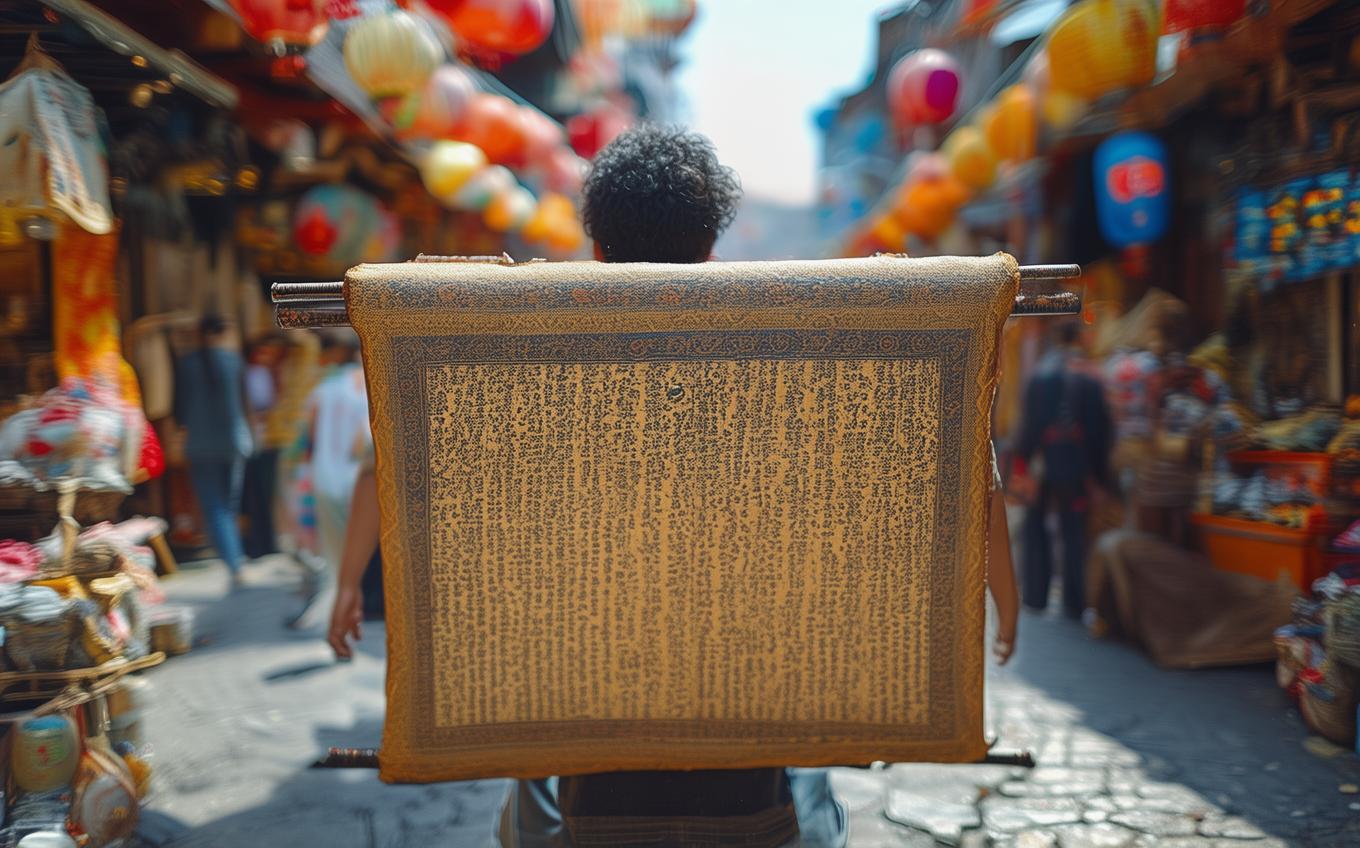
Understanding "背着" - Chinese Word Explanation
1. Basic Information
- Word: 背着
- Pinyin:
• bēi zhe (when referring to physically carrying on the back)
• bèi zhe (when meaning “behind someone’s back” / secretly) - Literal Meaning:
• bēi (to carry on the back) + zhe (continuous aspect marker) → “is carrying on the back”
• bèi (the back / behind) + zhe (adverbial suffix turning it into “with the back toward”) → “behind one’s back” - Primary Meaning:
1. (bēi zhe) – to be carrying a person or object on one’s back or shoulders, emphasizing an ongoing action or state.
2. (bèi zhe) – to do something secretly, behind someone’s back, without that person’s knowledge.
Because the characters are identical but the pronunciation and meaning change completely, learners must rely on context to distinguish between them.
2. In-depth Explanation
Context and Usage
1. bēi zhe (carrying on the back)
This concrete, physical meaning is used when someone is actively carrying a load on their back – a child, a backpack, an injured person, etc. The 着 (zhe) indicates that the carrying is ongoing, like “is carrying.” It is common in everyday descriptions of transportation by back.
- Usually followed by an object being carried: 背着 + [object] + (verb/rest of sentence).
- Can be used figuratively only in very specific metaphors (e.g., “carrying a burden” in a financial sense is more often 背负, not 背着), but 背着 (bēi zhe) almost always stays physical.
2. bèi zhe (behind one’s back)
This is an adverbial phrase meaning “without someone’s knowledge” or “behind someone’s back.” It modifies the main verb, telling you that the action was done covertly or without telling a certain person.
- Structure: 背着 + [person kept in the dark] + [verb phrase]
- It carries a strong sense of secrecy, sometimes guilt or sneakiness. Common in family contexts, relationships, and workplace gossip.
Character Breakdown
- 背 is a polysemic character:
• bēi (verb) – to carry on the back; to bear a load on one’s shoulders. This meaning uses the 1st tone.
• bèi (noun/verb) – the back of the body; also “to turn one’s back on,” “to betray,” or “to recite from memory.” This uses the 4th tone. - 着 (zhe) is a grammatical particle. With bēi, it marks a continuous state: “(be) carrying.” With bèi, it turns the noun “back” into an adverbial “with the back turned,” i.e., “behind (someone’s) back.”
So, the same two-character sequence unlocks two very different messages based solely on the tone of the first syllable.
3. Example Sentences
-
Chinese: 妈妈背着孩子去公园。
Pinyin: Māma bēi zhe háizi qù gōngyuán.
English: Mom is carrying the child on her back to the park. -
Chinese: 他背着一个很重的背包。
Pinyin: Tā bēi zhe yī gè hěn zhòng de bēibāo.
English: He is carrying a very heavy backpack on his back. -
Chinese: 她背着父母偷偷交了男朋友。
Pinyin: Tā bèi zhe fùmǔ tōutōu jiāo le nánpéngyou.
English: She secretly got a boyfriend behind her parents’ back.
4. Cultural Notes
- Carrying culture: In traditional Chinese families, especially in rural areas, it’s still common to see grandparents “背着” a grandchild while doing chores. The image of a mother bēi zhe her baby while working in the fields is deeply rooted in folk memory.
- The secretive “bèi zhe”: Chinese dramas and novels often use 背着 to show family tension. If someone bèi zhe their spouse makes a major decision, it immediately signals mistrust or a hidden agenda.
- Don’t confuse with “背书” (bèi shū) – “to recite texts,” where 背 is also 4th tone, but the character has a completely different meaning. Tone is everything here.
5. Conclusion
Remember 背着 is a chameleon word:
- If you hear bēi zhe, picture someone physically carrying something on their back.
- If you hear bèi zhe, imagine a person turning their back to hide an action from someone else.
The tone on 背 (bēi vs. bèi) is your compass – keep an ear out for it, and you’ll never confuse piggyback rides with secrets again.
Sources and Further Reading
Dictionary links are provided for independent reference. Example sentences and learning notes on this page are educational explanations rather than dictionary quotations.



Comments (0)
No comments yet. Be the first to comment!