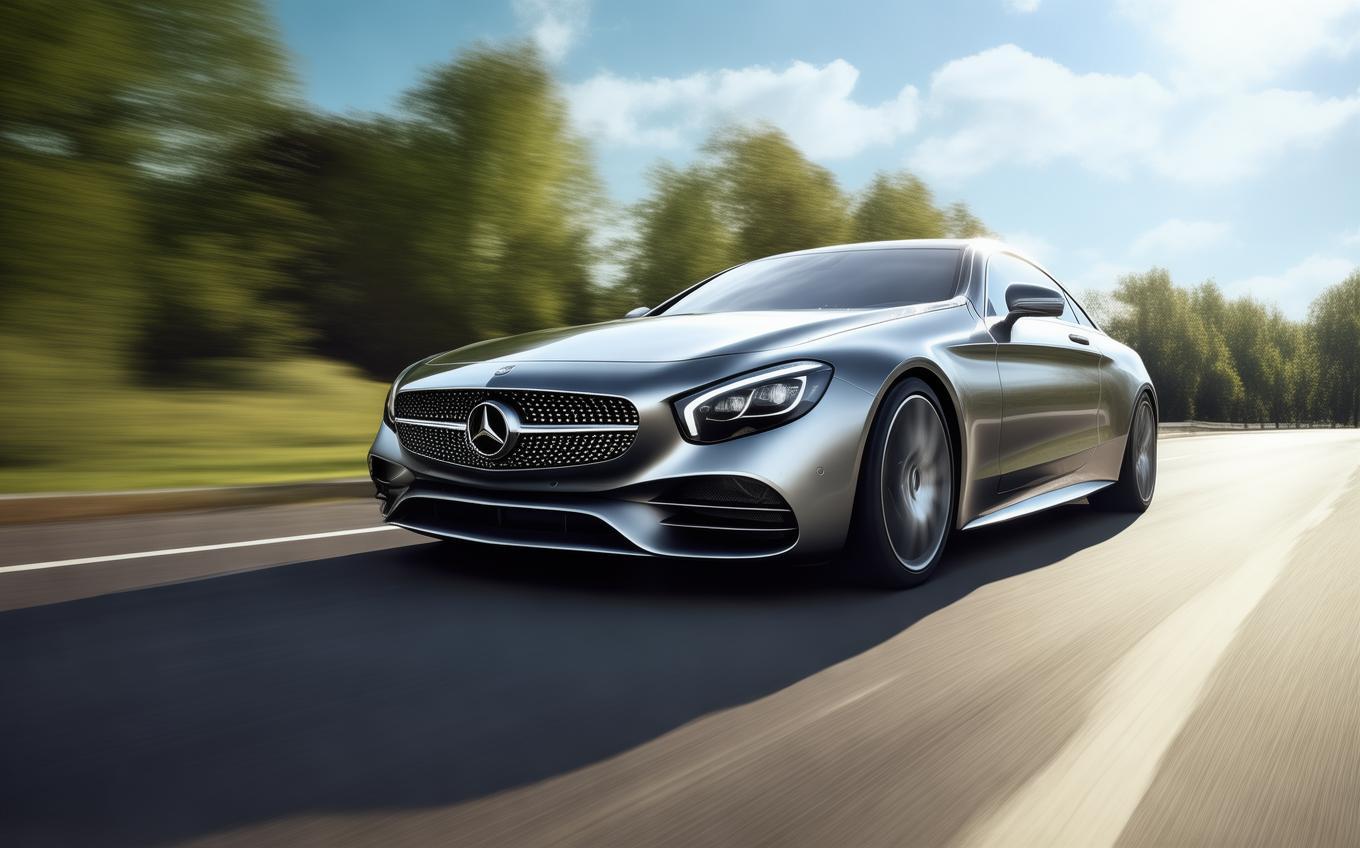
1. Basic Information
- Word: 奔驰
- Pinyin: bēnchí
- Literal Meaning: run + gallop
- Primary Meaning: to run quickly; to speed; to gallop; (as a proper noun) Mercedes-Benz
2. In-depth Explanation
-
Context and Usage: The word 奔驰 is a verb describing fast, energetic movement, often with a sense of power and grace. It can be used literally for animals (especially horses) running swiftly, vehicles speeding along, or even natural forces like wind or water. Figuratively, it can describe the rapid passage of time or a heart racing with excitement. When capitalized as a brand name, 奔驰 is the official Chinese name for the German automobile manufacturer Mercedes-Benz, chosen to evoke an image of speed and elegance. In everyday conversation, context tells you whether someone means “galloping” or the luxury car.
-
Character Breakdown:
- 奔 (bēn): means “to run fast,” “to dash,” or “to rush.” It suggests a headlong, energetic forward motion. The character historically depicts a person running with arms swinging.
- 驰 (chí): means “to gallop” (originally of a horse), “to speed,” or “to spread far and wide.” The left part (马) is the horse radical, cementing its equestrian origin. Together, 奔 and 驰 reinforce the idea of swift, powerful movement.
3. Example Sentences
- Chinese: 骏马在草原上奔驰。
- Pinyin: Jùnmǎ zài cǎoyuán shang bēnchí.
-
English: Fine horses gallop across the grassland.
-
Chinese: 他驾驶着一辆黑色奔驰车在高速公路上奔驰。
- Pinyin: Tā jiàshǐ zhe yī liàng hēisè bēnchí chē zài gāosù gōnglù shang bēnchí.
-
English: He drives a black Mercedes-Benz speeding along the highway.
-
Chinese: 时光奔驰,转眼又是一年。
- Pinyin: Shíguāng bēnchí, zhuǎnyǎn yòu shì yī nián.
- English: Time flies by; in the blink of an eye, another year has passed.
Cultural Notes
The choice of 奔驰 as the Chinese name for Mercedes-Benz is a masterful example of transcreation. Instead of a phonetic transliteration, the company adopted a meaningful word that conveys speed, power, and prestige—qualities the brand wishes to associate with its vehicles. The characters also sound somewhat similar to the German “Benz” (“Bēnchí” vs. “Bents”). This naming strategy resonates deeply with Chinese consumers, as the name itself paints a vivid picture of an automobile galloping on the open road. The brand’s slogan in Chinese, “The best or nothing,” is often rendered as “心所向,驰以恒” (xīn suǒ xiàng, chí yǐ héng), which again uses the character 驰 to suggest a lasting and passionate drive toward one’s aspirations.
Conclusion
Remember 奔驰 (bēnchí) as a dynamic word for galloping or speeding. Its two characters both point to fast motion, and it’s so vividly expressive that Mercedes-Benz adopted it. When you see 奔驰 in a text, look at the context: if it’s uppercase and referring to a car, it’s the brand; otherwise, it’s a poetic way to say “racing along.”
Sources and Further Reading
Dictionary links are provided for independent reference. Example sentences and learning notes on this page are educational explanations rather than dictionary quotations.



Comments (0)
No comments yet. Be the first to comment!