1. Basic Information
- Word: 绷带
- Pinyin: bēng dài
- Literal Meaning: binding strip / stretch band
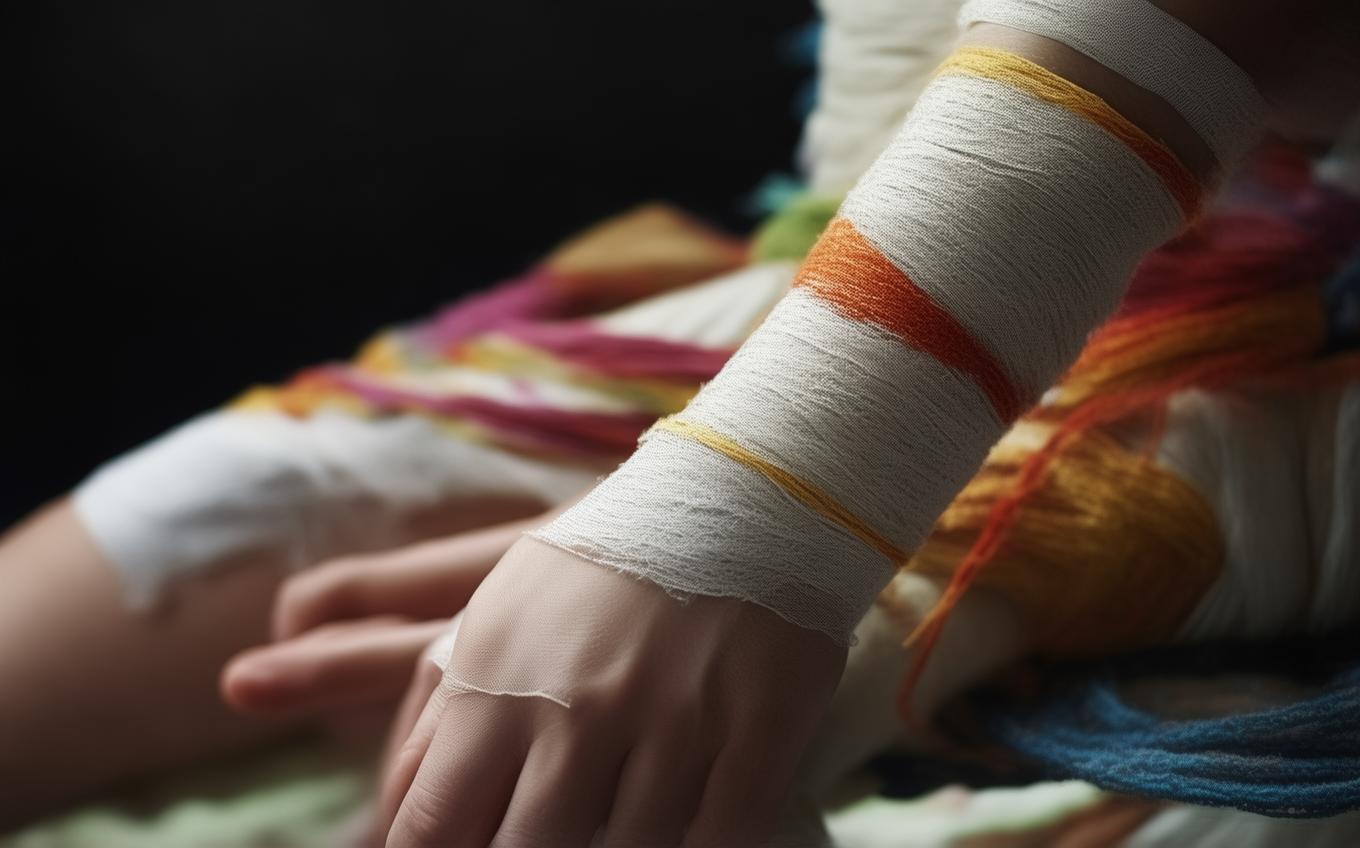
- Primary Meaning: bandage (a strip of material used to cover, protect, or support a wound or injured part of the body)
2. In-depth Explanation
-
Context and Usage:
"绷带" is the standard Chinese word for a medical bandage. It refers to any strip of cloth, gauze, elastic fabric, or similar material used to wrap a wound, hold a dressing in place, or provide support to a sprained joint. The word is used in both everyday conversations about minor injuries and in professional medical settings. It is a noun and commonly appears with verbs such as 缠 (chán – to wrap), 包扎 (bāozā – to dress/bandage), 换 (huàn – to change), or 拆 (chāi – to remove). For example, you can say "缠上绷带" (wrap with a bandage) or "换绷带" (change the bandage). There is no strong nuance between a "bandage" and a "dressing"; "绷带" can cover both concepts, although a plain gauze pad might be called "纱布" (shābù), and "绷带" often implies the rolled or strip form used for wrapping. -
Character Breakdown:
- 绷 (bēng): This character originally means “to stretch tight,” “to bind,” or “to draw taut.” It is composed of the silk radical 纟 (sīzìpáng) on the left, indicating a relation to fabric or thread, and the phonetic component 朋 (péng) on the right. In the context of "绷带," it conveys the action of wrapping something firmly.
- 带 (dài): This character means “belt,” “ribbon,” “strip,” or “to carry.” It can be seen in words like 皮带 (pídài – leather belt) or 领带 (lǐngdài – necktie). In "绷带," it refers to the physical strip of material that performs the binding.
Together, 绷带 paints a clear picture: a strip (带) used to bind or stretch over a wound (绷).
3. Example Sentences
-
Chinese: 护士用绷带包扎了我的伤口。
Pinyin: Hùshi yòng bēngdài bāozā le wǒ de shāngkǒu.
English: The nurse bandaged my wound with a bandage. -
Chinese: 你可以在药店买到绷带。
Pinyin: Nǐ kěyǐ zài yàodiàn mǎi dào bēngdài.
English: You can buy bandages at the pharmacy. -
Chinese: 运动时最好带上弹性绷带以防扭伤。
Pinyin: Yùndòng shí zuìhǎo dàishàng tánxìng bēngdài yǐ fáng niǔshāng.
English: It’s best to bring an elastic bandage when exercising to prevent sprains.
Cultural Notes
In China, as in many places, the concept of bandaging wounds has a long history dating back to traditional medicine, where clean cloth strips were used to secure herbal poultices. Modern "绷带" is a staple in every household first-aid kit, and children are taught basic bandaging skills in school health classes. The word is purely functional and carries no special idiomatic or metaphorical meaning, though you might occasionally hear phrases like 社会的绷带 (shèhuì de bēngdài, “bandage of society”) in literary or journalistic writing, where it metaphorically refers to something that holds society together after a crisis. For learners, simply remember that if you see an injury in a Chinese drama, the character will likely ask for a 绷带.
Conclusion
"绷带" (bēng dài) means bandage – think of a strip that binds a wound. The first character, 绷, suggests stretching or binding, while 带 gives you the “strip” image. Use it whenever you would say “bandage” in English, and pair it with verbs like 缠 (wrap) or 换 (change) to sound natural. Keeping this word in your active vocabulary will help you handle basic medical situations in Chinese with confidence.
Sources and Further Reading
Dictionary links are provided for independent reference. Example sentences and learning notes on this page are educational explanations rather than dictionary quotations.



Comments (0)
No comments yet. Be the first to comment!