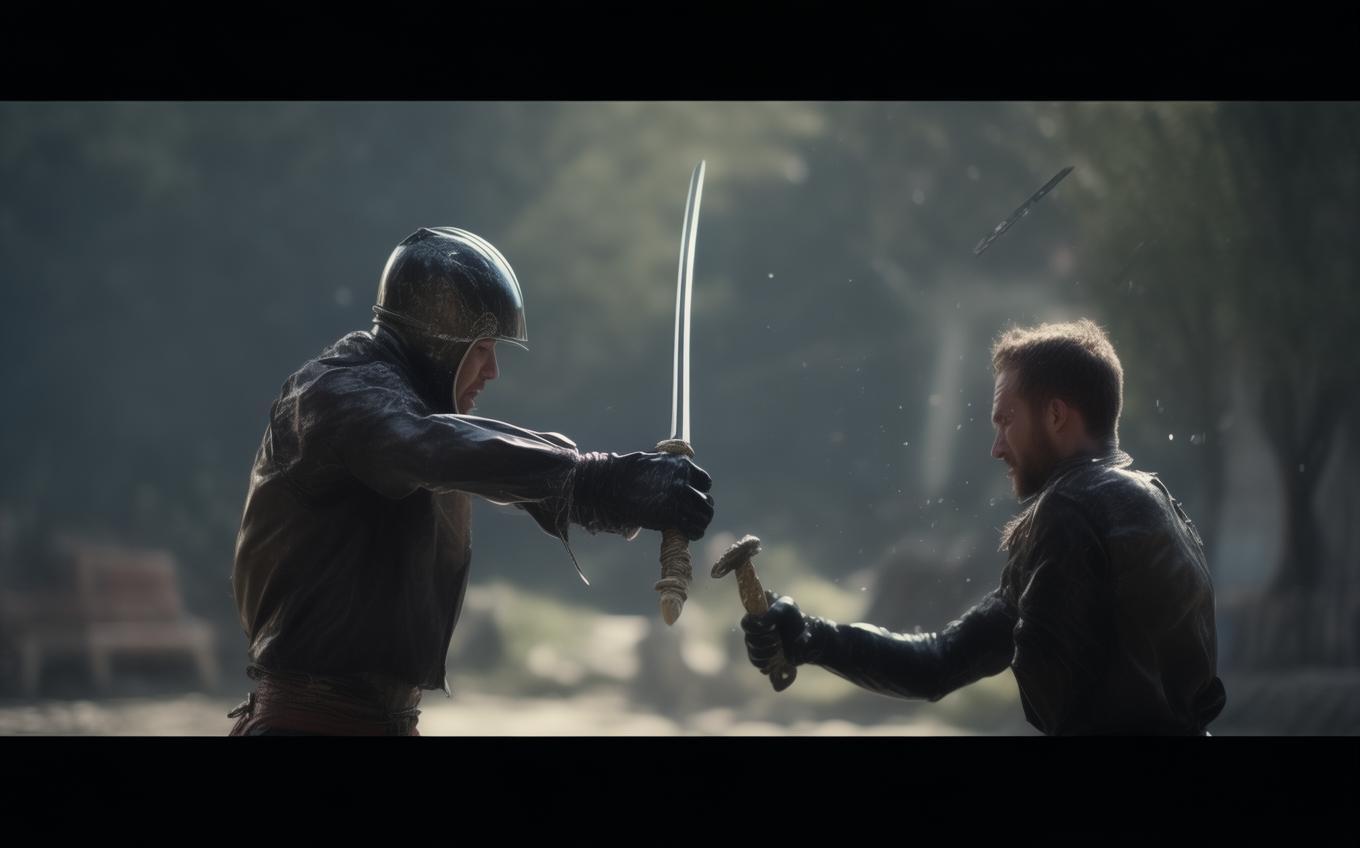
1. Basic Information
- Word: 比试
- Pinyin: bǐ shì
- Literal Meaning: “Compare test” or “compete try”
- Primary Meaning: A friendly trial of skill; an informal contest or match to see who is better at something.
2. In-depth Explanation
-
Context and Usage:
比试 is used when two or more people want to test each other’s ability in a particular area, often in a light-hearted or informal setting. It can refer to a physical contest (like martial arts, arm wrestling, or running), a skill-based challenge (cooking, calligraphy, video games), or even a verbal sparring match. The word carries a nuance of “let’s see how good you are” rather than a serious official competition. It can function as a verb (to have a contest) or a noun (the contest itself). For example, you might hear “我们比试一下” (Let’s have a little competition) among friends. In more formal or large-scale tournaments, words like 比赛 (bǐ sài) are preferred. -
Character Breakdown:
- 比 (bǐ): to compare; to compete; to contrast. This character implies a side-by-side evaluation of skills or qualities.
- 试 (shì): to test; to try; to experiment. This character adds the element of testing one’s ability through action.
Together, 比试 literally means “compare through testing” – you try something against each other to see who is better.
3. Example Sentences
-
Chinese: 两个剑客决定在院子里比试武艺。
Pinyin: Liǎng ge jiànkè juédìng zài yuànzi lǐ bǐshì wǔyì.
English: The two swordsmen decided to test their martial arts skills against each other in the courtyard. -
Chinese: 他们经常比试谁能先做完数学题。
Pinyin: Tāmen jīngcháng bǐshì shéi néng xiān zuòwán shùxuétí.
English: They often have a little competition to see who can finish the math problems first. -
Chinese: 这次比试只是朋友间的切磋,不用太认真。
Pinyin: Zhè cì bǐshì zhǐ shì péngyou jiān de qiēcuō, bú yòng tài rènzhēn.
English: This contest is just a friendly exchange between friends; no need to take it too seriously.
Cultural Notes
In traditional Chinese culture, especially in martial arts contexts (wuxia stories or real-life kung fu circles), 比试 is a common way to test skills without the brutal finality of a real duel. It emphasizes mutual improvement and “切磋” (qiēcuō – exchange of skills). In modern daily life, friends might use 比试 playfully for anything from cooking to video games, always implying a casual, respectful testing of abilities rather than a bitter rivalry.
Conclusion
Think of 比试 as a friendly challenge – you “compare” (比) by “testing” (试) each other’s skills. It’s informal, often light-hearted, and widely used when you want to see who is better at something just for fun. Remember the image of two kids arm wrestling on a desk, each grinning and saying, “Let’s 比试!”
Sources and Further Reading
Dictionary links are provided for independent reference. Example sentences and learning notes on this page are educational explanations rather than dictionary quotations.



Comments (0)
No comments yet. Be the first to comment!