
1. Basic Information
- Word: 闭幕
- Pinyin: bì mù
- Literal Meaning: close the curtain
- Primary Meaning: to conclude; to close (a conference, exhibition, ceremony, etc.); the closing of an event
2. In-depth Explanation
-
Context and Usage: 闭幕 is a formal verb used when an organized event, especially a large-scale gathering such as a conference, sports meet, film festival, or session of parliament, comes to an official end. It often carries a sense of ceremony and finality, similar to “draw the curtain” on a stage performance. In everyday speech, people rarely use 闭幕 for personal or trivial endings (like finishing dinner or a casual chat); it is reserved for institutional, public, or theatrical conclusions. The phrase can be used as a verb (“The conference will close tomorrow”) or in set terms like 闭幕式 (closing ceremony). Note that 闭幕 is intransitive; it does not take an object. You cannot say “闭幕 the meeting”; instead, the meeting 闭幕.
-
Character Breakdown:
- 闭 (bì): This character means “to shut,” “to close,” or “to block.” It’s the same 闭 used in 关门 (close a door) or 闭眼 (close one’s eyes). It carries the idea of bringing something to a halt or sealing it off.
- 幕 (mù): Originally referring to a tent, curtain, or screen, 幕 is strongly associated with theater and performance. Think of a stage curtain that falls to mark the end of a show. By extension, it represents any large public gathering or event. Combined, 闭 and 幕 literally mean “to close the curtain,” which vividly conveys the image of a performance or event coming to a dignified end.
3. Example Sentences
- Chinese: 奥运会今晚正式闭幕。
- Pinyin: Àoyùnhuì jīnwǎn zhèngshì bì mù.
-
English: The Olympic Games will officially close tonight.
-
Chinese: 会议闭幕以后,代表们纷纷离开了会场。
- Pinyin: Huìyì bì mù yǐhòu, dàibiǎomen fēnfēn líkāi le huìchǎng.
-
English: After the conference concluded, the delegates left the venue one after another.
-
Chinese: 电影节通过一场盛大的闭幕式来宣布获奖名单。
- Pinyin: Diànyǐngjié tōngguò yī chǎng shèngdà de bìmùshì lái xuānbù huòjiǎng míngdān.
- English: The film festival announced the award winners through a grand closing ceremony.
Cultural Notes
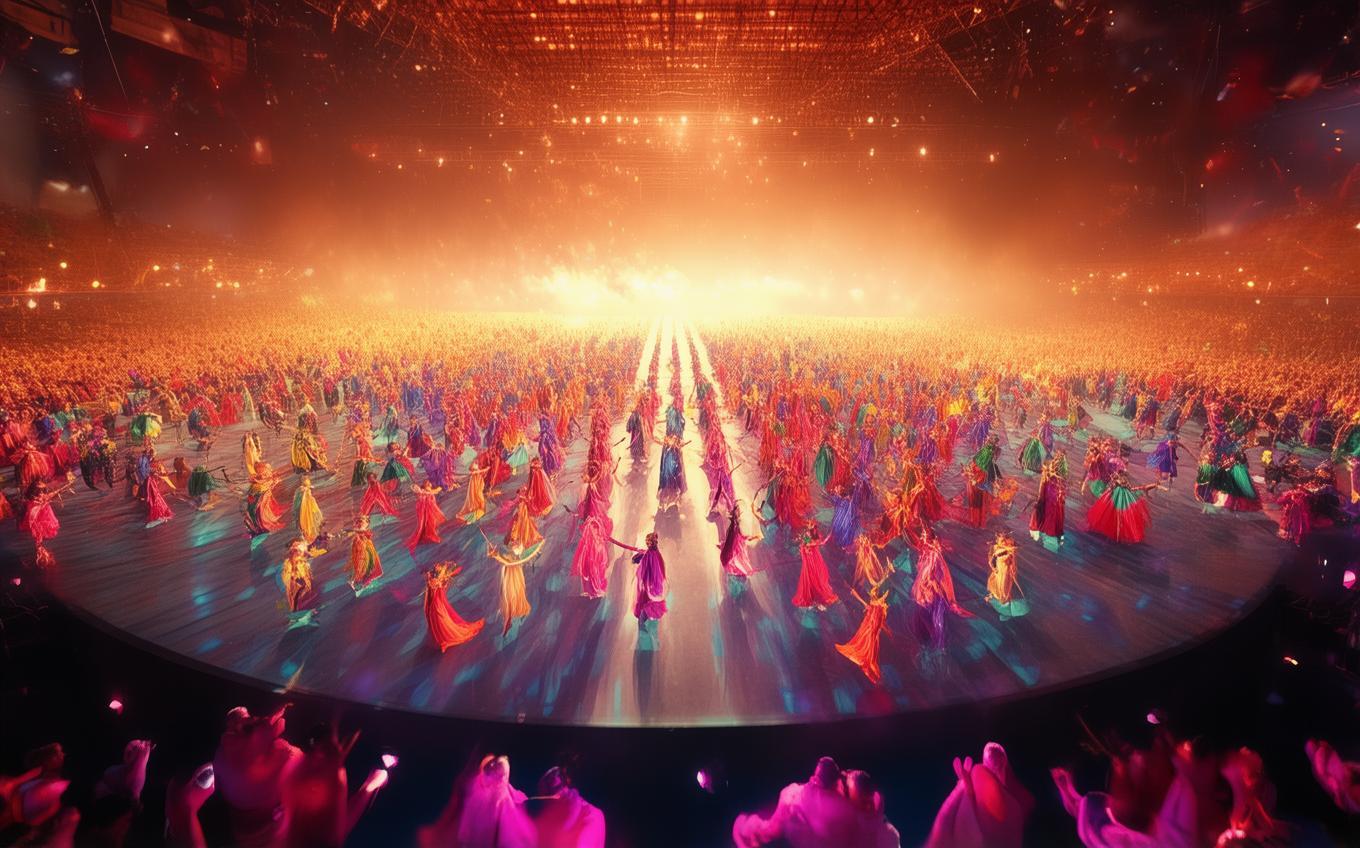
In Chinese culture, the metaphor of the curtain is deeply rooted in traditional opera and theater, where the rising and falling of the curtain signal the beginning and end of a performance. Thus, 开幕 (kāimù, “open the curtain”) and 闭幕 are a natural pair, used for everything from political congresses to sporting events. The word carries a sense of order and formality—suggesting that the event was planned and structured, not spontaneous. Notably, the closing ceremony (闭幕式) is often just as important as the opening ceremony, featuring cultural performances, speeches, and symbolic gestures like passing a flag to the next host. Using 闭幕 correctly will make your Chinese sound polished and precise, especially in news reports or official announcements.
Conclusion
Remember 闭幕 as “closing the curtain” on a stage. Use it for formal, public events ending officially—Olympics, conferences, exhibitions, sessions. The character 闭 gives the sense of shutting, and 幕 paints the image of a theater curtain. Together, they form a vivid and elegant term for bringing something important to a close.
Sources and Further Reading
Dictionary links are provided for independent reference. Example sentences and learning notes on this page are educational explanations rather than dictionary quotations.


Comments (0)
No comments yet. Be the first to comment!