1. Basic Information
- Word: 闭幕式
- Pinyin: bì mù shì
- Literal Meaning: "close – curtain – ceremony"
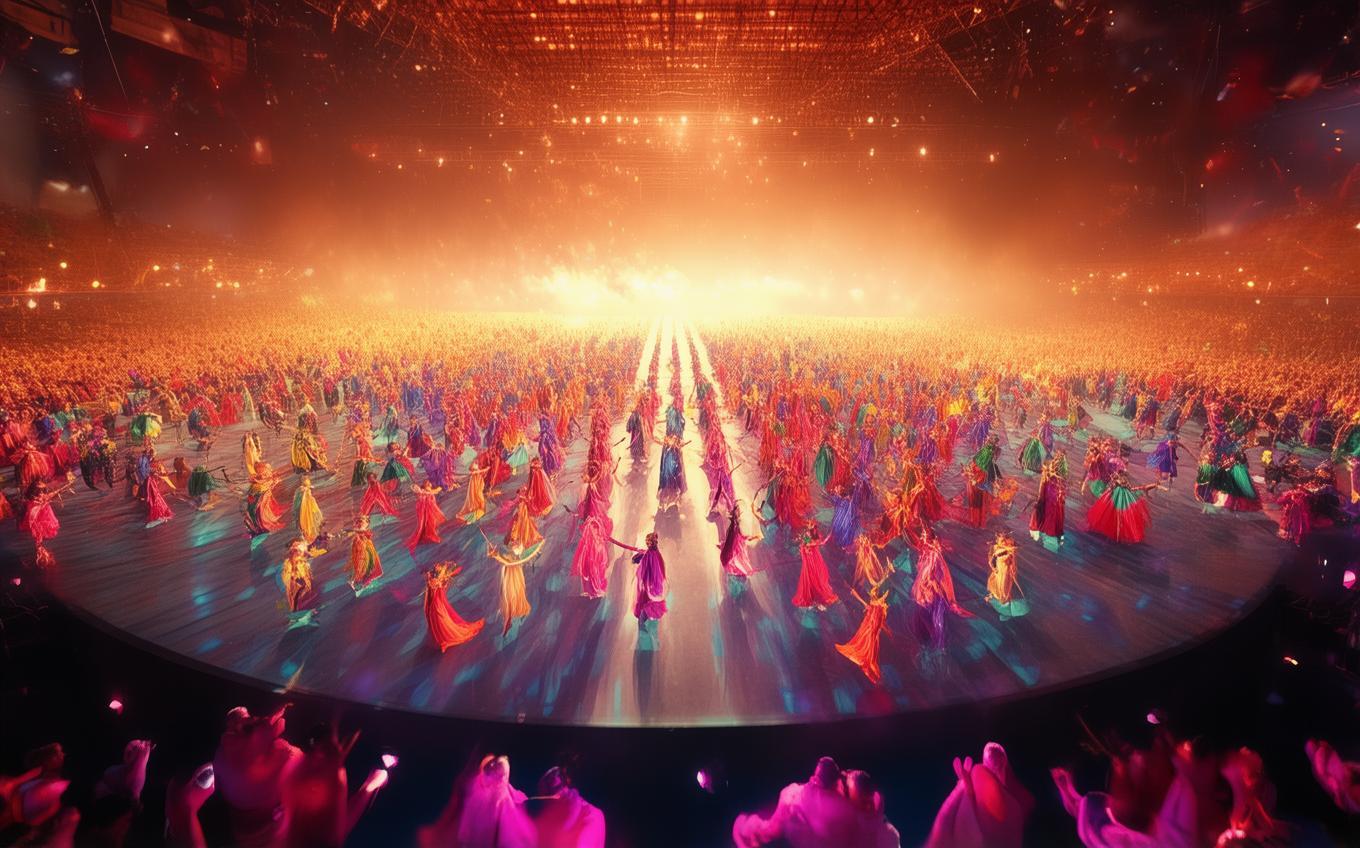
- Primary Meaning: Closing ceremony (a formal event that marks the end of a conference, festival, sports competition, etc.)
2. In-depth Explanation
-
Context and Usage:
闭幕式 is used for any organized, often ceremonial conclusion to a sizable event. It is the counterpart to 开幕式 (kāi mù shì, opening ceremony). You will hear it most frequently in contexts such as the Olympic Games, a film festival, a business conference, an academic forum, or a cultural exhibition. The word is neutral in tone but implies a formal, planned ending. It is not used for informal get-togethers or small personal events; for those, you would use expressions like “聚会结束” (jù huì jié shù, the party ended). -
Character Breakdown:
- 闭 (bì): to close, to shut. It carries the idea of bringing something to an end.
- 幕 (mù): curtain. In traditional Chinese theatres, a performance would literally end when the curtain fell, so "closing the curtain" became a metaphor for concluding an event.
- 式 (shì): ceremony, style, form. This character marks the word as a formal, ritualized occasion.
Together, “closing the curtain ceremony” vividly captures the idea of a ceremonial finale.
3. Example Sentences
-
Chinese: 奥运会的闭幕式非常精彩。
Pinyin: Ào yùn huì de bì mù shì fēi cháng jīng cǎi.
English: The Olympic closing ceremony was very spectacular. -
Chinese: 会议结束后,我们举行了一个简短的闭幕式。
Pinyin: Huì yì jié shù hòu, wǒ men jǔ xíng le yī ge jiǎn duǎn de bì mù shì.
English: After the conference ended, we held a short closing ceremony. -
Chinese: 你明天会去看音乐节的闭幕式吗?
Pinyin: Nǐ míng tiān huì qù kàn yīn yuè jié de bì mù shì ma?
English: Will you go to watch the music festival’s closing ceremony tomorrow?
Cultural Notes
In Chinese culture, large-scale events often place great importance on symmetry between opening and closing. Major sporting events like the Olympics or national games will have elaborate 闭幕式 that mirror the grandeur of the opening, often including artistic performances, speeches from dignitaries, and symbolic acts such as handing over the flag to the next host city. At the Olympic closing ceremony, the ceremonial extinguishing of the flame is a universally recognized moment. Business or academic conferences in China also commonly include a 闭幕式 where organizers summarise achievements, thank participants, and formally declare the event closed. Knowing this word shows an understanding of formal event protocol in Chinese-speaking environments.
Conclusion
Remember 闭幕式 as “the ceremony that closes the curtain” on an event. Think of the falling theatre curtain (幕) to link the characters to the meaning. Use it whenever you need to refer to the official wrap-up of a formal gathering, and pair it with 开幕式 for a complete pair of bookend ceremonies.
Sources and Further Reading
Dictionary links are provided for independent reference. Example sentences and learning notes on this page are educational explanations rather than dictionary quotations.



Comments (0)
No comments yet. Be the first to comment!