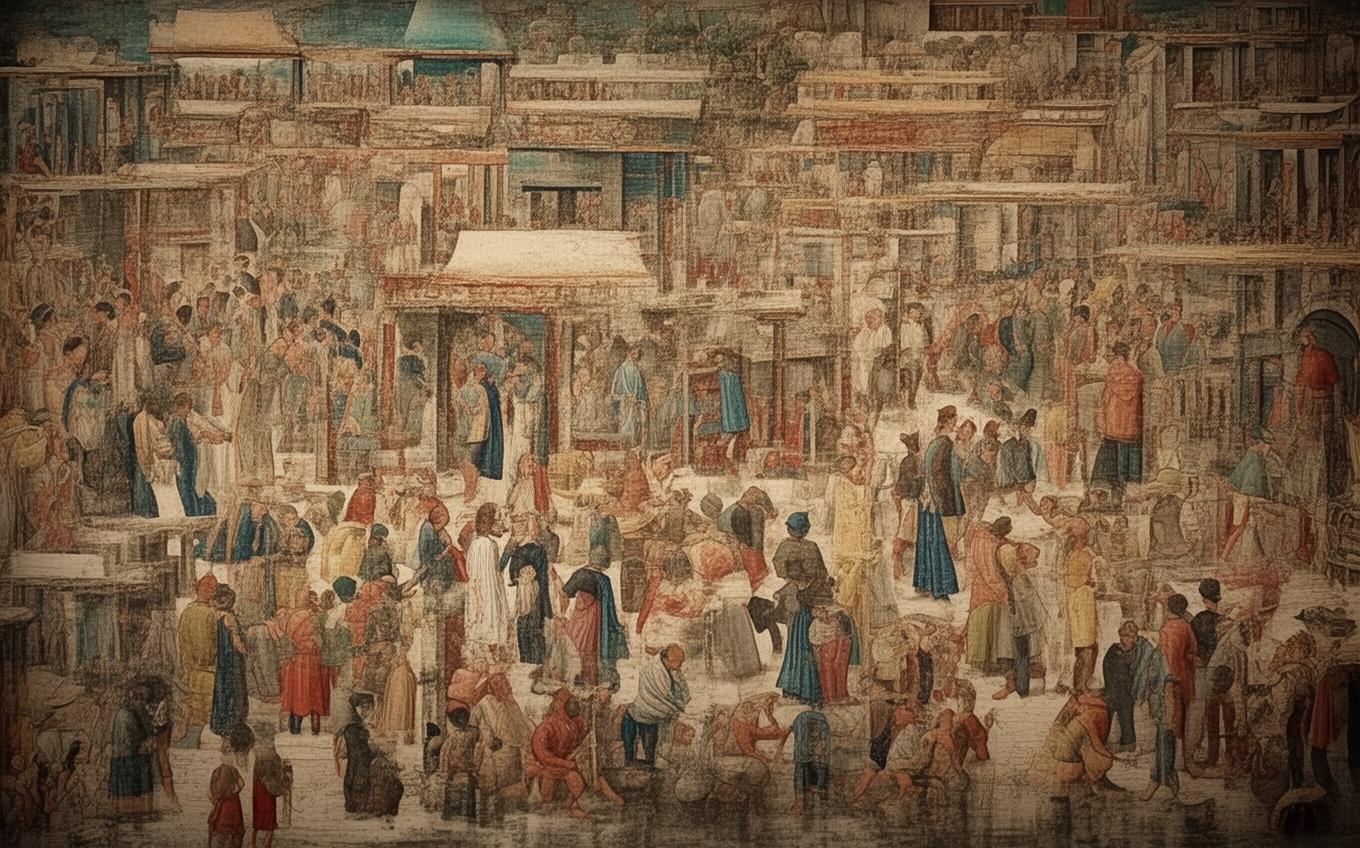
Understanding "壁画" - Chinese Word Explanation
1. Basic Information
- Word: 壁画
- Pinyin: bì huà
- Literal Meaning: wall painting
- Primary Meaning: mural (a painting or other artwork applied directly to a wall, ceiling, or other permanent surface)
2. In-depth Explanation
-
Context and Usage: "壁画" is the standard, all-purpose term for any painting made directly on a wall surface. It covers both grand historical frescoes (like those in cathedrals or ancient tombs) and modern indoor or outdoor murals, including street art. The word is neutral in register—equally at home in art history books, casual conversation about home decoration, or news articles about new public art projects. There is no separate word to distinguish frescoes from dry-wall painting; "壁画" covers all techniques. When you want to specify a "fresco" technique, you can say "湿壁画 (shī bì huà)" but most daily usage just uses "壁画."
-
Character Breakdown:
- 壁 (bì): wall, partition, cliff. This character itself combines the semantic component 土 (earth/clay) and the phonetic 辟 (bì). It evokes the idea of a solid, vertical surface.
- 画 (huà): painting, drawing, picture. It originally depicted a hand holding a brush delineating boundaries or patterns. As a verb, it means "to paint" or "to draw." Together, "壁画" literally means "wall-painting," a straightforward compound like "bookcase" or "sunlight" in English.
3. Example Sentences
- Chinese: 敦煌的壁画非常精美。
- Pinyin: Dūnhuáng de bìhuà fēicháng jīngměi.
-
English: The murals in Dunhuang are extremely exquisite.
-
Chinese: 这幅壁画描绘了古代的生活场景。
- Pinyin: Zhè fú bìhuà miáohuì le gǔdài de shēnghuó chǎngjǐng.
-
English: This mural depicts scenes of ancient life.
-
Chinese: 艺术家正在教堂的墙壁上创作一幅巨大的壁画。
- Pinyin: Yìshùjiā zhèngzài jiàotáng de qiángbì shàng chuàngzuò yī fú jùdà de bìhuà.
- English: The artist is creating a huge mural on the wall of the church.
Cultural Notes
In Chinese culture, "壁画" carries immense historical weight. The most famous examples are the Buddhist cave murals at the Mogao Caves in Dunhuang (敦煌莫高窟, Dūnhuáng Mògāo Kū), a UNESCO World Heritage site. These murals span a thousand years, illustrating religious scriptures, legends, and daily life along the Silk Road. Similarly, tomb murals from the Han and Tang dynasties provide vivid glimpses into aristocratic life, and temple murals (such as in the Yongle Palace) showcase exquisite Daoist iconography. Contemporary China also embraces "壁画" as a tool for urban beautification and cultural expression, often blending traditional motifs with modern styles. So the word bridges a towering artistic heritage and current creative practice.
Conclusion
Think of "壁画" as exactly what its two characters say: "wall" + "painting" = "mural." It’s the go-to word for any painted work on a wall, from ancient cave art to a child’s bedroom wall decoration. The pinyin bì huà is easy to remember because it sounds a bit like "be whoa" – imagine standing before a magnificent mural and saying, "Behold!"
Sources and Further Reading
Dictionary links are provided for independent reference. Example sentences and learning notes on this page are educational explanations rather than dictionary quotations.

Comments (0)
No comments yet. Be the first to comment!