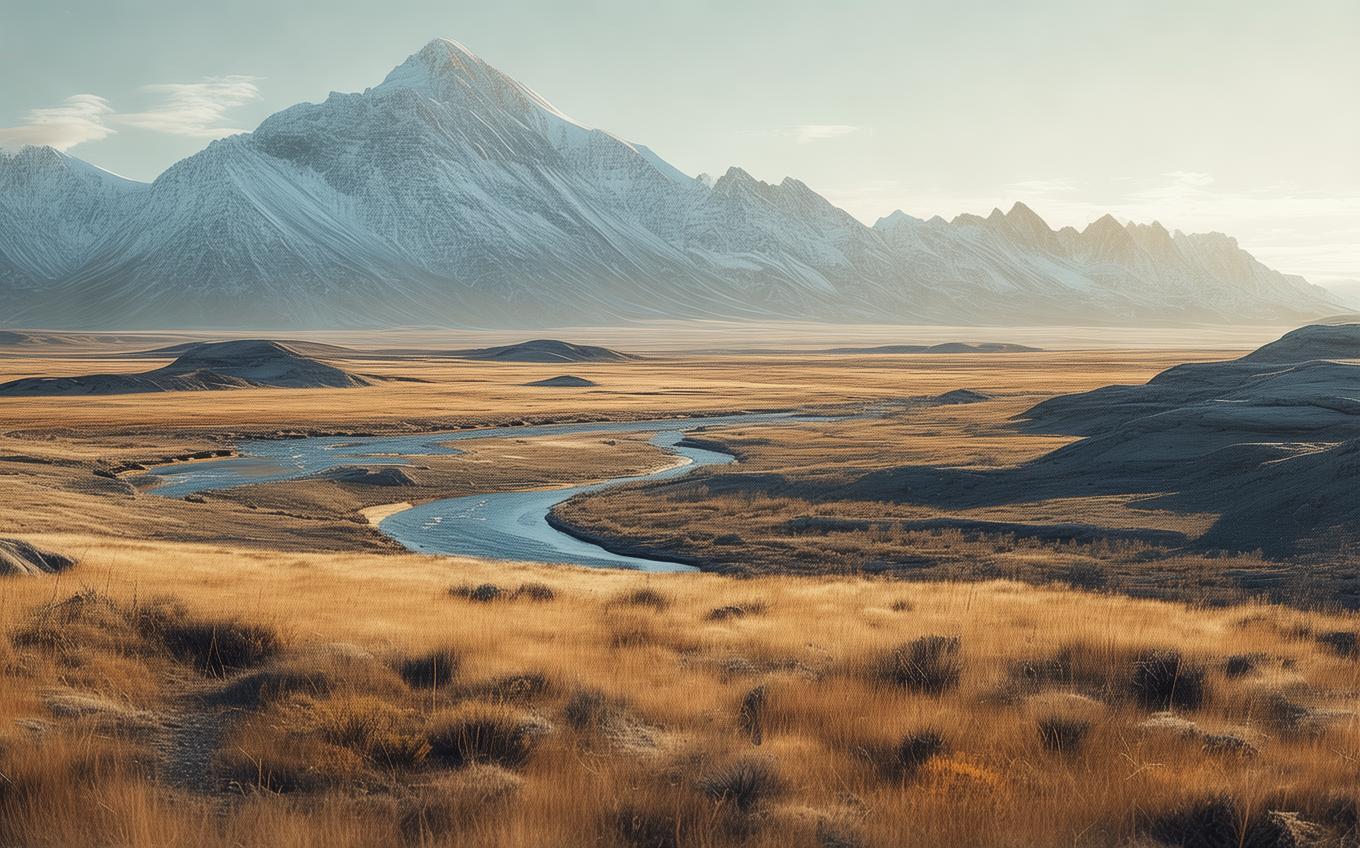
Understanding "边境" - Chinese Word Explanation
1. Basic Information
- Word: 边境
- Pinyin: biān jìng
- Literal Meaning: edge/rim (边) + boundary/territory (境)
- Primary Meaning: national border, frontier area (the region along the boundary between two countries)
2. In-depth Explanation
-
Context and Usage:
The word 边境 is used to refer to the geographical area adjacent to a national border. It can describe both the physical line dividing countries and, more commonly, the border region as a whole – the zone where one country ends and another begins. You will encounter it in formal news reports, official documents, travel warnings, and everyday conversation when talking about frontier zones, border crossings, or security near a country’s edge.
Nuances: While 边境 usually implies a political or national border, it can also appear in compound terms like 边境贸易 (border trade) or 边境地区 (border area). It is slightly more formal than colloquial terms for a simple dividing line, but still widely used. Be careful not to confuse it with 边界 (biān jiè), which emphasizes the exact dividing line (like a demarcation line on a map), whereas 边境 often invokes a zone or region around that line. -
Character Breakdown:
- 边 (biān): Originally means “edge” or “side.” In this context, it indicates the outermost part, the frontier. It appears in words like 旁边 (pángbiān – beside) and 路边 (lùbiān – roadside).
- 境 (jìng): Means “border,” “boundary,” or “territory.” It carries the sense of a realm or a defined area. You see it in 环境 (huánjìng – environment) and 国境 (guójìng – national territory).
Together, 边 and 境 create “the edge territory,” i.e., the border area of a country.
3. Example Sentences
-
Chinese: 他们住在边境附近的一个小镇上。
Pinyin: Tāmen zhù zài biānjìng fùjìn de yī gè xiǎo zhèn shàng.
English: They live in a small town near the border. -
Chinese: 边境检查非常严格,请准备好您的护照。
Pinyin: Biānjìng jiǎnchá fēicháng yángé, qǐng zhǔnbèi hǎo nín de hùzhào.
English: Border checks are very strict; please have your passport ready. -
Chinese: 两国之间的边境因冲突而暂时关闭。
Pinyin: Liǎng guó zhī jiān de biānjìng yīn chōngtū ér zhànshí guānbì.
English: The border between the two countries has been temporarily closed due to conflict.
Cultural Notes
China shares land borders with 14 countries, making the word 边境 frequently relevant in discussions of trade, travel, and geopolitics. Historical landmarks like the Great Wall once served as a defensive 边境. Today, you might hear about 边境城市 (border cities) such as Manzhouli on the China–Russia border or Ruili on the China–Myanmar border, where cross‑border commerce and cultural exchange are prominent. In Chinese media, 边境 is also associated with security operations against smuggling and illegal immigration, reflecting the dual nature of borders as both bridges and barriers.
Conclusion
Remember 边境 (biān jìng) as the “border region” – the area where one nation’s territory meets another’s. The characters 边 (edge) and 境 (boundary/territory) combine to paint a picture of the frontier zone. Use it to talk about border areas, checkpoints, or any context involving a country’s edge. With its clear character logic and broad application, 边境 is a practical and important word for understanding Chinese geography and global affairs.
Sources and Further Reading
Dictionary links are provided for independent reference. Example sentences and learning notes on this page are educational explanations rather than dictionary quotations.


Comments (0)
No comments yet. Be the first to comment!