1. Basic Information
- Word: 遍布
- Pinyin: biàn bù
- Literal Meaning: “everywhere / all over” + “to spread / to arrange”
- Primary Meaning: to be spread all over; to be found everywhere; to cover (a large area); to be widely distributed
2. In-depth Explanation
Context and Usage
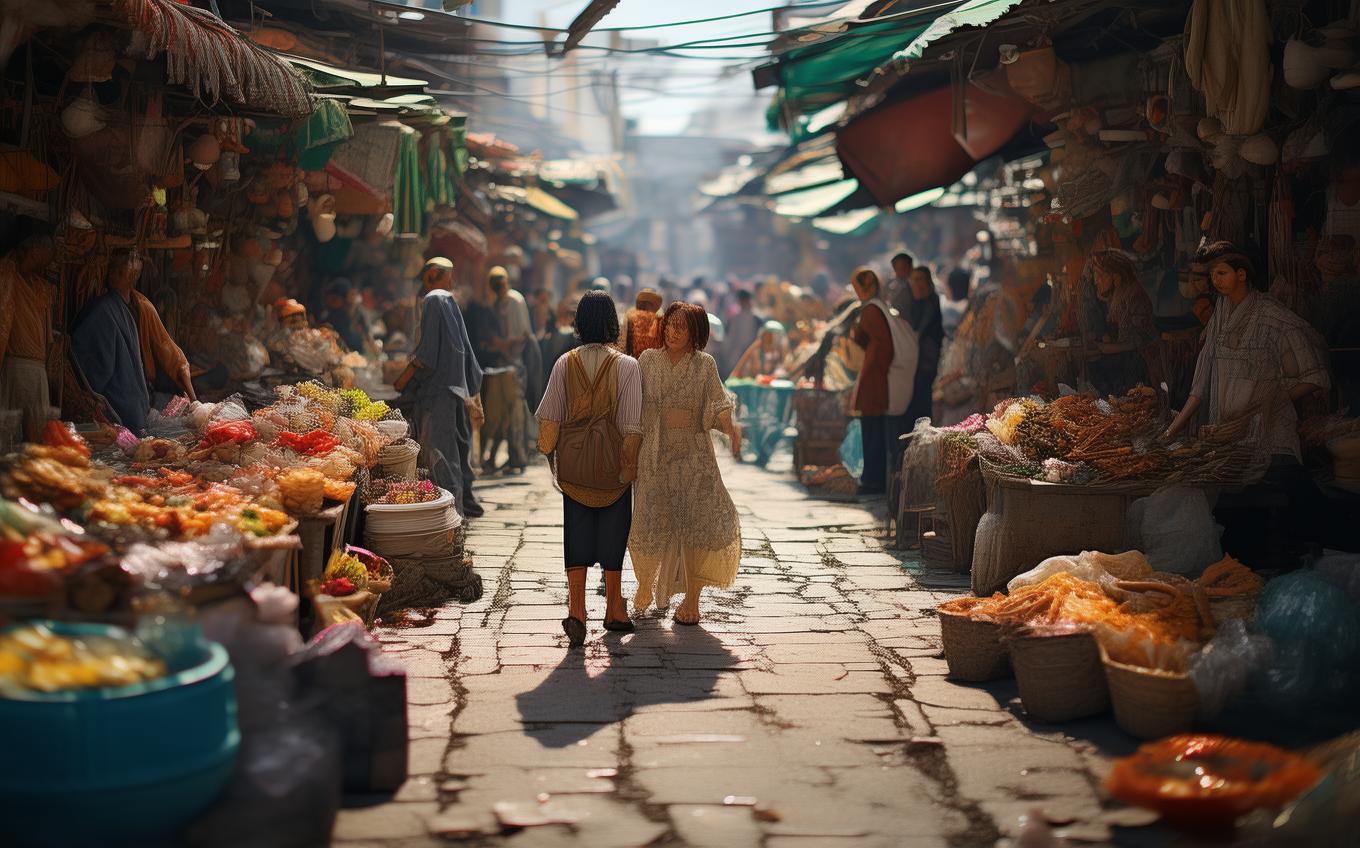
“遍布” is used when you want to say that something exists in many places across a wide area – it is widespread, ubiquitous, or covers a surface completely. It can describe physical objects, plants, buildings, or people, as well as abstract things like ideas, emotions, influences, or phenomena.
The word often appears in descriptive or formal writing, but it is also perfectly natural in daily conversation when talking about distribution. It typically follows the structure:
Subject (the thing that is widespread) + 遍布 + location or area.
For example, you might say “flowers are spread all over the garden” or “this brand’s stores can be found everywhere in the country”. The emphasis is always on the extensive coverage, not on a single spot.
Character Breakdown
- 遍 (biàn) – This character means “everywhere,” “all over,” or “throughout.” It indicates that something reaches every part of an area. Think of it as the “all around” component.
- 布 (bù) – Originally meant “cloth,” but as a verb it means “to spread,” “to arrange,” or “to distribute.” It carries the image of something unfolding or being laid out over a surface.
Together, 遍布 literally paints a picture: something that has been spread out so that it is everywhere. The combination is stronger than simply “many” – it implies that you could go to almost any spot in the mentioned area and encounter the thing.
3. Example Sentences
-
Chinese: 鲜艳的花朵遍布整个花园。
Pinyin: Xiānyàn de huāduǒ biàn bù zhěnggè huāyuán.
English: Bright flowers are spread all over the entire garden. -
Chinese: 这家连锁餐厅的分店遍布全国各地。
Pinyin: Zhè jiā liánsuǒ cāntīng de fēndiàn biàn bù quánguó gèdì.
English: Branches of this chain restaurant can be found everywhere across the country. -
Chinese: 听到好消息后,笑容遍布她的脸庞。
Pinyin: Tīngdào hǎo xiāoxi hòu, xiàoróng biàn bù tā de liǎnpáng.
English: After hearing the good news, a smile spread across her face.
Cultural Notes
In Chinese, the character 布 is deeply associated with cloth and fabric. Historically, spreading a cloth over a surface was a common way to cover it completely, and that visual has been extended to abstract ideas of distribution. The word 遍布 is neutral in tone but carries a sense of thoroughness – it’s not just “scattered here and there,” but rather a complete or near-complete coverage. It often appears in news reports, business descriptions (e.g., “Our services span the globe”), and nature writing. A common fixed phrase is 遍布全球 (biàn bù quánqiú) – “spread all over the globe”.
Conclusion
Remember 遍布 as “to spread everywhere” or “to be found all over.” The first character 遍 gives the sense of “everywhere,” and 布 adds the action of spreading. Whenever you want to describe something that covers a large area or is widely present – from flowers in a field to a smile on a face – 遍布 is your word.
Sources and Further Reading
Dictionary links are provided for independent reference. Example sentences and learning notes on this page are educational explanations rather than dictionary quotations.



Comments (0)
No comments yet. Be the first to comment!