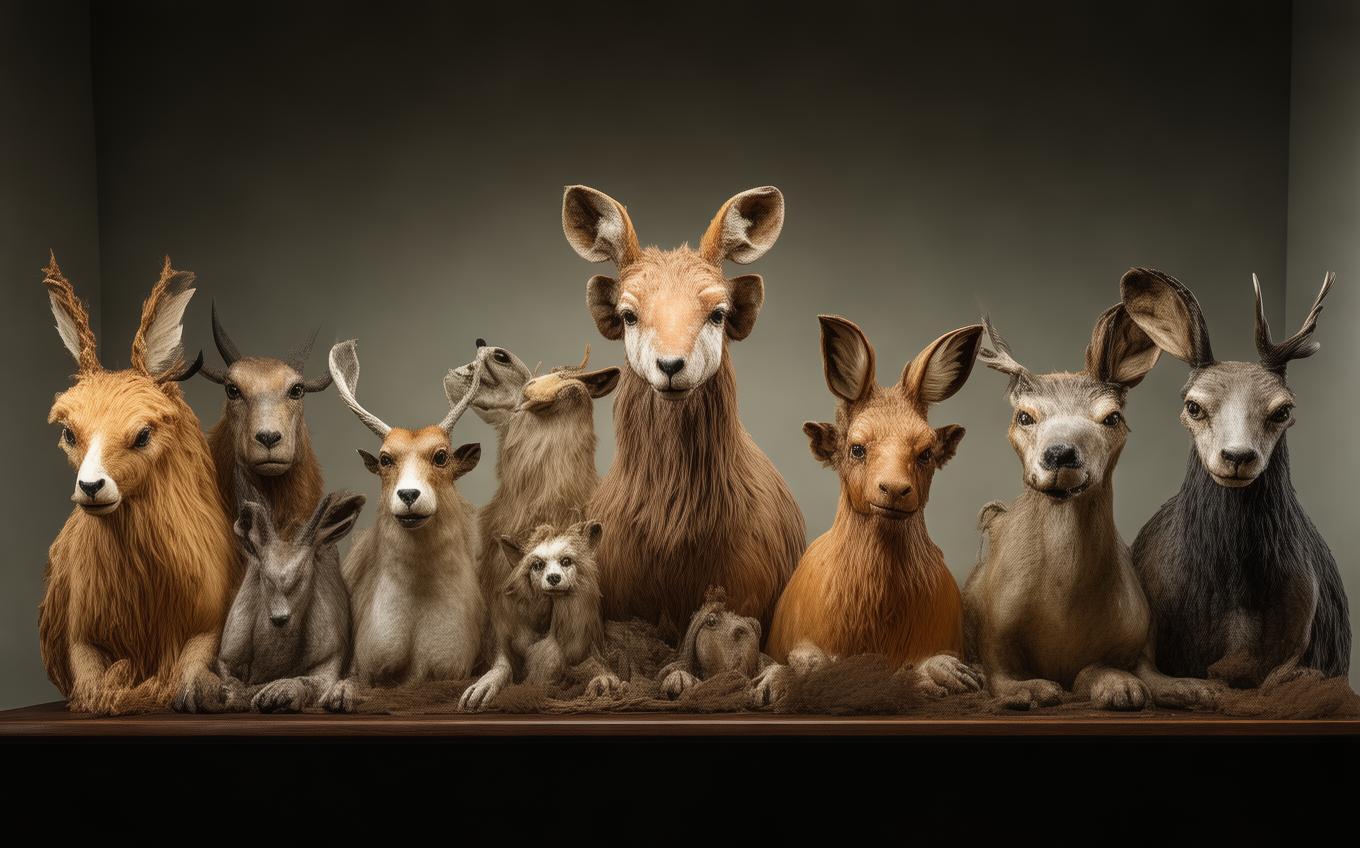
1. Basic Information
- Word: 标本
- Pinyin: biāoběn
- Literal Meaning: “Standard root” or “marked source”
- Primary Meaning: A specimen (a physical sample, typically a preserved plant, animal, or part of one, prepared for scientific study, display, or collection)
2. In-depth Explanation
-
Context and Usage:
标本 (biāoběn) is a formal, concrete noun used most often in scientific and educational settings. It refers to a specimen — an intact, prepared example of a living organism (or its parts) that is preserved for examination. You will encounter this word in biology labs, natural history museums, herbariums, and medical collections. While it can occasionally be used metaphorically to mean a “perfect example” of some quality (e.g., a person might be jokingly called a “标本 of laziness”), this figurative usage is rare and less natural. For learners, it’s safest to stick with the core meaning: a preserved sample used for study or exhibition. -
Character Breakdown:
The word is made up of two characters that each add a layer of meaning: - 标 (biāo) – Primarily means “mark,” “sign,” “standard,” or “label.” Historically, the character depicted the top of a tree (a visible mark), which evolved into the idea of a visible standard or target. Here, it contributes the sense of something that is chosen or set aside as representative.
- 本 (běn) – Fundamentally means “root,” “origin,” or “foundation.” The pictograph shows a tree (木) with a stroke emphasizing its root. In the context of 标本, it implies something that captures the essential, core nature of the original living thing — a sample that gets to the root of what it represents.
Together, 标本 suggests “a standard sample that retains the essence of the original” — a specimen.
3. Example Sentences
-
Chinese: 这个博物馆有很多动物标本。
Pinyin: Zhège bówùguǎn yǒu hěnduō dòngwù biāoběn.
English: This museum has many animal specimens. -
Chinese: 科学家正在研究蝴蝶标本。
Pinyin: Kēxuéjiā zhèngzài yánjiū húdié biāoběn.
English: Scientists are studying butterfly specimens. -
Chinese: 她把植物做成了标本保存起来。
Pinyin: Tā bǎ zhíwù zuò chéngle biāoběn bǎocún qǐlái.
English: She preserved the plant as a specimen (lit. “made the plant into a specimen and preserved it”).
Cultural Notes
In China, the tradition of preparing and studying 标本 has deep roots in both medicine and natural history. Large institutions like the Beijing Museum of Natural History house enormous collections of animal and plant 标本 that serve as scientific records and educational tools. Even in traditional Chinese medicine, dried plant and animal 标本 were (and still are) preserved for reference and teaching, bridging the ancient and the modern. When you visit a Chinese science museum or university biology department, you’ll often see signs for 标本馆 (biāoběn guǎn) — “specimen hall” — a space dedicated entirely to these preserved treasures.
Conclusion
Remember 标本 (biāoběn) as the word for a preserved specimen — a carefully chosen physical sample that captures the “root” essence of a living thing under a “standard” form. Whether it’s a dried flower, a pinned insect, or a jarred organ, 标本 is the term that connects science, education, and the beauty of the natural world in Chinese.
Sources and Further Reading
Dictionary links are provided for independent reference. Example sentences and learning notes on this page are educational explanations rather than dictionary quotations.



Comments (0)
No comments yet. Be the first to comment!