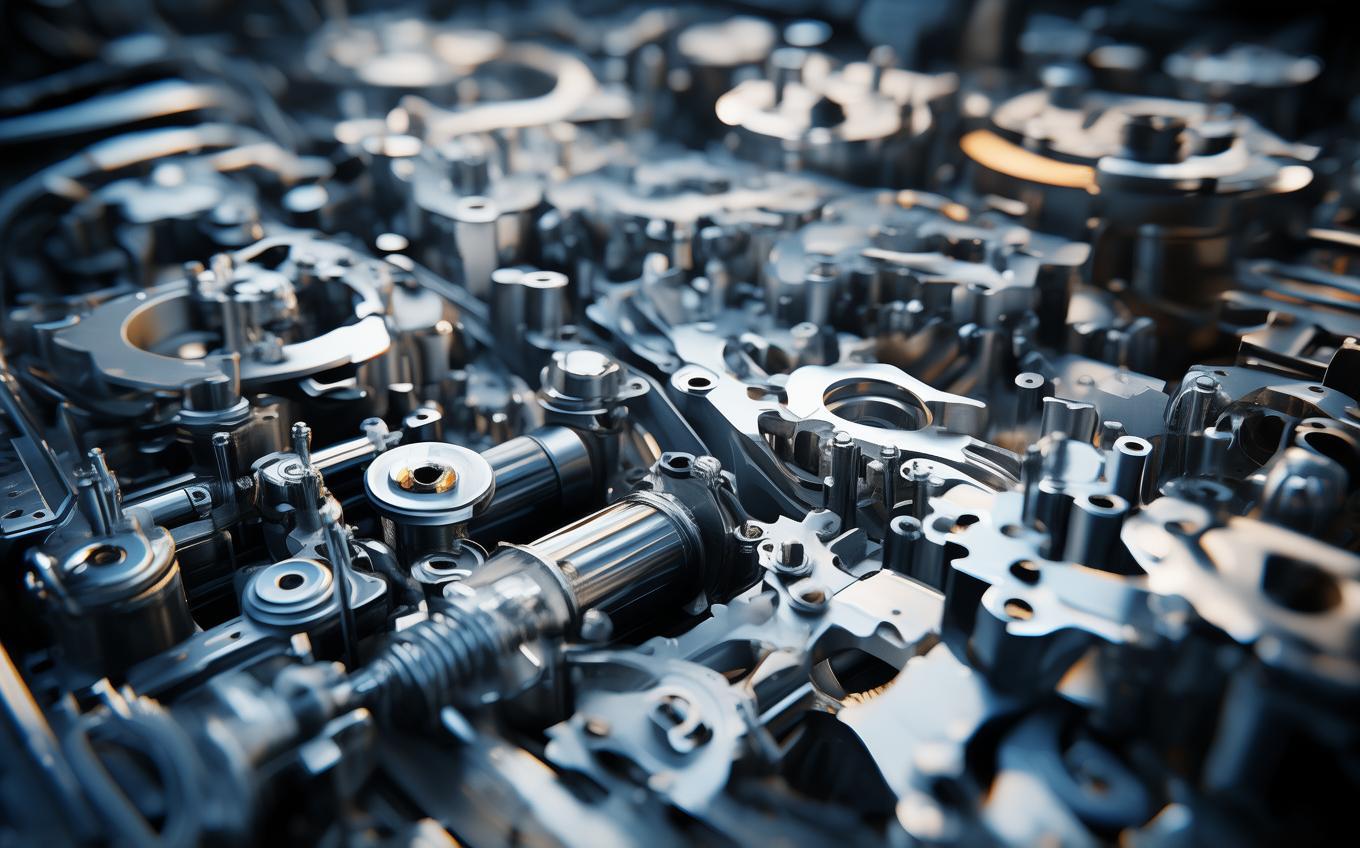
1. Basic Information
- Word: 部件
- Pinyin: bùjiàn
- Literal Meaning: "section piece" or "part item"
- Primary Meaning: component, part (especially of a machine, device, or system)
2. In-depth Explanation
- Context and Usage:
“部件” is the word you use when talking about a distinct physical part of a larger mechanical, electronic, or structural system. It often implies that the part is a functional unit that can be assembled, disassembled, or replaced. It appears frequently in engineering, manufacturing, IT, and even everyday conversations about appliances. For example, the engine is a 部件 of a car, and a hard drive is a 部件 of a computer. It is more formal and technical than the general word “part”; you would not typically use 部件 for a piece of a puzzle or a fragment of bread.
Nuance:
While 部件 can refer to any component, it tends to describe larger, distinct assemblies rather than tiny, individual pieces like screws or washers. For very small, standardized spare parts (like nuts and bolts), Chinese often uses 零件 (língjiàn). 部件 is ideal when you want to sound precise and technical. In a diagram or manual, a labeled part is almost always called a 部件.
- Character Breakdown:
- 部 (bù): This character means “section,” “department,” “unit,” or “part.” It suggests an organized division within a whole. In words like 部门 (bùmén – department) or 部分 (bùfen – part/portion), 部 highlights a segment of a larger structure.
- 件 (jiàn): A measure word and character meaning “item,” “piece,” or “object.” It is used for countable physical things (e.g., 一件衣服 – a piece of clothing). When combined with 部, it turns the concept of a “section” into a concrete, tangible object – a section that is also an item.
Together, 部件 literally paints a picture of “a section that is a discrete piece,” which perfectly captures the idea of a component part.
3. Example Sentences
-
Chinese: 这台机器由许多精密部件组成。
Pinyin: Zhè tái jīqì yóu xǔduō jīngmì bùjiàn zǔchéng.
English: This machine is made up of many precision components. -
Chinese: 请检查一下这个部件是否损坏。
Pinyin: Qǐng jiǎnchá yíxià zhège bùjiàn shìfǒu sǔnhuài.
English: Please check whether this component is damaged. -
Chinese: 电脑的各个部件需要定期维护。
Pinyin: Diànnǎo de gègè bùjiàn xūyào dìngqī wéihù.
English: The various parts of a computer need regular maintenance.
Cultural Notes
In Chinese technical and industrial culture, there is a clear hierarchy of part names. 部件 (component) often sits above 零件 (spare part/small part) – a 部件 might consist of many 零件. For example, a car engine is a 部件, while the spark plug inside it is a 零件. This distinction helps in logistics, repair manuals, and manufacturing: you order 零件 for maintenance but design or assemble 部件. In everyday speech, some Chinese speakers might use 部件 loosely for any kind of machine part, but the formal nuance remains. Understanding this word gives you a tiny window into China’s precision-oriented industrial vocabulary.
Conclusion
Remember 部件 as the go-to technical term for a “component” – a distinct, functional piece of a larger mechanical or electronic whole. The characters break down neatly into “section” + “item,” making it easy to recall that a 部件 is a physical part that belongs to an organized system. Use it when talking about machines, devices, and technical equipment, and you’ll sound accurate and professional.
Sources and Further Reading
Dictionary links are provided for independent reference. Example sentences and learning notes on this page are educational explanations rather than dictionary quotations.



Comments (0)
No comments yet. Be the first to comment!