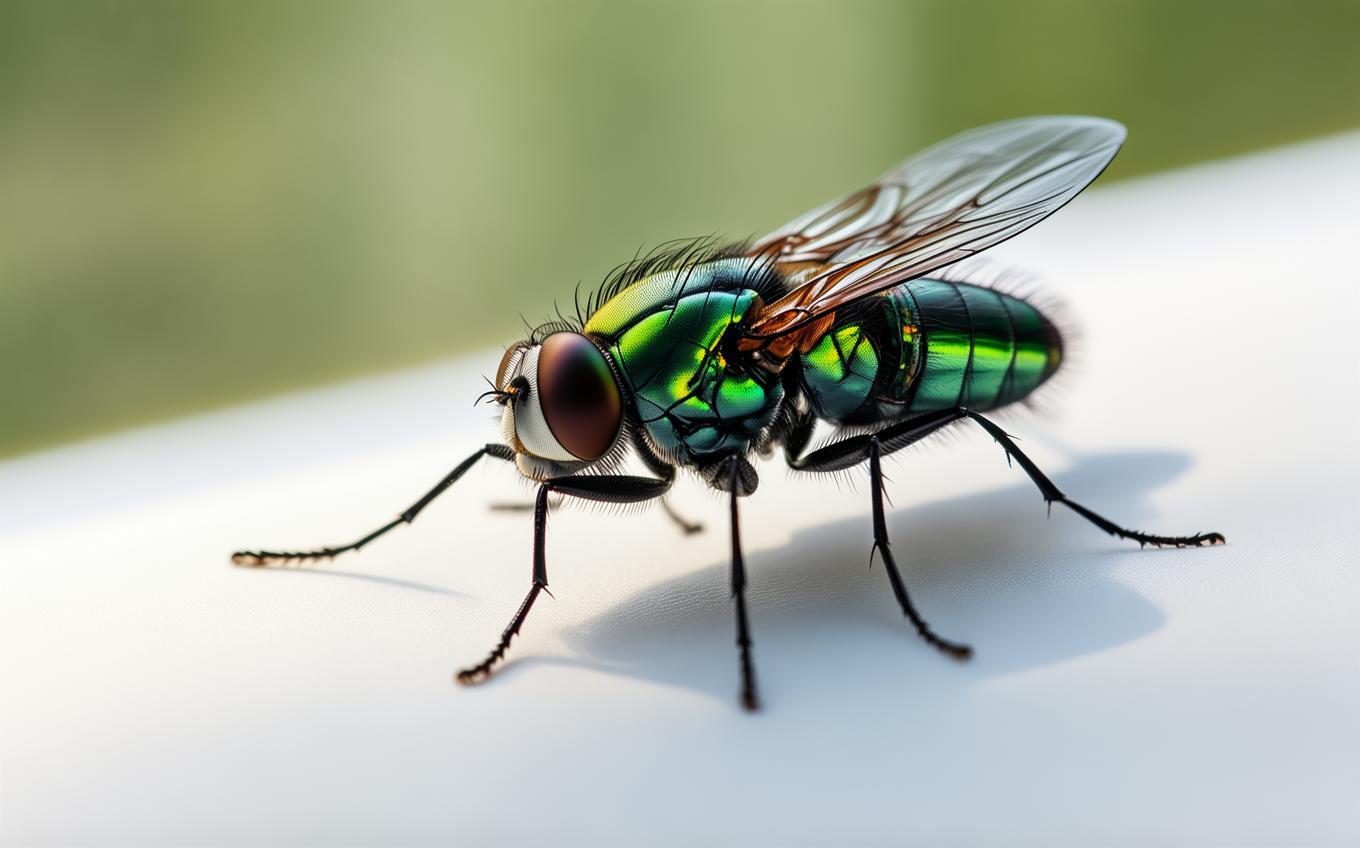
1. Basic Information
- Word: 苍蝇
- Pinyin: cāngying
- Literal Meaning: “blue-green/gray insect” or “dark-colored fly”
- Primary Meaning: fly; housefly
2. In-depth Explanation
- Context and Usage:
苍蝇 is the common Chinese word for a “fly,” especially the ordinary housefly that appears around food, garbage, or dirty places. It is a neutral everyday noun, but because flies are usually associated with dirt, annoyance, and disease, the word often has a negative feeling in context.
You can use 苍蝇 when talking about insects in daily life, such as seeing a fly in a room, a fly landing on food, or swatting a fly.
For example, in English you might say “There is a fly in the kitchen.” In Chinese, you can say: 厨房里有一只苍蝇.
The measure word commonly used with 苍蝇 is 只, as in 一只苍蝇, meaning “one fly.”
-
Character Breakdown:
苍蝇 is a two-character word: -
苍: This character can mean “dark blue,” “greenish-blue,” “gray,” or “pale.” In older or descriptive usage, it can refer to a dark or bluish-gray color.
- 蝇: This character means “fly,” the insect. It contains the insect radical 虫, which often appears in characters related to insects or small creatures.
Together, 苍蝇 refers to a fly, especially a common housefly.
3. Example Sentences
- Chinese: 房间里有一只苍蝇。
- Pinyin: Fángjiān lǐ yǒu yì zhī cāngying.
-
English: There is a fly in the room.
-
Chinese: 这只苍蝇一直在我耳边飞。
- Pinyin: Zhè zhī cāngying yìzhí zài wǒ ěrbiān fēi.
-
English: This fly keeps flying around my ear.
-
Chinese: 不要让苍蝇落在食物上。
- Pinyin: Bú yào ràng cāngying luò zài shíwù shàng.
- English: Don’t let flies land on the food.
Cultural Notes (if applicable)
In Chinese, 苍蝇 can also appear in figurative or political language. For example, in anti-corruption language, both “tigers” and “flies” may be mentioned: 老虎 refers to high-ranking corrupt officials, while 苍蝇 refers to lower-level corrupt officials. In this metaphor, flies represent smaller but still harmful forms of corruption.
苍蝇 is also commonly associated with annoyance. Just like in English, calling something or someone “like a fly” can imply that they are bothersome, noisy, or difficult to get rid of.
Conclusion
苍蝇, pronounced cāngying, means “fly” or “housefly” in Chinese. Remember that 蝇 means “fly,” and 苍 gives an older color-related description. In daily conversation, use 苍蝇 to talk about annoying flies around rooms, food, or garbage.
Sources and Further Reading
Dictionary links are provided for independent reference. Example sentences and learning notes on this page are educational explanations rather than dictionary quotations.



Comments (0)
No comments yet. Be the first to comment!