1. Basic Information
- Word: 茶道
- Pinyin: chá dào
- Literal Meaning: tea way / the way of tea
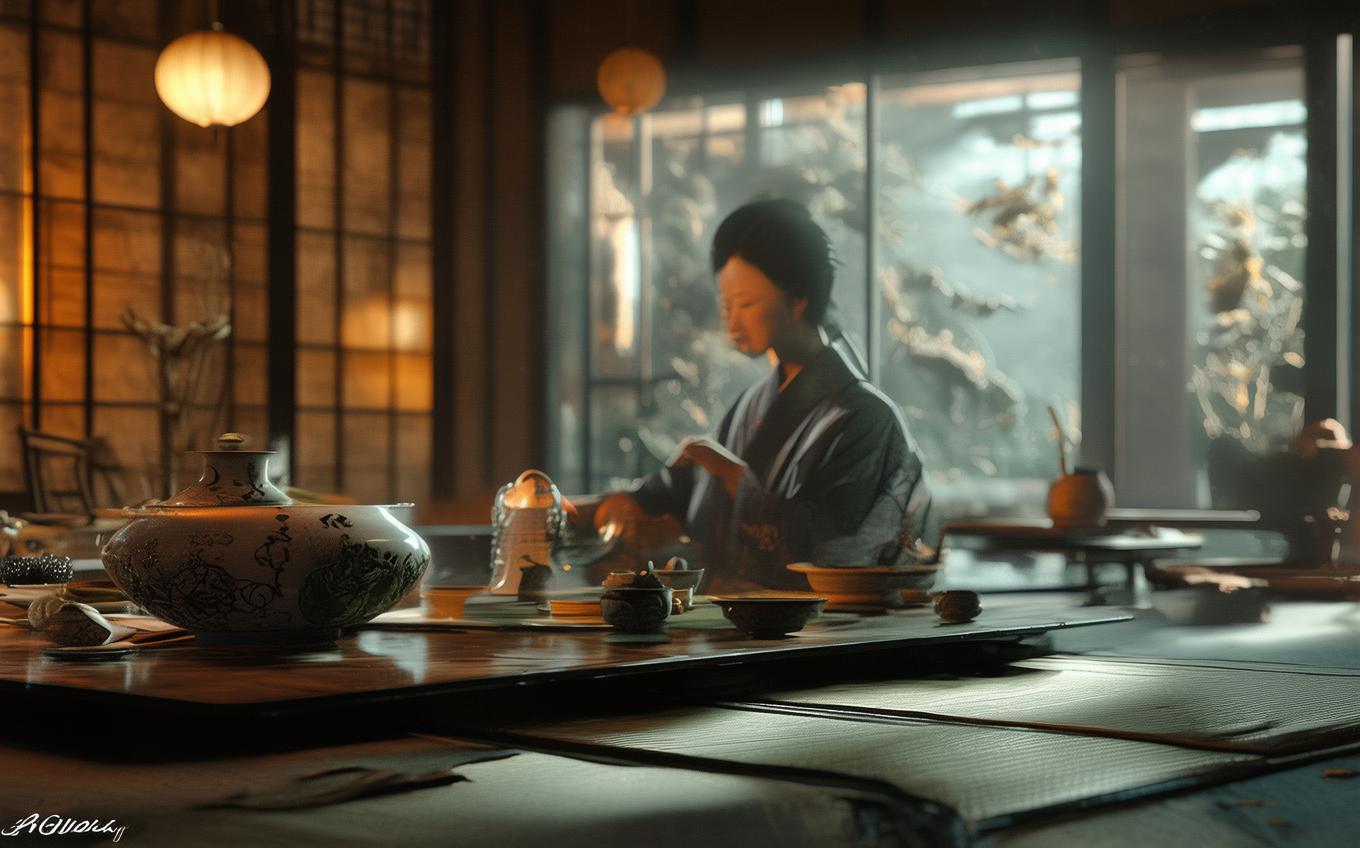
- Primary Meaning: The art of tea ceremony; a spiritual and aesthetic practice centered around the preparation, serving, and appreciation of tea, emphasizing mindfulness, harmony, and inner cultivation.
2. In-depth Explanation
-
Context and Usage:
"茶道" refers to a disciplined practice that elevates the simple act of drinking tea into a meditative and artistic ritual. It can be used to talk about both the philosophical path and the physical ceremony itself. In everyday conversation, you might encounter it when someone studies tea culture, visits a tea house, or discusses mindfulness practices. The word carries a sense of refinement and depth. Note that in modern Chinese, "茶道" is often used alongside or interchangeably with "茶艺" (chá yì, tea art), but "茶道" places stronger emphasis on the spiritual and moral dimensions. -
Character Breakdown:
- 茶 (chá): tea. This character refers to the tea plant, tea leaves, or the beverage itself.
- 道 (dào): way, path, principle, or method. It is the same character as in "Daoism" (Taoism), implying a deep philosophical system or a way of life.
Together, "茶道" literally means "the way of tea," suggesting a holistic path where making and drinking tea becomes a vehicle for self-cultivation and harmony with nature and others.
3. Example Sentences
-
Chinese: 她正在学习茶道。
Pinyin: Tā zhèngzài xuéxí chá dào.
English: She is learning the art of the tea ceremony. -
Chinese: 茶道讲究和谐与平静。
Pinyin: Chá dào jiǎngjiū héxié yǔ píngjìng.
English: The way of tea emphasizes harmony and tranquility. -
Chinese: 通过茶道,他体会到了内心的宁静。
Pinyin: Tōngguò chá dào, tā tǐhuì dào le nèixīn de níngjìng.
English: Through the tea ceremony, he experienced inner peace.
Cultural Notes
The concept of "茶道" is often associated with the highly formalized Japanese tea ceremony (chanoyu), heavily influenced by Zen Buddhism, but its roots lie in ancient Chinese tea culture. In China, tea has been celebrated for millennia, with classical texts like Lu Yu’s "The Classic of Tea" (《茶经》) laying the groundwork for tea as a spiritual practice. Chinese "茶道" is less rigidly codified than its Japanese counterpart and is deeply intertwined with Daoist, Confucian, and Buddhist ideas of simplicity, respect, and living in the moment. While "茶艺" (chá yì) may highlight the performance and aesthetic skills of tea preparation, "茶道" points to the inner journey—the cultivation of the heart and mind through the mindful ritual of tea. Today, people practice "茶道" as a way to slow down, connect with nature, and find balance in a busy world.
Conclusion
Remember "茶道" (chá dào) as a beautiful fusion: 茶 (tea) + 道 (the way/path). It is not just about drinking tea—it is a mindful journey toward harmony, respect, purity, and tranquility. Whether you encounter it in a quiet tea room or a cultural discussion, you now understand that "茶道" represents a profound art of life.
Sources and Further Reading
Dictionary links are provided for independent reference. Example sentences and learning notes on this page are educational explanations rather than dictionary quotations.

Comments (0)
No comments yet. Be the first to comment!