1. Basic Information
- Word: 茶馆儿
- Pinyin: cháguǎnr
- Literal Meaning: tea + establishment + erhua suffix (a phonetic addition common in northern Chinese dialects)
- Primary Meaning: A teahouse (often small, traditional, and casual); a place where people gather to drink tea, socialize, and enjoy simple entertainment.
2. In-depth Explanation
-
Context and Usage:
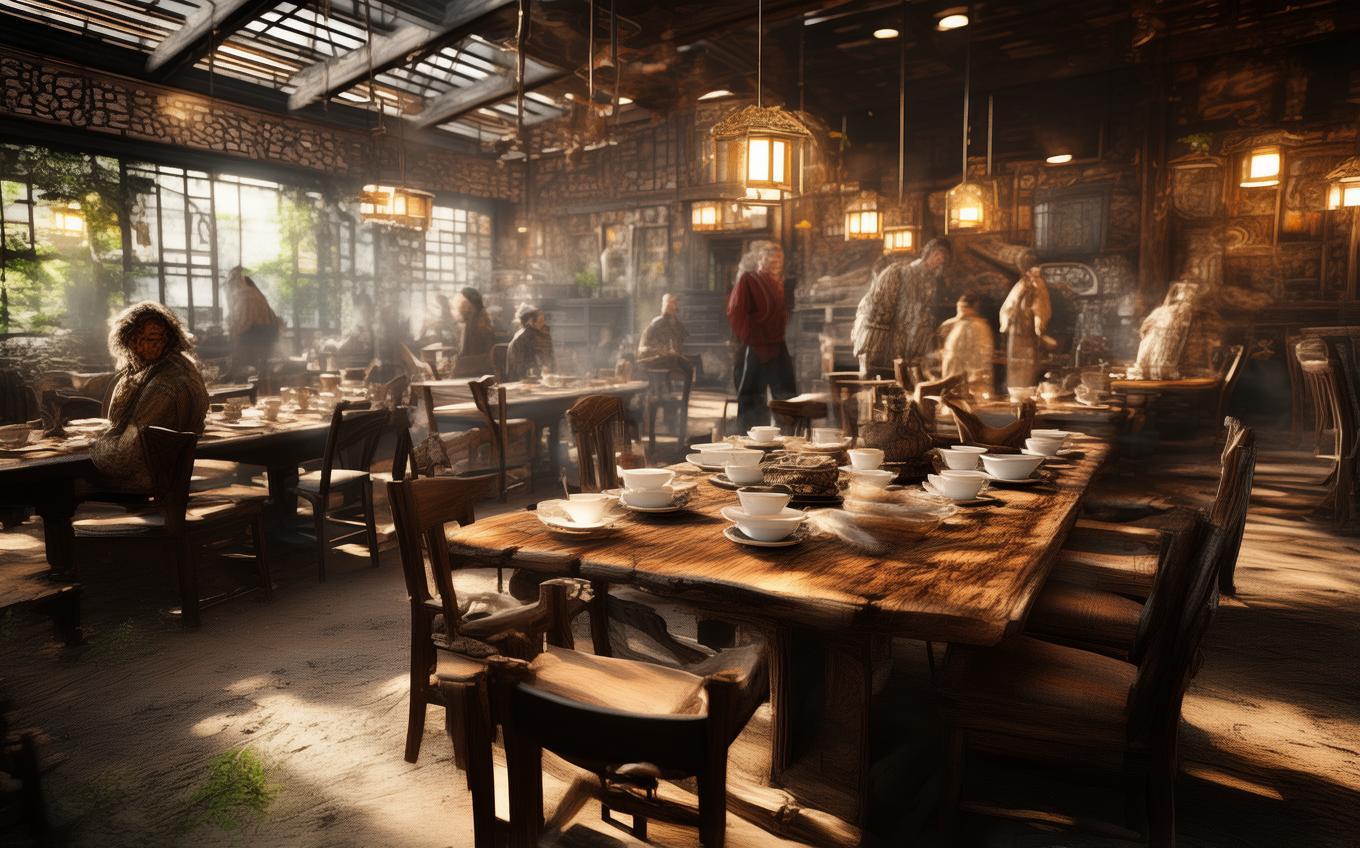
"茶馆儿" is a colloquial term primarily used in northern China, especially in Beijing and surrounding areas. It refers to a traditional-style teahouse — not a fancy modern tea shop, but a relaxed venue where people sit, sip tea, chat, play chess, or listen to storytelling or folk performances. The "儿" (erhua) ending gives the word a friendly, local, and slightly nostalgic feel. You would use this word when talking about old Beijing culture, everyday social life, or when inviting friends casually. In more formal settings or written Chinese, people might simply say "茶馆" (cháguǎn) without the "儿". -
Character Breakdown:
- 茶 (chá): Tea. This character appears in all tea-related words.
- 馆 (guǎn): An establishment, hall, or house for a specific activity (e.g., 饭馆 restaurant, 图书馆 library). Here it indicates a place dedicated to tea.
- 儿 (er): Erhua suffix. It does not carry independent meaning; instead, it’s a phonetic feature that attaches to the previous syllable, making the word sound more vernacular, intimate, or regionally flavored. In pinyin, the "r" is simply added to the preceding syllable: guǎn → guǎnr.
Together, "茶馆儿" literally means "tea establishment with an erhua touch," signaling that this is not just any teahouse but one spoken about in a familiar, down-to-earth way.
3. Example Sentences
-
Chinese: 咱们去茶馆儿坐坐吧。
Pinyin: Zánmen qù cháguǎnr zuòzuo ba.
English: Let’s go sit in a teahouse for a while. -
Chinese: 那个茶馆儿里有唱大鼓的。
Pinyin: Nàge cháguǎnr li yǒu chàng dàgǔ de.
English: That teahouse has drum singing performances. -
Chinese: 老北京人都喜欢在茶馆儿里聊天儿。
Pinyin: Lǎo Běijīng rén dōu xǐhuan zài cháguǎnr li liáotiānr.
English: Old Beijingers love chatting in teahouses.
Cultural Notes
Teahouses have long been social microcosms in China, particularly in Beijing. The famous play Teahouse (茶馆, Cháguǎn) by Lao She captures the essence of such places: a crossroads of all social classes, gossip, and history. Adding "儿" makes the word feel even more rooted in local Beijing identity. You might hear it in narrow hutong alleyways or when recalling the “teahouse culture” of the early 20th century. If you visit a traditional Beijing teahouse today, you might still see elderly patrons with birdcages, sipping jasmine tea and listening to Peking opera snippets — a living snapshot of what "茶馆儿" represents.
Conclusion
Remember "茶馆儿" as the casual, warm way to say “teahouse” in northern Chinese speech. The "儿" is your signal that it’s informal, cultural, and soaked in local flavor — perfect for describing a friendly gathering spot over a cup of tea.
Sources and Further Reading
Dictionary links are provided for independent reference. Example sentences and learning notes on this page are educational explanations rather than dictionary quotations.


Comments (0)
No comments yet. Be the first to comment!