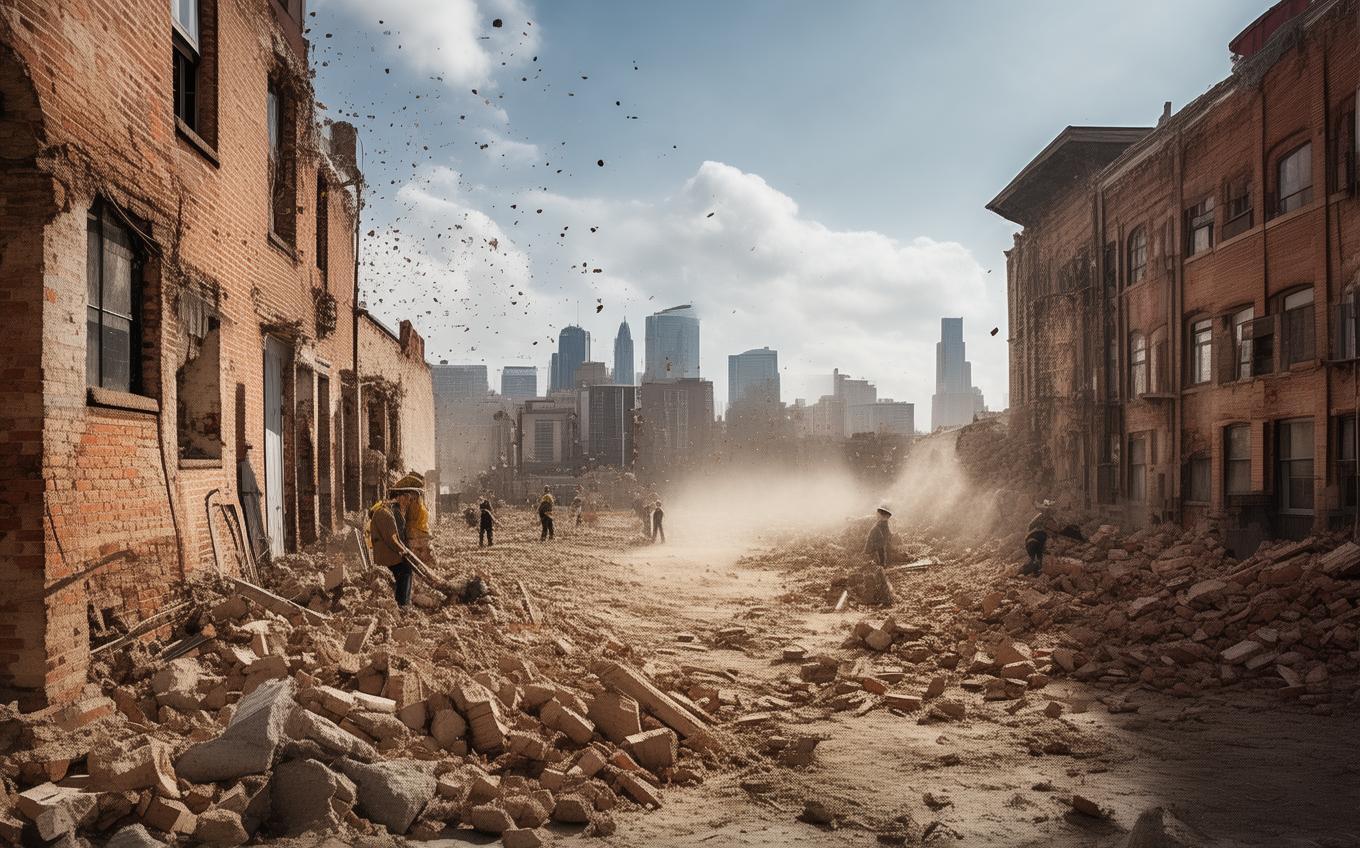
Understanding "拆迁" - Chinese Word Explanation
1. Basic Information
- Word: 拆迁
- Pinyin: chāi qiān
- Literal Meaning: “to dismantle and relocate”
- Primary Meaning: Demolition and relocation, especially when buildings are torn down and residents or businesses are moved elsewhere, often due to urban redevelopment or government construction projects.
2. In-depth Explanation
- Context and Usage:
拆迁 is commonly used in discussions about city development, old neighborhoods, infrastructure projects, and real estate. It usually refers not only to physically demolishing buildings, but also to relocating the people or businesses living or operating there.
In English, it can be translated as “demolition and relocation,” “urban redevelopment relocation,” or sometimes simply “demolition,” depending on context. However, “demolition” alone may miss the important idea of moving residents and giving compensation.
拆迁 can be neutral, but it often carries social and emotional meaning. For some people, 拆迁 may mean receiving compensation, a new apartment, or financial opportunity. For others, it may mean losing an old home, neighborhood, or community.
- Character Breakdown:
- 拆: to tear down, dismantle, take apart
- 迁: to move, relocate, migrate
Together, 拆迁 means “to tear down and relocate,” especially in the context of buildings and residents.
3. Example Sentences
- Chinese: 这个老小区明年要拆迁。
- Pinyin: Zhège lǎo xiǎoqū míngnián yào chāiqiān.
-
English: This old residential community will be demolished and relocated next year.
-
Chinese: 拆迁以后,他们搬到了新的公寓。
- Pinyin: Chāiqiān yǐhòu, tāmen bān dào le xīn de gōngyù.
-
English: After the demolition and relocation, they moved into a new apartment.
-
Chinese: 很多人关心拆迁补偿的问题。
- Pinyin: Hěn duō rén guānxīn chāiqiān bǔcháng de wèntí.
- English: Many people are concerned about the issue of demolition and relocation compensation.
Cultural Notes (if applicable)
拆迁 is an important word in modern Chinese society because many Chinese cities have changed rapidly over the past few decades. Old houses, villages within cities, and traditional neighborhoods have often been demolished to make way for apartment complexes, shopping centers, subway lines, roads, and other development projects.
A related phrase is 拆迁户, meaning “a household affected by demolition and relocation.” In some cases, 拆迁户 may receive significant compensation or several new apartments, so the term can sometimes be associated with sudden wealth. However, 拆迁 can also be controversial when residents feel the compensation is unfair or when they are emotionally attached to their old homes.
Another useful phrase is 拆迁补偿, meaning “demolition and relocation compensation.”
Conclusion
拆迁 means more than simply “demolition.” It refers to the process of tearing down buildings and relocating the people or businesses affected. To remember it, think of 拆 as “tear down” and 迁 as “move away.” Together, 拆迁 describes a common and culturally significant part of urban change in China.


Comments (0)
No comments yet. Be the first to comment!