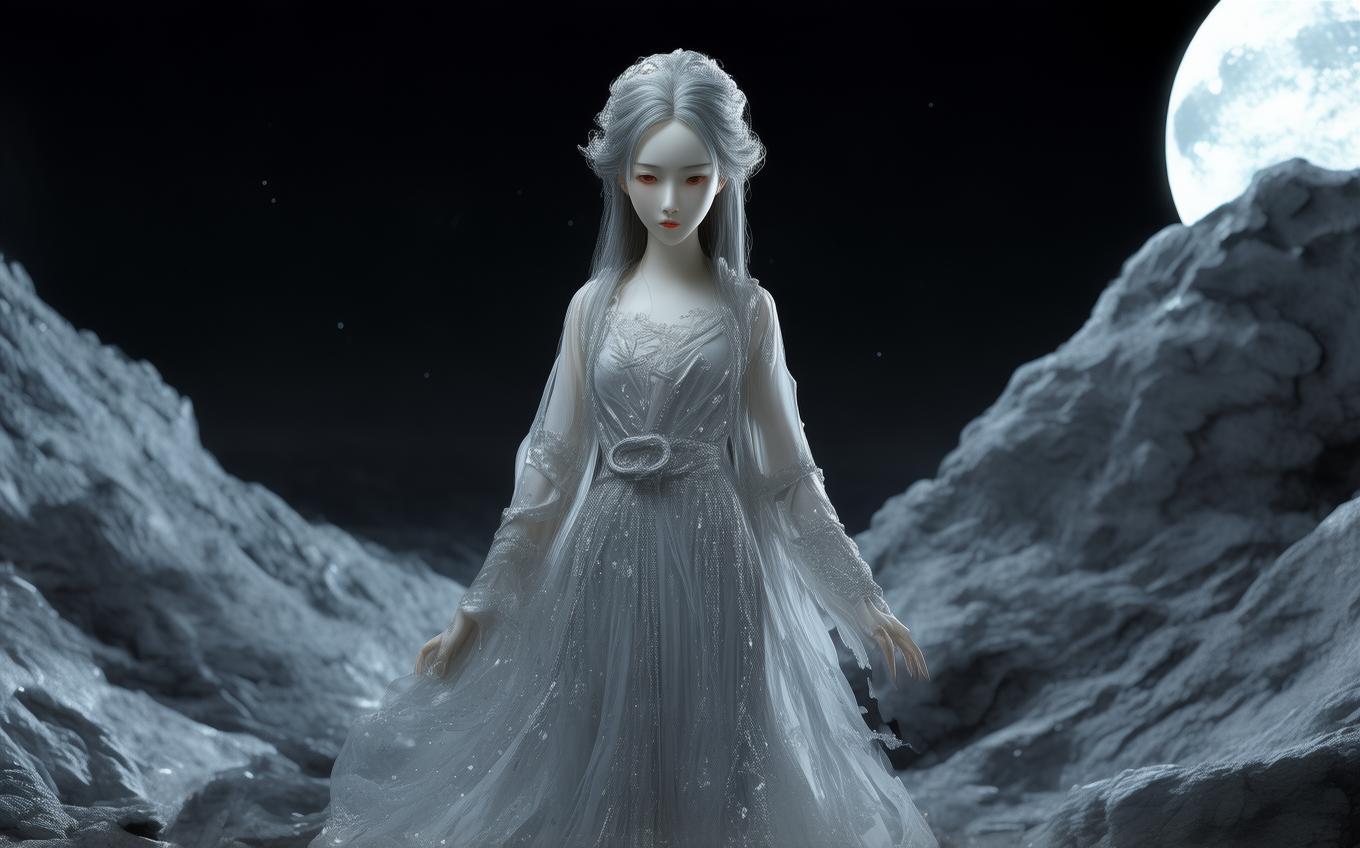
Understanding "嫦娥" - Chinese Word Explanation
1. Basic Information
- Word: 嫦娥
- Pinyin: Cháng'é
- Literal Meaning: The two characters are ancient feminine characters used in a name; together they form a mythological name rather than a normal literal phrase.
- Primary Meaning: The Moon Goddess in Chinese mythology
2. In-depth Explanation
-
Context and Usage:
嫦娥is not a regular everyday word. It is a proper noun referring to the famous Moon Goddess in Chinese legend. English speakers usually translate it as “Chang’e” or “the Moon Goddess.”
You will see this word in stories, poetry, the Mid-Autumn Festival, school textbooks, and cultural references. It is strongly associated with the moon, beauty, longing, and the idea of flying to the moon. -
Character Breakdown:
- 嫦: An uncommon character used mainly in the name
嫦娥; it does not have a common standalone meaning in modern daily Chinese. - 娥: Often associated with beauty or a graceful woman in classical Chinese.
Together, 嫦娥 forms a mythological name, so the meaning comes from cultural tradition more than from the individual characters alone.
3. Example Sentences
-
Chinese: 嫦娥住在月亮上。
Pinyin: Cháng'é zhù zài yuèliang shàng.
English: Chang’e lives on the moon. -
Chinese: 中秋节的时候,人们会想起嫦娥的传说。
Pinyin: Zhōngqiū Jié de shíhou, rénmen huì xiǎngqǐ Cháng'é de chuánshuō.
English: During the Mid-Autumn Festival, people think of the legend of Chang’e. -
Chinese: 嫦娥是中国神话中非常有名的人物。
Pinyin: Cháng'é shì Zhōngguó shénhuà zhōng fēicháng yǒumíng de rénwù.
English: Chang’e is a very famous figure in Chinese mythology.
Cultural Notes
嫦娥 is closely connected with the Mid-Autumn Festival, one of the most important traditional festivals in China. People admire the full moon on this day, and the legend of Chang’e is often told as part of the celebration.
A common version of the story says that Chang’e drank an immortality elixir and flew to the moon, where she lives apart from her husband Hou Yi. Because of this, she often represents beauty, moonlight, loneliness, and longing in Chinese literature and art.
Conclusion
嫦娥 is the name of the Moon Goddess in Chinese mythology. It is a culturally important proper noun, especially linked to the Mid-Autumn Festival, and helps learners understand both Chinese legend and traditional moon imagery.


Comments (0)
No comments yet. Be the first to comment!