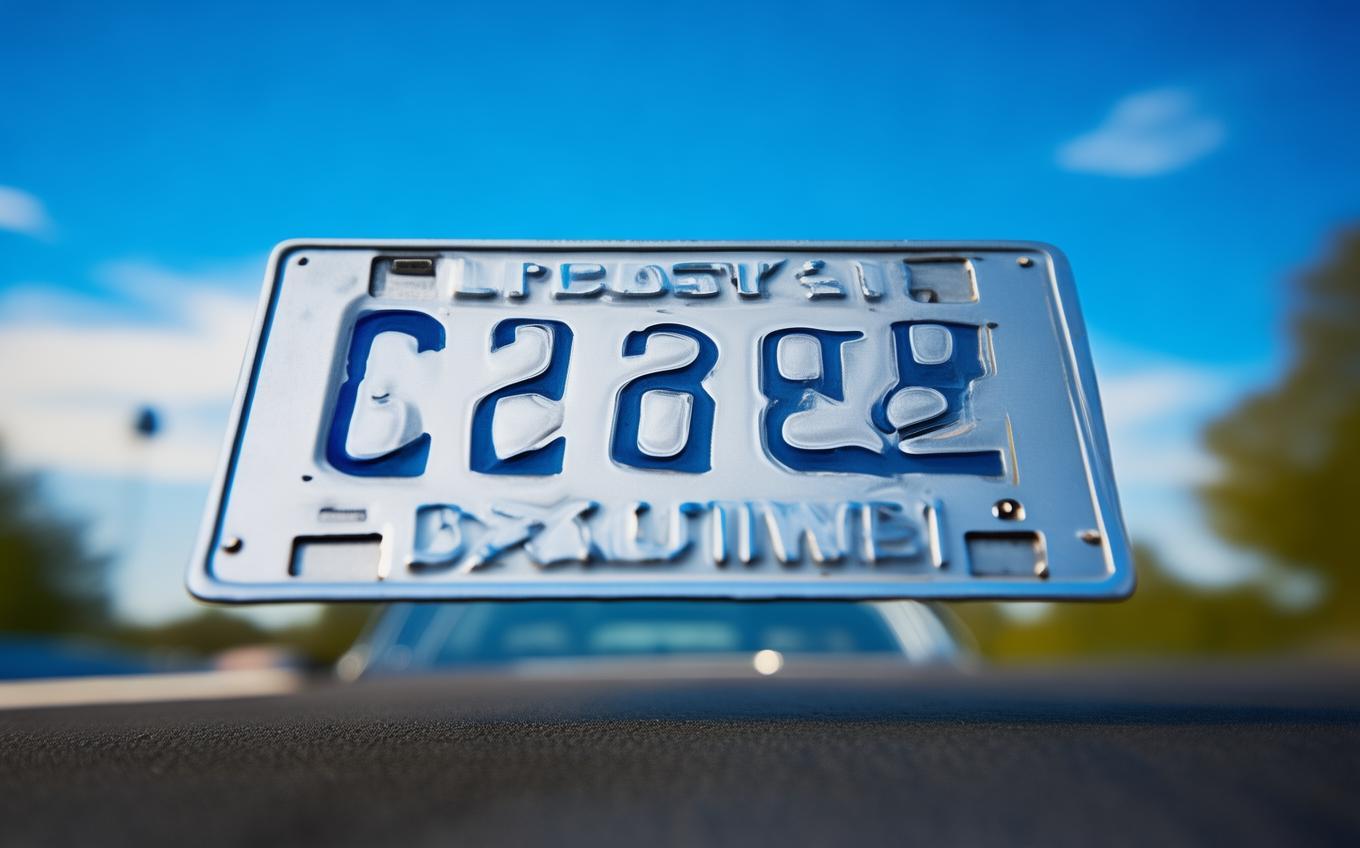
1. Basic Information
- Word: 车号
- Pinyin: chē hào
- Literal Meaning: “vehicle number” or “car number”
- Primary Meaning: A vehicle’s identification number — most often a license plate number for cars, taxis, and trucks, but also the route number of a bus or the designated number of a train.
2. In-depth Explanation
Context and Usage
The word "车号" is a straightforward compound, yet its exact meaning depends heavily on context. In everyday conversation, when someone says “车号” about a private car or taxi, they almost always mean the license plate number — the string of characters on the plate at the front and back of the vehicle. For example, if you lose something in a taxi, you might be asked for the “车号” so the company can track the car.
When referring to public transportation, “车号” shifts to mean the route number or service number. A city bus that runs along line 5 has “车号 5.” A high-speed train G123 has “车号 G123.” The word doesn’t usually refer to the bus’s license plate; it’s about which route or service the vehicle belongs to.
Nuances:
- If you want to be absolutely clear about a license plate, you can say "车牌号" (chē pái hào), but native speakers often shorten it to "车号" in casual speech.
- For a train or bus, “车号” overlaps with “车次” (chē cì) for trains, but “车号” is more colloquial and may be used for both buses and trains.
- When talking about a vehicle’s factory serial number (VIN), this is not called “车号” but rather “车辆识别代号” or “车架号.”
Character Breakdown
- 车 (chē): vehicle; any wheeled transport like car, bus, truck, train, etc.
- 号 (hào): number; mark; designation; also used for size, date, or signal. Here it simply means an identifying number.
Together, they form the idea of “the number that identifies a vehicle.”
3. Example Sentences
-
Chinese: 你看到那辆白车的车号了吗?
Pinyin: Nǐ kàn dào nà liàng bái chē de chē hào le ma?
English: Did you see the license plate number of that white car? -
Chinese: 我每天坐车号88路公交车上班。
Pinyin: Wǒ měi tiān zuò chē hào bā shí bā lù gōng jiāo chē shàng bān.
English: I take bus number 88 (the number-88 bus) to work every day. -
Chinese: 这趟高铁的车号是G5678。
Pinyin: Zhè tàng gāo tiě de chē hào shì G wǔ liù qī bā.
English: The train number of this high-speed train is G5678.
Cultural Notes (if applicable)
-
License plate lottery and lucky numbers
In China, certain numbers are considered lucky, especially 8 (bā), which sounds like “发” (fā, to prosper). License plates containing many 8s are highly sought after and can be sold at auctions for large sums. So when a Chinese speaker asks for your “车号,” they might not just be noting it down for practical reasons — a plate full of eights can spark a quick conversation about good fortune. -
The meaning behind train numbers
The letter at the beginning of a train’s “车号” tells you the speed class: G (高速 gāosù) for the fastest high-speed trains, D (动车 dòngchē) for slower high-speed, C (城际 chéngjì) for intercity, and traditional K, T, Z, or pure digits for conventional trains. Knowing the “车号” instantly gives a Chinese traveler an idea of the train type and approximate speed. -
City codes on license plates
A car’s “车号” always starts with a Chinese character representing the province, followed by a letter for the city. For example, “京A” means Beijing, “沪B” means Shanghai. This makes “车号” a tiny geographic label — people sometimes guess where someone is from just by glancing at the plate.
Conclusion
"车号" is a flexible term: think “vehicle + number.” For cars and taxis, it’s the license plate; for buses and trains, it’s the route or service number. To remember it, picture a car (车 chē) with a giant number (号 hào) painted on it — depending on whether it’s a taxi or a city bus, that number either identifies the unique vehicle or tells you which route it runs. With this image, you can use “车号” accurately in almost any situation.
Sources and Further Reading
Dictionary links are provided for independent reference. Example sentences and learning notes on this page are educational explanations rather than dictionary quotations.


Comments (0)
No comments yet. Be the first to comment!