1. Basic Information
- Word: 车库
- Pinyin: chē kù
- Literal Meaning: car storehouse
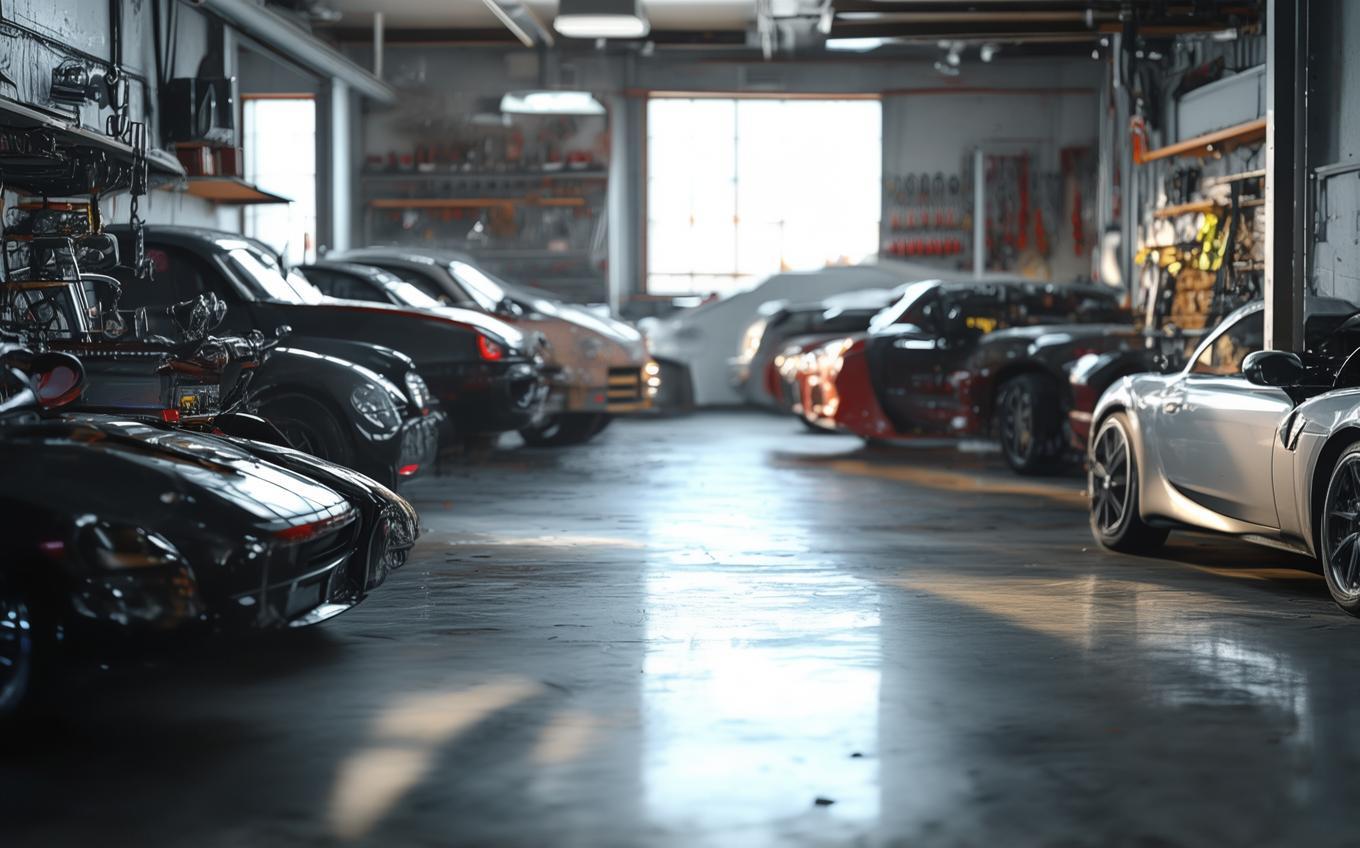
- Primary Meaning: garage (a building or enclosed space for parking or storing a motor vehicle)
2. In-depth Explanation
- Context and Usage:
The word 车库 is used to describe any enclosed structure whose primary function is to house one or more cars. In everyday Chinese, you will encounter it in both residential and commercial contexts: - A private garage attached to a house (家车库 / 私人车库)
- An underground parking garage in an apartment complex (地下车库)
- A public multi-storey parking structure (公共车库 / 立体车库)
Important nuance: 车库 refers specifically to a building or covered enclosure, not an open parking lot or a single outdoor parking spot. An open-air parking area is normally called 停车场 (tíngchēchǎng), while a marked parking space within any facility is 停车位 (tíngchēwèi). So if you say “我把车停在车库” (I parked the car in the garage), it implies the car is inside a building or covered space, not outside.
- Character Breakdown:
- 车 (chē) – vehicle; car. This character originally depicted a chariot and today refers broadly to wheeled vehicles, especially cars.
- 库 (kù) – storehouse; warehouse; depot. A place where goods or resources are stored, often in large quantities or in a protected environment.
Together, 车库 literally paints a picture of a “car warehouse” – a dedicated storage space for automobiles.
3. Example Sentences
-
Chinese: 我的车停在车库里,不会被雨淋到。
Pinyin: Wǒ de chē tíng zài chēkù lǐ, bù huì bèi yǔ lín dào.
English: My car is parked in the garage, so it won’t get wet from the rain. -
Chinese: 这个新小区有地下车库,业主可以租用车位。
Pinyin: Zhège xīn xiǎoqū yǒu dìxià chēkù, yèzhǔ kěyǐ zūyòng chēwèi.
English: This new residential community has an underground garage, and owners can rent a parking space. -
Chinese: 他正在车库里修理他的摩托车。
Pinyin: Tā zhèngzài chēkù lǐ xiūlǐ tā de mótuōchē.
English: He is repairing his motorcycle in the garage.
Cultural Notes (if applicable)
In modern Chinese cities, private garages are less common for single-family homes than in some Western countries, especially in dense urban areas. Instead, high-rise apartment buildings typically feature large 地下车库 (underground garages) spread across one or more basement levels. The character 库 shows up in many storage-related words, such as 仓库 (cāngkù – warehouse) and 水库 (shuǐkù – reservoir), reinforcing the idea of 车库 as a “storage facility for cars.” In more traditional or rural settings, you might see 车棚 (chēpéng – carport/shed) instead of a fully enclosed garage.
Conclusion
To remember 车库, picture a “car storehouse” – any enclosed building where vehicles are kept. Use it when you talk about a garage as a physical structure. If you’re pointing to an open parking spot or a large outdoor lot, switch to 停车位 or 停车场. Mastering this distinction will make your Chinese sound more natural and precise.
Sources and Further Reading
Dictionary links are provided for independent reference. Example sentences and learning notes on this page are educational explanations rather than dictionary quotations.


Comments (0)
No comments yet. Be the first to comment!