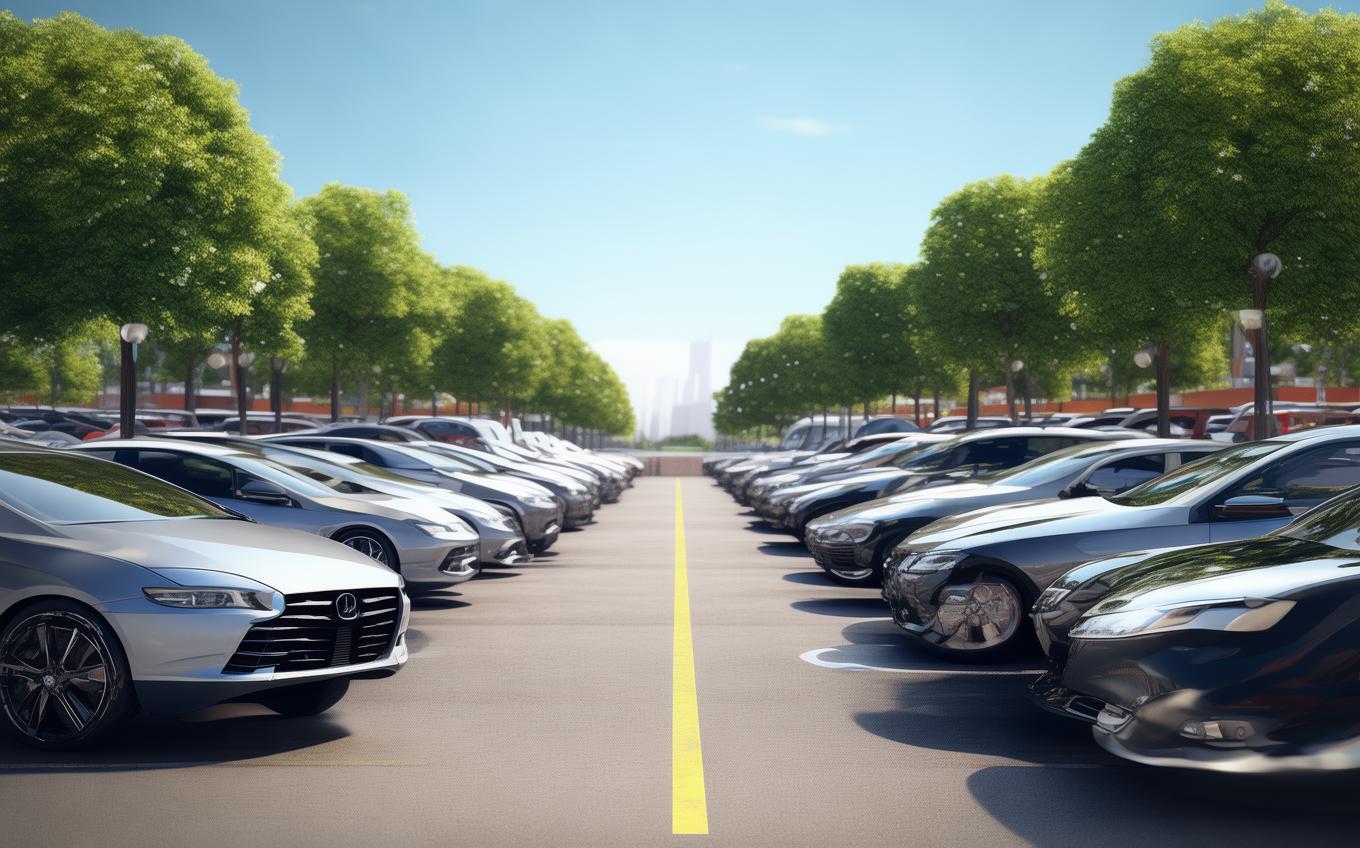
1. Basic Information
- Word: 车位
- Pinyin: chēwèi
- Literal Meaning: “car space” or “vehicle position”
- Primary Meaning: a parking space; a place where a car can be parked
2. In-depth Explanation
- Context and Usage: 车位 is commonly used to refer to a designated parking space for a car. You will often hear it in parking lots, apartment complexes, shopping malls, office buildings, and residential communities. It can refer to a temporary parking spot or a privately owned/rented parking space. In everyday English, it is closest to “parking space” or “parking spot.”
For example, if someone says 没有车位, they mean “There are no parking spaces.” If someone says 我的车位, they usually mean “my parking space,” often referring to a reserved or owned space.
- Character Breakdown:
- 车: means “car,” “vehicle,” or “transportation.”
- 位: means “position,” “place,” or “spot.”
Together, 车位 literally means “car position,” which naturally means a “parking space.”
3. Example Sentences
- Chinese: 这里还有车位吗?
- Pinyin: Zhèlǐ hái yǒu chēwèi ma?
-
English: Are there still any parking spaces here?
-
Chinese: 我找不到车位。
- Pinyin: Wǒ zhǎo bù dào chēwèi.
-
English: I can’t find a parking space.
-
Chinese: 这个车位是我租的。
- Pinyin: Zhège chēwèi shì wǒ zū de.
- English: This parking space is rented by me.
Cultural Notes (if applicable)
In many Chinese cities, especially large and crowded ones like Beijing, Shanghai, Shenzhen, and Guangzhou, parking spaces can be limited and expensive. In residential communities, a 车位 may be rented or purchased separately from an apartment. Because of this, having a private 车位 can be considered very convenient and sometimes even valuable.
You may also see related terms such as 停车位, which also means “parking space.” 停车位 is slightly more explicit because 停车 means “to park a car,” while 车位 is shorter and very common in everyday speech.
Conclusion
车位 means “parking space” or “parking spot.” Remember that 车 means “car” and 位 means “place” or “position,” so 车位 is literally a “car place.” It is a practical word you will often use when talking about driving, parking lots, apartments, and city life in China.
Sources and Further Reading
Dictionary links are provided for independent reference. Example sentences and learning notes on this page are educational explanations rather than dictionary quotations.


Comments (0)
No comments yet. Be the first to comment!