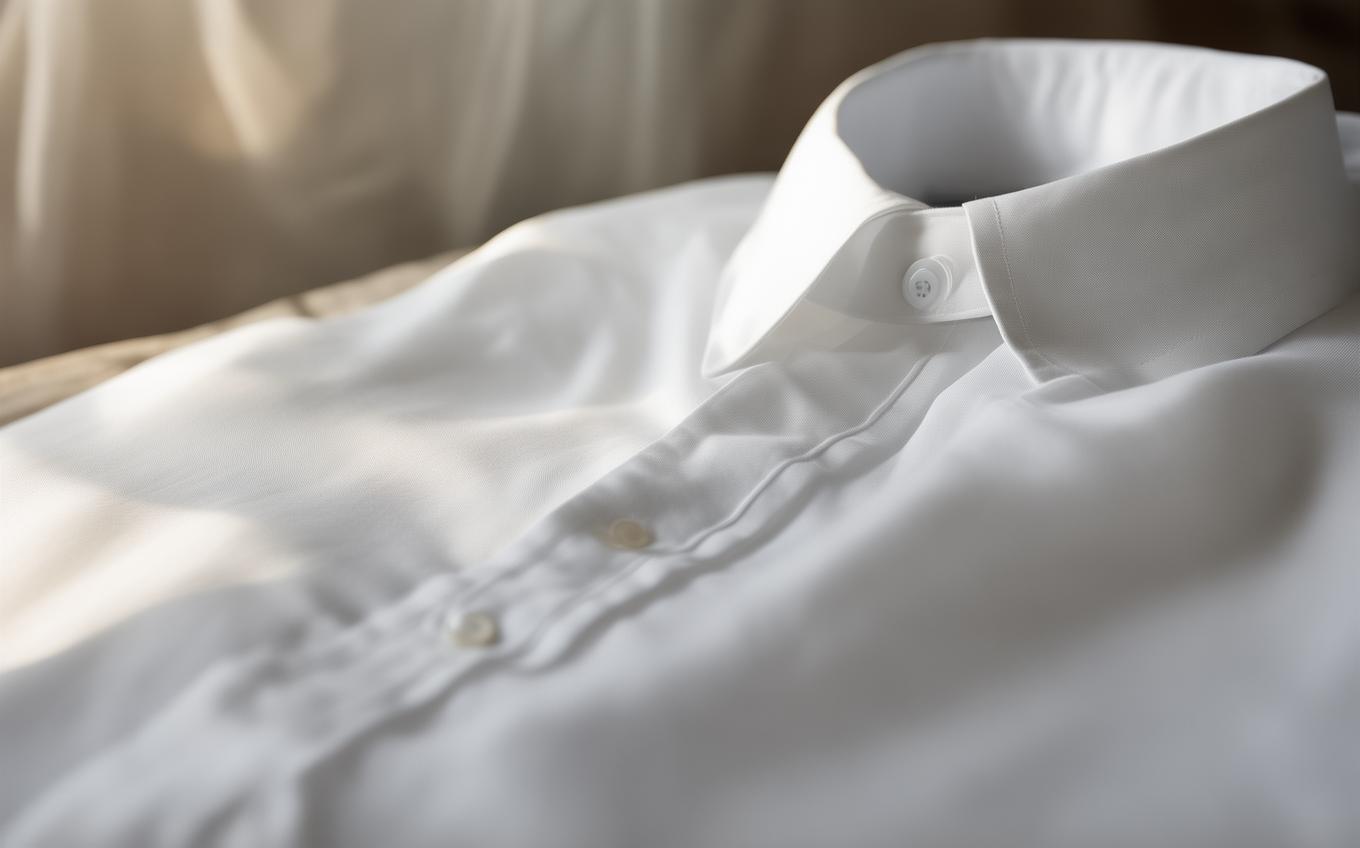
Understanding "衬衫" - Chinese Word Explanation
1. Basic Information
- Word: 衬衫
- Pinyin: chèn shān
- Literal Meaning: "lining garment" or "under-garment"
- Primary Meaning: shirt (typically a button-down, collared shirt for the upper body)
2. In-depth Explanation
-
Context and Usage:
The word "衬衫" is the standard Chinese term for a shirt, especially one with a collar, buttons down the front, and long or short sleeves. It covers both men’s dress shirts and women’s blouses of similar style. You can use it to refer to a formal office shirt, a casual linen shirt, or any button-up shirt.
Important nuance: "衬衫" does not include T-shirts — the word for a T-shirt is "T恤" (T xù). So if you say "I'm wearing a 衬衫," people will imagine a buttoned shirt, not a pullover cotton tee. -
Character Breakdown:
- 衬 (chèn): This character means "to line," "to serve as a lining," or "inner." In clothing contexts, it implies something worn underneath or close to the body.
- 衫 (shān): This means a "garment," specifically an upper-body piece of clothing, often an unlined jacket or shirt.
Originally, "衬衫" might have referred to an undergarment worn beneath a jacket, but today it simply means a shirt. The two characters together create a word that literally pictures a “lining shirt,” but in modern usage, the idea of “linen” has faded — it’s just “shirt.”
3. Example Sentences
-
Chinese: 他今天穿了一件白衬衫去面试。
Pinyin: Tā jīntiān chuān le yī jiàn bái chènshān qù miànshì.
English: He wore a white shirt to the job interview today. -
Chinese: 这件衬衫的领子有点紧。
Pinyin: Zhè jiàn chènshān de lǐngzi yǒudiǎn jǐn.
English: The collar of this shirt is a little tight. -
Chinese: 夏天我喜欢穿棉质的衬衫。
Pinyin: Xiàtiān wǒ xǐhuan chuān miánzhì de chènshān.
English: In summer, I like to wear cotton shirts.
Cultural Notes (if applicable)
In Chinese business culture, a crisp white or light-blue shirt is often a must for formal occasions, much like in the West. However, in everyday life, shirt styles vary widely, and the word "衬衫" covers them all. An interesting note: while "衬衫" traditionally suggests a buttoned look, modern Chinese fashion has absorbed loose, pullover-style “shirts” that still use the same name. Also, because "衫" alone can mean a simple upper garment, you sometimes see it in words like "汗衫" (hànshān, undershirt) or "T恤衫" (T xù shān, T-shirt), but "衬衫" remains the unmarked, default word for a buttoned shirt.
Conclusion
"衬衫" (chèn shān) means a button-up, collared shirt — perfect for work, casual days, or anywhere in between. Remember that "衬" suggests a layer and "衫" points to an upper garment, but together they simply mean “shirt.” Differentiate it from "T恤" (T-shirt) and you’ll use it naturally in any situation where a shirt with buttons is called for.
Sources and Further Reading
Dictionary links are provided for independent reference. Example sentences and learning notes on this page are educational explanations rather than dictionary quotations.


Comments (0)
No comments yet. Be the first to comment!