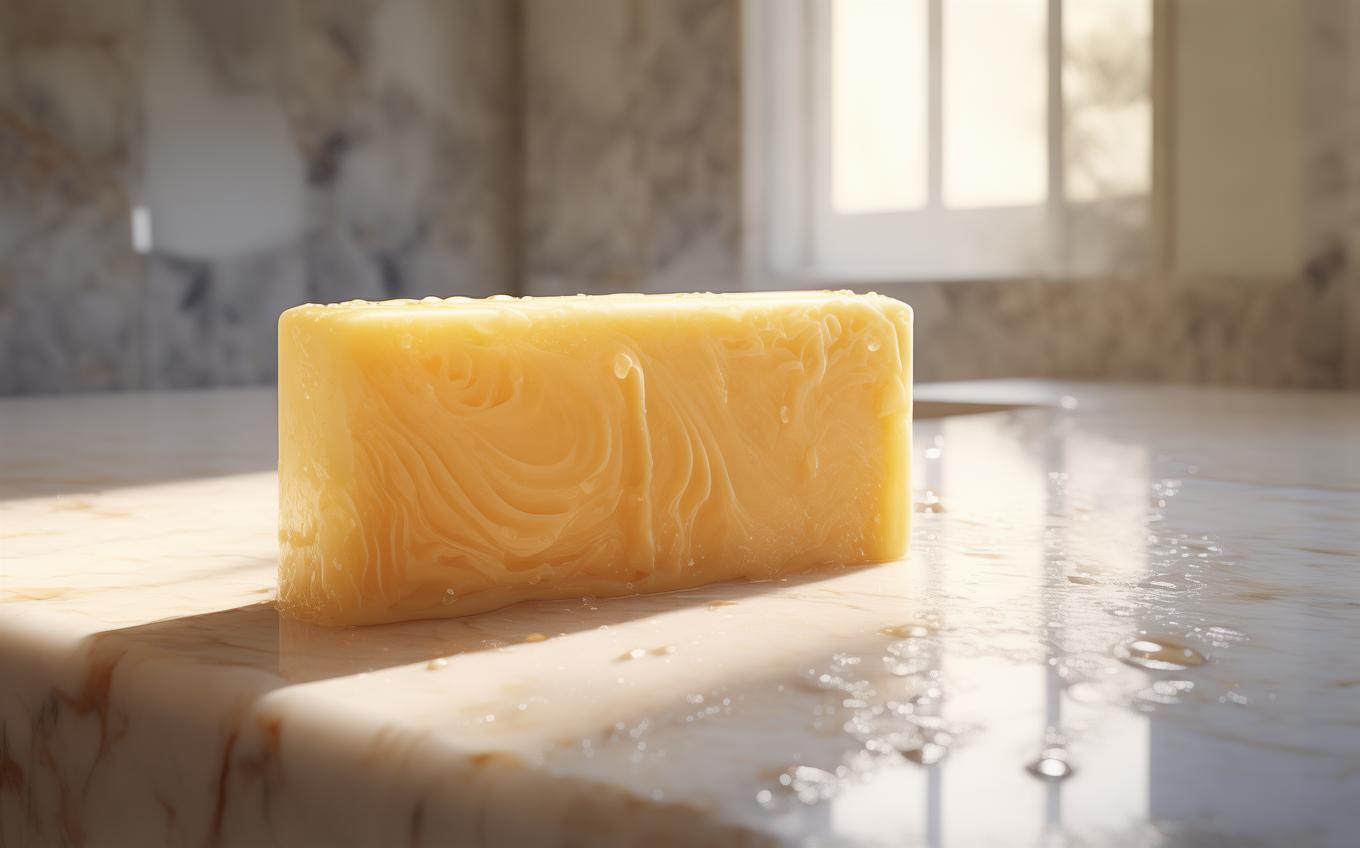
1. Basic Information
- Word: 肥皂
- Pinyin: féi zào
- Literal Meaning: "fat soap" (肥 = fat, 皂 = soap)
- Primary Meaning: "soap" (referring to solid soap bars used for cleaning)
2. In-depth Explanation
- Context and Usage:
- 肥皂 (féi zào) is the general term for solid soap bars used for washing hands, body, or clothes. It is distinct from liquid soap (洗手液, xǐ shǒu yè) or detergent (洗衣粉, xǐ yī fěn).
-
In daily life, it is commonly used in households and public restrooms. The word is neutral and can refer to any type of bar soap unless specified (e.g., 香皂, xiāng zào = scented soap).
-
Character Breakdown:
- 肥 (féi): means "fat" or "fertile." Historically, soap was made from animal fat, hence the connection.
- 皂 (zào): means "soap" or "black" (in ancient times, soap was dark-colored). Together, the characters emphasize the traditional composition of soap.
3. Example Sentences
-
Chinese: 请用肥皂洗手。
Pinyin: Qǐng yòng féi zào xǐ shǒu.
English: Please wash your hands with soap. -
Chinese: 这块肥皂很香。
Pinyin: Zhè kuài féi zào hěn xiāng.
English: This bar of soap smells very nice. -
Chinese: 我需要买一块新肥皂。
Pinyin: Wǒ xū yào mǎi yí kuài xīn féi zào.
English: I need to buy a new bar of soap.
Cultural Notes
- Historically, soap in China was made from natural materials like animal fat and plant ash. Modern 肥皂 is mass-produced but retains the traditional name.
- In some regions, 肥皂 may also colloquially refer to laundry soap, while 香皂 (xiāng zào) is reserved for body soap.
Conclusion
肥皂 (féi zào) is the standard term for "soap" in Chinese, specifically solid bars. Remember its characters 肥 (fat) and 皂 (soap) to understand its historical roots. Use it for everyday cleaning contexts, and note the distinction from liquid or scented soaps.
Sources and Further Reading
Dictionary links are provided for independent reference. Example sentences and learning notes on this page are educational explanations rather than dictionary quotations.



Comments (0)
No comments yet. Be the first to comment!