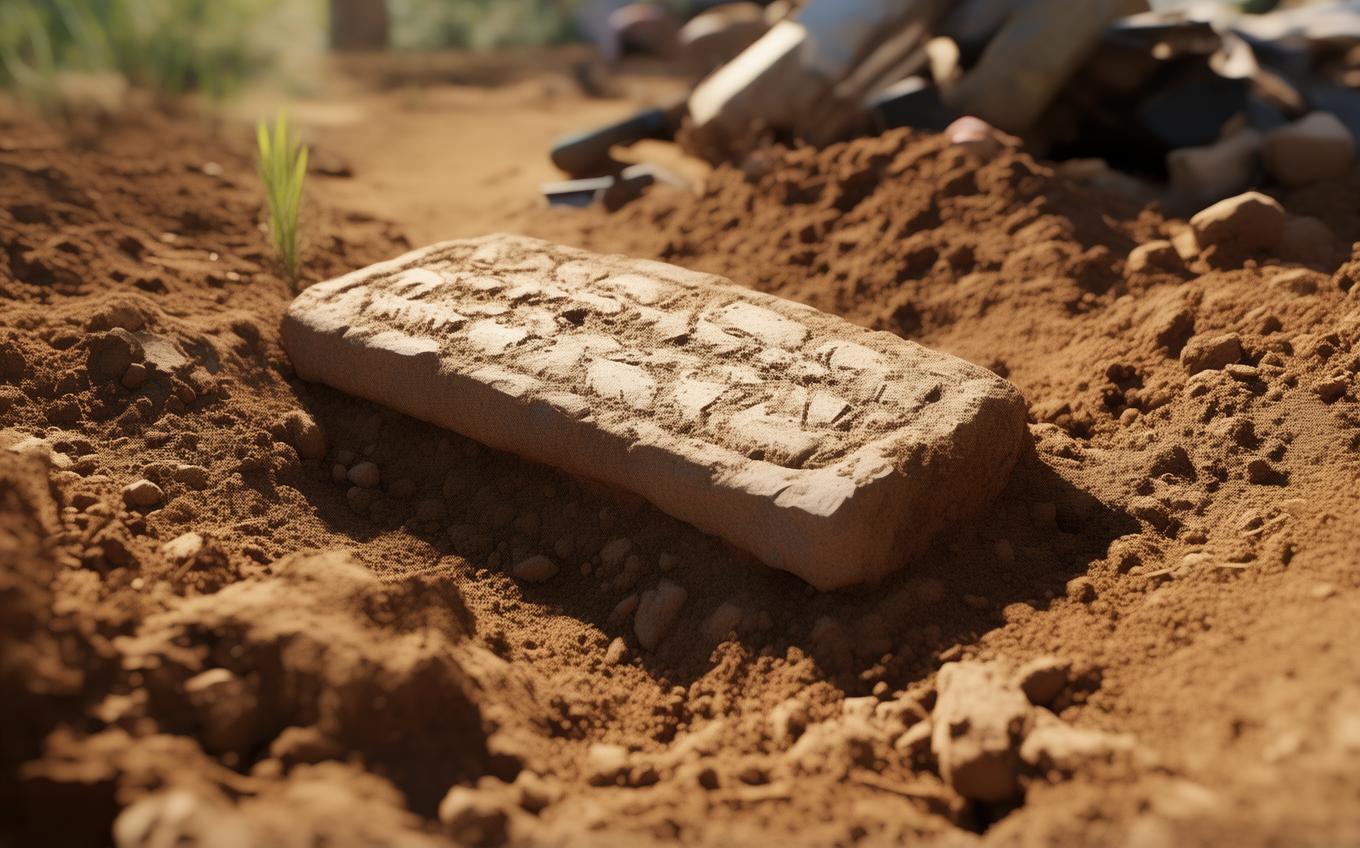
1. Basic Information
- Word: 出土
- Pinyin: chū tǔ
- Literal Meaning: “to come out of the earth/soil”
- Primary Meaning: to be unearthed; to be excavated, especially referring to cultural relics, artifacts, fossils, or ancient objects discovered underground
2. In-depth Explanation
- Context and Usage:
出土 is most commonly used in archaeology, history, museums, and news reports about ancient discoveries. It describes objects that are found after being buried underground, often for a very long time.
In English, 出土 can be translated as “to be unearthed,” “to be excavated,” or “to be discovered underground.” It is usually used for things like ancient pottery, bronze vessels, coins, tomb objects, bamboo slips, fossils, or historical remains.
A key nuance is that 出土 usually sounds formal or academic. You would not normally use it for casually digging something up in your garden unless the object has archaeological or historical value. For everyday “dig out,” Chinese would more often use words like 挖出来.
出土 can function as a verb or as an attributive phrase before a noun. For example:
- 出土文物 = unearthed cultural relics
- 出土地点 = excavation site / place where something was unearthed
- 新出土的陶器 = newly unearthed pottery
- Character Breakdown:
- 出 means “to go out,” “to come out,” or “to emerge.”
- 土 means “earth,” “soil,” or “ground.”
Together, 出土 literally means “to come out of the soil,” which naturally developed into the meaning “to be unearthed” or “to be excavated.”
3. Example Sentences
- Chinese: 这件青铜器是在陕西出土的。
- Pinyin: Zhè jiàn qīngtóngqì shì zài Shǎnxī chū tǔ de.
-
English: This bronze vessel was unearthed in Shaanxi.
-
Chinese: 考古学家发现了许多新出土的文物。
- Pinyin: Kǎogǔxuéjiā fāxiàn le xǔduō xīn chū tǔ de wénwù.
-
English: Archaeologists discovered many newly unearthed cultural relics.
-
Chinese: 这些出土的竹简为研究古代历史提供了重要资料。
- Pinyin: Zhèxiē chū tǔ de zhújiǎn wèi yánjiū gǔdài lìshǐ tígōng le zhòngyào zīliào.
- English: These unearthed bamboo slips provided important materials for the study of ancient history.
Cultural Notes (if applicable)
China has a very rich archaeological tradition, and 出土 often appears in discussions of ancient Chinese civilization. Famous examples include 出土文物 from ancient tombs, bronze ritual vessels from the Shang and Zhou dynasties, and the Terracotta Warriors, which were discovered underground near the tomb of Qin Shi Huang.
In Chinese museum descriptions, 出土 is a very common word. You may see labels explaining when and where an object was unearthed, such as “1974年出土” meaning “unearthed in 1974.” This word often signals that the object has historical, archaeological, or cultural importance.
Conclusion
出土 means “to be unearthed” or “to be excavated.” Remember it through its characters: 出 means “to come out,” and 土 means “earth” or “soil.” Together, they describe something “coming out of the ground,” especially an ancient object or relic discovered through archaeology.
Sources and Further Reading
Dictionary links are provided for independent reference. Example sentences and learning notes on this page are educational explanations rather than dictionary quotations.



Comments (0)
No comments yet. Be the first to comment!